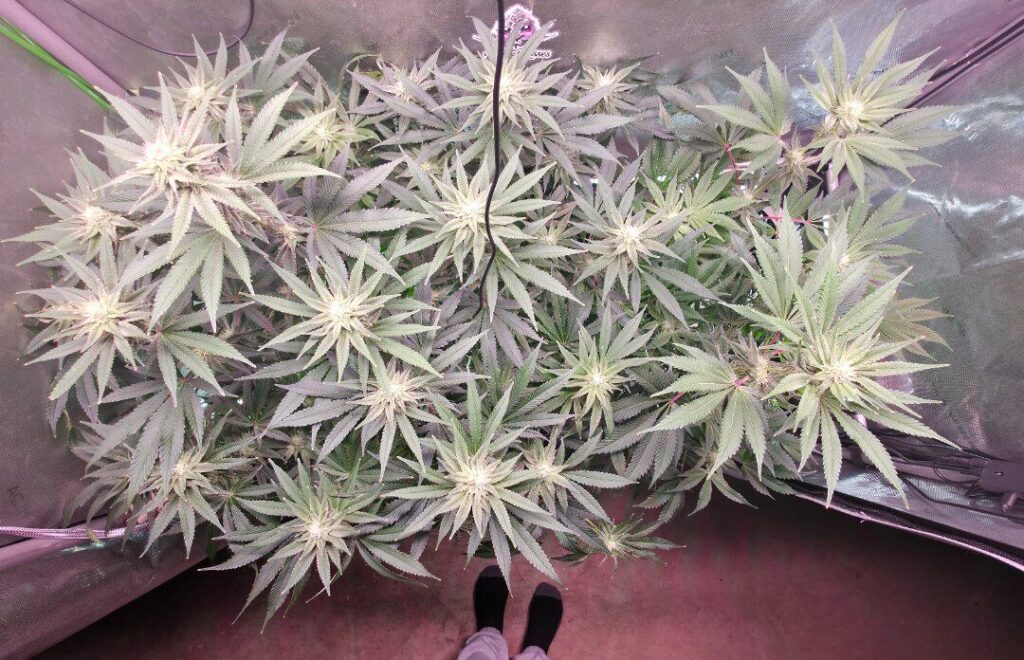
Cannabis Nanners in Late Flower: What to Do

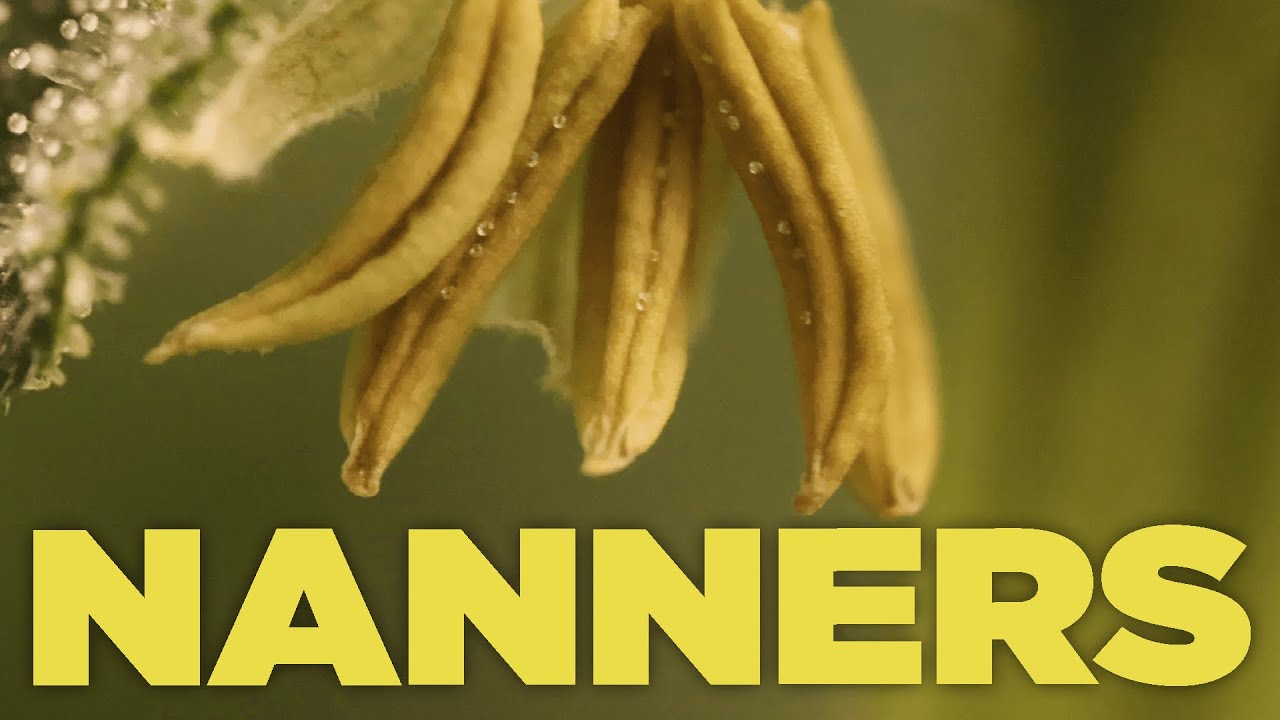
Short answer: a “nanner” is the banana-shaped anther that can appear inside a cannabis flower and may release pollen. One isolated late-flower nanner and widespread early intersex growth are not the same risk. Slow the airflow, inspect the whole plant and make the removal decision based on timing, extent and what else is sharing the room.
Video chapters
- 0:19 — The late-flower discovery
- 0:35 — Identifying the neon-green anthers
- 1:01 — Checking whether pollen was still contained
- 1:26 — Why removing them individually was not realistic
- 2:13 — What the result means for future genetics
Timestamp links open the standard HWGrow pop-out player at the selected moment without moving you away from your reading position.
What nanners look like
Nanners are usually yellow, cream or bright green and look more like a tiny banana than a round pollen sac. They often emerge from inside a formed flower. That is different from the clusters of immature pollen sacs that develop at branch nodes, and it is also different from the normal teardrop-shaped female bract with a stigma growing from it.
If the structure is too small to identify with the naked eye, inspect it without crushing it. The male-versus-female cannabis guide shows the basic flower anatomy.
What to do when you find one
- Stop direct airflow. Do not point a fan at the suspect flower or carry it through the room uncovered.
- Inspect the entire plant. Check the interior buds, lower flowers and nearby plants—not only the spot that caught your eye.
- Judge timing and extent. One isolated anther near the end of flower is a different decision from repeated or widespread growth early enough to seed the room.
- Contain before moving. If removal is the safer choice, gently cover or bag the plant before carrying it past unaffected flowers.
- Record what happened. Note the cultivar, seed lot or clone, day of flower, environment, recent stress and whether the expression was isolated or repeated.
Can you remove nanners and keep flowering?
Sometimes a grower may choose to remove one or two late anthers with damp fine-tip tweezers and keep watching the plant. Recheck daily and assume pollen could already have escaped.
In this documented run, the nanners were embedded throughout the plant and seven other cultivars shared the room. Picking them one by one was not a controllable plan, so I removed the affected plant. If expression is widespread, early or recurring, sacrificing one plant may protect more of the room.
Why it happened is a separate question
Intersex expression can involve genetic susceptibility, environmental stress, late-flower survival behavior or a combination of factors. I cannot tell you the cause from one video. Review light interruptions, heat, root-zone stress, physical damage and timing, then compare the plant with others that experienced the same room.
I would not judge a whole cultivar on one stressed plant, and I would not ignore repeatable early expression. If a plant is being considered for breeding, keep records and read the separate sexual-stability testing and ethics guide. The ethical goal is to test realistic grow-room variation—not torture plants until any biology eventually fails.
Useful inspection and containment tools
 30×–60× jeweler’s loupeConfirm the structure before handling a flower and inspect nearby sites for more growth.Check Current OptionsView product
 Fine-tip tweezersUseful only for a small, accessible late-flower site when monitoring can continue daily.Check Current OptionsView product
 Large containment bagsCover an affected plant before moving it through a shared flowering room.Check Current OptionsView product
 Waterproof plant labelsKeep the cultivar, clone, date and observation attached to the correct plant.Check Current OptionsView product
Next in your grow
Before this step: How to Top, FIM and Low-Stress Train Cannabis
Next step: When to Harvest Cannabis: Trichome Color & Readiness Guide
Related: When to Flip Cannabis to Flower Indoors · Cannabis Balls, Nanners and Herms: What You’re Actually Seeing · Cannabis Terpenes Explained: Aroma, Flavor & What Evidence Shows
Further reading: Cornell University: hemp nutrient disorder diagnostic guide · Penn State Extension: diagnosing poor plant health
Go deeper (supporter membership required): These advanced guides are for HWGrow supporters: Grow With Me – Day 42-49 – Defoliation, Pruning, LST & Flip · Grow With Me – Day 89-End – Pre-Flush – Cutting Nutrients & Chop Prep. Become a supporter.
Want to watch this done step by step? The Grow With Me Masterclass follows one complete grow, day by day.
Affiliate disclosure: HWGrow may earn a commission from qualifying Amazon purchases at no additional cost to you. Equivalent tools can replace the linked items without changing the inspection method.
Frequently asked questions
Will one nanner seed the entire tent?
It can release pollen, but the result depends on maturity, airflow, timing and where that pollen lands. I take it seriously.
Do I always need to remove the whole plant?
An isolated late-flower site may be monitored after careful removal; widespread, early or recurring expression in a shared room creates a much larger risk.
Are late nanners the same as early intersex instability?
No. Timing and pattern matter. Late survival expression belongs in the record, but early or repeatable expression under ordinary conditions is a stronger warning when selecting genetics.


You may also like
pH vs. PPM for Cannabis: EC Scales, Buffering and Nutrient Lockout