

How to Test Cannabis Runoff pH and EC Without Guessing
Video chapters: the HWGrow runoff workflow
- 0:19 — Why early diagnosis matters
- 0:42 — When runoff testing can help
- 0:50 — What the sample represents
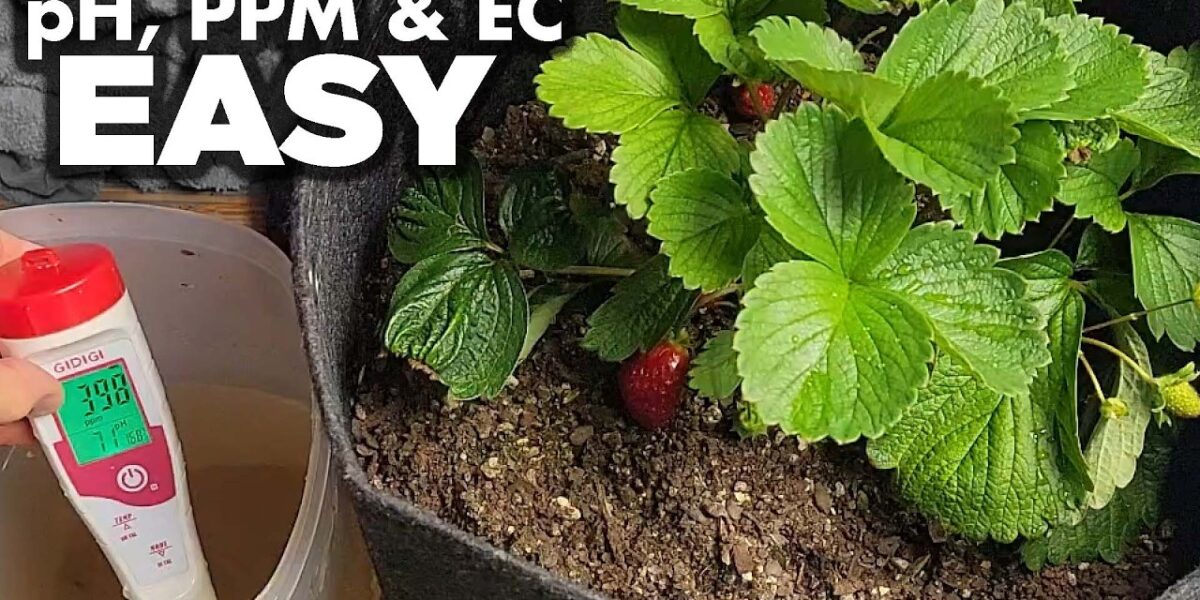
- 1:09 — pH and conductivity meters
- 1:17 — Sample during normal irrigation
- 1:33 — Measure input pH and PPM first
- 1:57 — Elevate the pot over a clean saucer
- 2:13 — Collect enough sample for the probes
- 2:27 — Original threshold discussion; corrected below

Last updated: August 2026
Quick answer: Test cannabis runoff by measuring the input water first, collecting a clean leachate sample from a normally irrigated container, then recording runoff pH and EC with calibrated meters. Compare the result with your own baseline and recent trend. Do not diagnose a deficiency from one runoff number, and do not use universal “high” or “low” PPM cutoffs without naming the meter scale, medium, feed and collection method.

Selecting a timestamp opens the video at that moment without moving you away from this section.
What runoff can—and cannot—tell you
Runoff is the liquid that leaves the bottom of a container after water moves through the medium. It can reveal a useful trend: salts may be accumulating, the output may be moving away from the input, or one pot may behave differently from the rest.
It is not a direct sample of “what the plant is consuming at the roots.” The reading also depends on the water volume, how dry the pot was, channeling, fertilizer history, medium, container size and which part of the drainage you collected. Treat it like a clue—not a verdict.
| Runoff can help you see | Runoff alone cannot prove |
|---|---|
| A rising or falling pH/EC trend under one repeatable method | The exact chemistry at every point in the root zone |
| One container behaving differently from similar plants | Which nutrient is deficient or excessive |
| A large, repeated output-versus-input conductivity difference | That the plant must be flushed or fed more immediately |
| Whether a correction produced the expected direction of change | That visible damage was caused only by nutrition |
A repeatable runoff test for a home grow
- Calibrate and rinse the meters. Verify the pH meter with fresh buffers and the EC meter with the appropriate conductivity standard. A drifting meter creates a fake trend.
- Do not flood an already saturated pot just to get a number. Sample during a normal irrigation event or use one defined pour-through method.
- Record the input. Measure temperature, pH and EC after the feed is mixed. If you display PPM, record whether the meter uses the 500, 640 or 700 conversion scale.
- Elevate the container. Keep the pot above the collection surface so it never sits in drainage. Use a clean saucer or beaker.
- Water slowly and evenly. Cover the surface instead of pouring one fast stream that channels down a single path.
- Collect a clean sample. Get enough liquid to submerge the probes without scraping sediment from the saucer. Do not squeeze the pot or reuse old standing runoff.
- Let each reading stabilize. Record runoff temperature, pH and EC/PPM, then rinse the probes as their manufacturers direct.
- Compare like with like. Use the same method, timing, input type and meter scale next time. Sample more than one comparable pot before changing the whole room.
Why the collection method matters
HWGrow’s original demonstration samples during irrigation, which is a practical home check. A standardized nursery “pour-through” method is different: Oklahoma State’s nursery guidance describes waiting two to three hours after irrigation, then applying distilled water in a circle to collect about 50–100 mL of leachate. It also recommends sampling multiple comparable containers instead of relying on one pot. Read the OSU leachate collection method.
Either approach can be useful when it is repeated consistently. What you should not do is compare a heavy first-flush sample with a small pour-through sample and treat the numbers as interchangeable.
Use EC for comparisons; label PPM when you display it
An EC meter measures electrical conductivity. A TDS meter normally measures the same conductivity and converts it into a PPM-style number. That is why two meters can show different PPM values for the same solution while agreeing on EC.
For your notebook, record EC in mS/cm whenever possible. If you prefer PPM, write the conversion scale beside it. The complete pH, EC, PPM and runoff guide explains those conversions in more detail.
Do not use 600 and 2,000 PPM as universal cutoffs
The original video says runoff below 600 PPM means the soil probably needs more nutrients and runoff above 2,000 PPM means it is “hot.” Those numbers are not universal. They change with the meter scale, input EC, medium, fertilizer program, plant stage, water alkalinity and collection method.
Oklahoma State’s growth-media guidance is explicit that desirable pH and EC ranges vary by crop, age, production system and management. It also uses a defined saturated-media-extract method—not an unspecified home runoff sample. See why method-specific ranges matter.
How to interpret the trend without overcorrecting
If runoff EC keeps climbing above the input
- Verify the meter and PPM scale before blaming the plant.
- Check whether the pot is drying too far, developing dry channels or receiving uneven irrigation.
- Compare several plants and look for salt residue, tip burn or stalled growth.
- Review the labeled feed rate and the full recipe. Reduce concentration or improve complete, even irrigation when the evidence supports it.
- Do not perform an aggressive flush automatically. Sudden root-zone changes can create a second problem.
If runoff EC is lower than expected
- Confirm that the input was mixed and measured correctly.
- Check whether a large water volume diluted the sample.
- Review the medium: a lightly charged mix and an amended soil do not start from the same baseline.
- Use the plant’s growth and leaf pattern, not the number alone, before increasing feed strength.
If runoff pH is drifting
Compare the output with your input and earlier samples, but do not chase one runoff pH reading with an extreme opposite-pH solution. Water alkalinity, medium buffering and fertilizer chemistry all affect the trend. Penn State recommends calibrating the pH/EC meter and evaluating the source water during troubleshooting; a laboratory water analysis is the stronger next step when the source itself looks suspicious. Read the Penn State water-quality workflow.
If the runoff result stays abnormal, confirm it with the repeatable soil-slurry test or a laboratory media test before making a large correction.
Runoff troubleshooting checklist
| Meter | Calibrated, rinsed and allowed to stabilize |
|---|---|
| Input | Temperature, pH, EC and PPM scale recorded after mixing |
| Container | Normal irrigation timing; pot elevated above a clean collector |
| Method | Same water volume, coverage and sample timing as prior tests |
| Comparison | Several similar plants plus the recent trend—not one isolated value |
| Plant evidence | Leaf pattern, growth rate, root-zone moisture and environmental history |
For leaf symptoms, continue to the yellow cannabis leaves diagnosis guide. If you see high EC and burned tips, also check the complete recipe and watering pattern before assuming every yellow leaf is nutrient burn.
Recommended runoff-testing tools
 Reliable pH and EC meterUse the same calibrated meter and conversion scale for every input and runoff comparison so the trend means something.View product
 Calibration and storage kitFresh buffers expose drift, while the correct storage solution protects a glass pH probe between runoff checks.View product
 Runoff collection saucersUse a clean catch tray and keep the pot elevated. Empty it after testing so the container never sits in runoff.View product
Affiliate disclosure: HWGrow may earn a commission from qualifying purchases at no additional cost to you. Equivalent calibrated meters and clean collection tools can be substituted without changing the sampling method.
Use the number in a complete grow workflow
Runoff testing is most useful when you already track what went into the pot and how the plant responded. The Grow With Me Masterclass connects watering, feeding and troubleshooting decisions without reproducing protected lesson content here. If a trend still does not make sense, ask HWGrow a question and include the medium, pot size, plant stage, water source, input pH/EC, runoff pH/EC, meter scale and collection method.
Cannabis runoff testing FAQ
Does runoff show exactly what the roots are consuming?
No. It is a leachate sample influenced by the medium, irrigation volume, moisture, channeling and collection method. It is best used as one trend alongside plant symptoms and input measurements.
Should I test runoff in PPM or EC?
EC is easier to compare across meters. If you display PPM, record the meter’s 500, 640 or 700 conversion scale beside every result.
Is runoff above 2,000 PPM always too high?
No. A universal cutoff ignores the PPM scale, input, medium, plant stage and test method. Investigate a repeated rise relative to your controlled baseline instead.
Should I flush immediately when runoff looks wrong?
No. Verify the meters, input and sampling method first. Then compare multiple plants, symptoms and the recent trend before making a gradual correction.
You may also like
pH vs. PPM for Cannabis: EC Scales, Buffering and Nutrient Lockout

Complete Grow Tent Setup: Four Videos, One Working Setup






Featured Grow

Mine wasnt that bad, i am low rate afib so just swing between 95 and high as 150 sometimes, up…

Yeah not fun, but as long as it helps thats what matters. Had my heartrate 200+bpm in the hospital for…
Tupac mine is for afib. Just Had cardio version the other week to get me out of it, worst case…
I was hoping for one at least that check the box's, but ya, having a couple is that much better.…
Heart cath ablation? Had one of those for Super Ventricular Tachycardia and it worked well