


FoxFarm Happy Frog Soil Review: Lab Test Results

Last updated: August 2026
Quick answer: HWGrow sent one sample from one bag of FoxFarm Happy Frog to the University of Delaware for a greenhouse-media lab test. The home slurry measured pH 4.91; the laboratory saturated-media extract measured pH 5.2 and soluble salts of 3.16 mmhos/cm (numerically the same as mS/cm). The close pH readings make this a useful one-sample comparison, but they do not prove that every bag has the same pH or needs an immediate fertilizer correction.
Video chapters: Happy Frog home test vs. lab test
- 0:00 — Why HWGrow uses Happy Frog
- 0:14 — Mycorrhizae and the “cooking the food” analogy
- 0:51 — Why send the soil to a laboratory?
- 0:57 — Laboratory pH: 5.2
- 1:15 — Home slurry pH: 4.91
- 1:29 — Historical pH advice; safer workflow below
- 1:49 — What the nutrient report measured
- 2:12 — Pre-moistening and microbial claims
- 2:19 — Grow Big, FloraMicro and worm castings
- 3:08 — CytoPlus and trace elements
- 3:38 — Final takeaway
Selecting a timestamp opens the video at that moment without moving you away from this section.
What exactly did HWGrow test?
The sample went through the University of Delaware’s GH-1 SME Media Analysis. SME means saturated media extract. The package measures pH, electrical conductivity and extractable P, K, Ca, Mg, Mn, Zn, Cu, Fe, B, S, Na, Al, nitrate-N and ammonium-N. That is a standardized greenhouse-media test, not the same procedure as a casual home slurry.
The University still lists GH-1 for greenhouse media. See the University of Delaware soil-testing program and GH-1 package.
Happy Frog laboratory results
| pH | 5.2 — lab interpretation: low |
|---|---|
| Soluble salts / EC | 3.16 mmhos/cm — lab note: good for most plants |
| Nitrate-N | 0.1 ppm — low |
| Phosphorus | 15.8 ppm — high |
| Potassium | 172.9 ppm — optimum |
| Calcium | 409.6 ppm — optimum |
| Magnesium | 269.7 ppm — optimum |
| Manganese | 2.36 ppm — high |
| Zinc | 0.23 ppm — low |
| Copper | 0.15 ppm — optimum |
| Iron | 1.76 ppm — optimum |
| Sodium | 28.16 ppm — high |
| Boron | 0.08 ppm — low |
| Sulfur | 613.1 ppm — high |

Why the home and laboratory pH readings are close—but not identical
The video’s calibrated home meter displayed pH 4.91, while the laboratory reported pH 5.2. Agreement within about three-tenths of a pH unit is useful evidence that the submitted sample was acidic under both preparations. It does not prove that every home slurry is accurate or that every bag of Happy Frog has the same pH.

Slurry results change with the media-to-water ratio, source-water chemistry, contact time, temperature, calibration, filtration and which part of the bag was sampled. Use the same method every time if you want a trend. The repeatable soil slurry guide shows the home workflow, and the pH, EC, PPM and runoff guide explains why PPM numbers need a named conversion scale.
What one sample cannot prove
- It cannot prove wide pH variation across all Happy Frog bags. That requires multiple sealed bags, lots, locations and repeat samples.
- It cannot turn extract ppm into the bag’s NPK analysis. Guaranteed-analysis percentages describe nutrient content by weight; the SME table reports what appeared in an extract.
- It cannot prove the nitrate result is “inaccurate.” The 0.1-ppm result accurately describes nitrate-N in this extract at this time. It does not measure total organic nitrogen or future mineralization.
- It cannot prescribe one amendment. Grow Big, FloraMicro, castings and CytoPlus each change more than one part of the root zone.
Mycorrhizae: keep the useful analogy, lose the magic claim
The video’s “cooking the food” analogy is a friendly way to introduce nutrient availability. FoxFarm’s current Happy Frog information confirms that the mix contains a custom blend of mycorrhizal fungi and says those fungi may colonize roots and improve root efficiency. The product also contains aged forest products, peat moss, perlite, earthworm castings, bat guano, oyster shell, dolomite lime and humic acids. Check the current Happy Frog ingredients and directions.
Mycorrhizae form a relationship with living roots; they are not the only organisms involved in decomposition or nitrogen mineralization. Wetting the mix evenly before planting can prevent dry pockets, but the video’s five-day “activation” window is not a universal laboratory rule. Follow the fabric-pot preparation guide for even moisture without copying a fixed amendment recipe from a different grow.
Does fresh Happy Frog need nitrogen or pH Up?
Not automatically. FoxFarm currently describes Happy Frog as a ready-to-use container medium and recommends feeding during growth and bloom. The low nitrate result is worth recording, but it is not permission to pour a nitrogen product into every fresh bag.
The same caution applies to pH. This sample tested low, but do not pour concentrated pH Up into the medium or chase one slurry reading. Repeat the test, check the plant and source water, then adjust a fully mixed irrigation solution in tiny diluted steps if a correction is actually needed. The pH Up and pH Down safety guide shows the mix-stir-wait-retest method.
If an established plant and repeatable measurements point to a real nitrogen need, the Grow Big 6-4-4 test shows what that soil-formula bottle did in one controlled water sample. FloraMicro is labeled 5-0-1, but General Hydroponics describes it as the foundation of the three-part FloraSeries—not a nitrogen-only correction. Check the current FloraMicro role and directions.
Worm castings are a variable biological amendment, not a precise nitrate dose. CytoPlus contains seaweed, humic acids and micronutrients; it is also not a universal fix for one low zinc or boron line. BioAg tells growers to use the current label and, when appropriate, agronomic guidance. Check the current CytoPlus label and resources.
A safer Happy Frog workflow
- Record the bag and lot. Photograph the label and code before opening so an unusual result can be traced.
- Pre-moisten evenly. Bring the medium to an even field moisture without turning it into mud or assuming a fixed five-day timer changes its nutrient analysis.
- Plant first; diagnose second. Give the root zone time to establish unless the plant or repeat data shows an immediate problem.
- Read your local water report. Search your ZIP code plus “water report”. Alkalinity and dissolved minerals can change how the medium and pH adjusters behave.
- Trend one test method. Keep the ratio, water, timing, temperature and calibrated meters consistent.
- Use the whole picture. Combine plant symptoms, stage, input pH/EC, runoff or slurry trends and water data. The nutrient-deficiency guide helps separate similar-looking problems.
- Change one variable at a time. Follow the current product label, start conservatively and record the response before stacking another amendment.
Recommended Happy Frog testing and amendment supplies
 FoxFarm Happy Frog soilThe product tested. Compare the online price with a local garden store because shipping soil can be expensive.View product
 pH and EC meter kitFor repeatable slurry, source-water and feed checks. Calibrate the probes and record the PPM scale when EC is unavailable.View product
 FoxFarm Grow Big 6-4-4The soil formula discussed in the video. Use only when the plant and complete measurements support feeding; verify 6-4-4 on the current bottle.View product
 FloraMicro 5-0-1A FloraSeries foundation product that supplies nitrogen, potassium, calcium and micronutrients. Follow the complete current program; it is not nitrogen-only.View product
 Earthworm castingsThe legacy organic amendment option. Treat castings as a variable soil input, not a precise or immediate nitrogen correction.View product
 BioAg CytoPlusThe trace-element product shown in the video. Verify the current label and use it only when the full root-zone evidence supports the amendment.View product
Affiliate disclosure: HWGrow may earn a commission from qualifying purchases at no additional cost to you. Product destinations may be replaced with equivalent items; verify the exact product, current label and fit for your grow before use.
Want help reading your own soil data?
The Grow With Me Masterclass connects water, feeding and root-zone measurements inside a guided workflow without reproducing protected lesson content here. If your numbers or symptoms do not match this sample, ask HWGrow a question and include the soil brand and lot, plant stage, local water report, meter calibration, exact test method, pH, EC or named PPM scale and clear plant photos.
FoxFarm Happy Frog FAQ
What pH did Happy Frog test at?
This one home slurry measured pH 4.91, while the University of Delaware saturated-media extract measured pH 5.2. Both indicated an acidic sample, but neither proves every bag has the same pH.
What EC did the laboratory report?
The report listed soluble salts of 3.16 mmhos/cm, numerically equivalent to 3.16 mS/cm. The home meter also displayed 1120 PPM, but the video did not identify its conversion scale, so the values should not be compared directly.
Does fresh Happy Frog need Grow Big or FloraMicro?
Not automatically. The low nitrate-N result describes one saturated-media extract, not total nitrogen or every bag. Use plant response, source-water data and repeatable root-zone measurements before adding a labeled fertilizer program.
Does pre-moistening Happy Frog for five days activate all its nitrogen?
No universal five-day rule was established by this test. Even pre-moistening can reduce dry pockets and support biological activity, but nitrogen mineralization depends on the full microbial community, temperature, moisture, time and organic materials.
Does the close home pH prove a slurry test is laboratory accurate?
No. It shows useful agreement for this sample. A repeatable home slurry is best used for trends, while a standardized laboratory method is better for a documented comparison.
Growing in soil? Follow the full step-by-step guide to growing weed at home, and keep the interactive grow cheat sheet open on your phone for every week’s settings and how-to videos.
Comments
Leave a reply
You may also like
PRO-MIX HP Review: What the Lab Test Actually Says
pH vs. PPM for Cannabis: EC Scales, Buffering and Nutrient Lockout


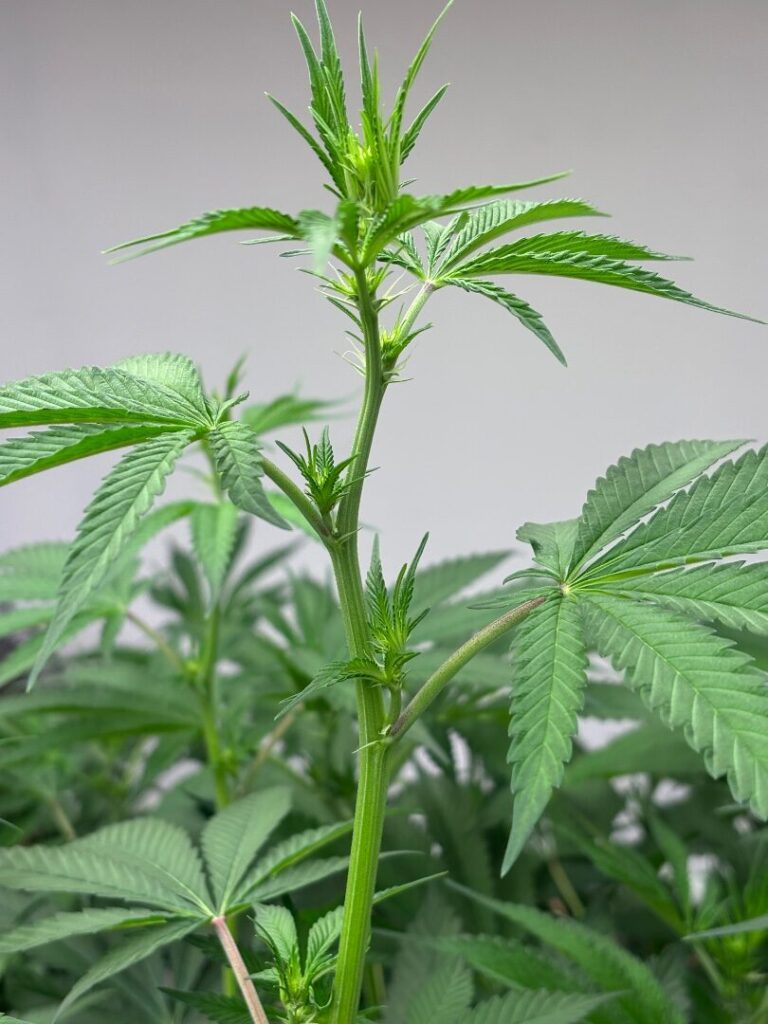

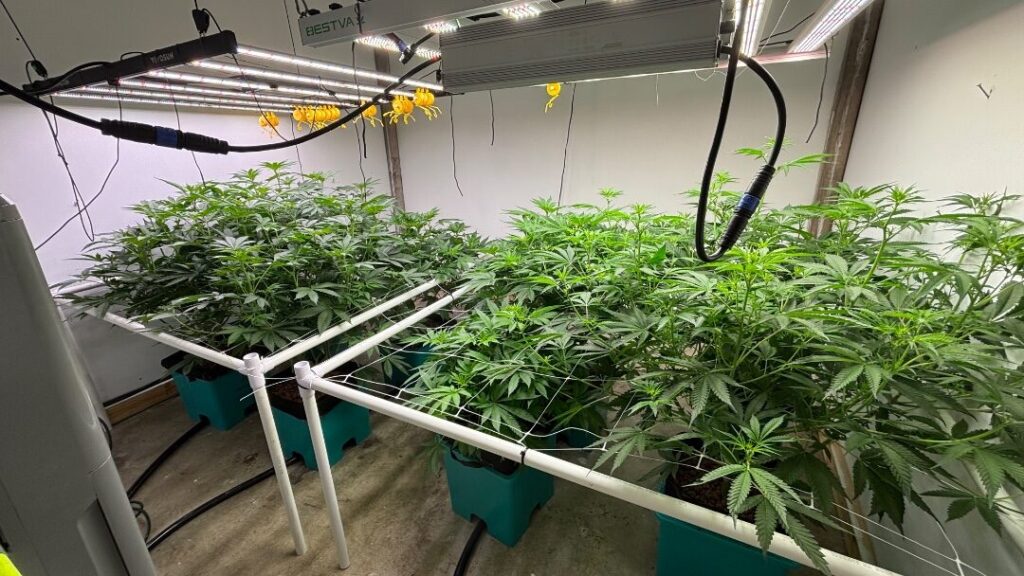


Featured Grow


Mine wasnt that bad, i am low rate afib so just swing between 95 and high as 150 sometimes, up…

Yeah not fun, but as long as it helps thats what matters. Had my heartrate 200+bpm in the hospital for…
Tupac mine is for afib. Just Had cardio version the other week to get me out of it, worst case…
I was hoping for one at least that check the box's, but ya, having a couple is that much better.…
Heart cath ablation? Had one of those for Super Ventricular Tachycardia and it worked well
Hey im on the end of the 4th week of veg for 2 plants and I’ve been having an issue with PH of the runoff, it wont increase at all it keep staying at 5.6. In the beginning it was at 6.2 and over the past few weeks been just constantly dropping lower and to counter it I’ve been raising my water PH to 6.5-7.2 depending on what the previous soil runoff PH was but it doesn’t change the runoff PH and sometimes it still will drop lower than before. Any idea what could be wrong I’m using Happy frog soil and general hydroponics with following the cheat sheet u made.
Without ppm, ph will not influence pH as much. Start feeding nutrients higher or even mix some soil into your water until it hits like 500 ppm, then add the counter ph, then feed your soil with the slurry and it will influence the pH more.
Do you know any good replacement for this i can get in Australia it would cost $184 not including shipping to get it
Do you have access to biobizz light? If so, start using nutrients off the bat