

How to Light Cannabis and Choosing LED Grow Lights

Photone has proved unreliable in my own testing. I have seen readings change after phone updates, so I no longer trust it as my reference. The Apogee MQ-500 is the meter I rely on. If you do not own one, the starting settings below are the approach I have used to help thousands of new growers.
Your phone isn’t just a camera. It’s processing the image, and an update can change how it does that. Apple has documented those changes, and Samsung explains how software adjusts brightness and contrast.
Jump to a measurement chapter
Lighting (PPFD)
HWGrow’s starting settings. Dimmer percentages are not PPFD readings, and the same percentage can produce different light intensity on different fixtures. Distances are measured above the top of the plants.
| Stage | Dimmer | Height | Plant placement |
|---|---|---|---|
| Seedling to Veg week 2 | 30% | 20 inches | Center all plants directly beneath the light. |
| Veg weeks 3-5 | 40% | 20 inches | Keep plants as centered as possible. |
| Veg week 5 to flip | 50% | 22 inches | Keep plants as centered as possible. |
| Flip to Bloom week 2 | 70% | 20 inches | Spread plants beneath the light for the rest of the grow. |
| Bloom weeks 3-5 | 80% | 18 inches | Keep plants spread beneath the light. |
| Bloom weeks 6-8 | 90% | 18 inches | Keep plants spread beneath the light. |
| Bloom week 9 to chop | 80% | 20 inches | Keep plants spread beneath the light. |
Keep the interactive cheat sheet handy, or watch my full light-measurement guide.
Pick the light, not the logo
Results first. I want to see what a light actually does, not just a spec sheet wearing a big price tag. Compare its coverage, dimmer, build and real-world results, then check what those watts will cost you.
Samsung is out. Bridgelux is a workable replacement.
Samsung discontinued its general-lighting LED families, including LM301H and LM301H EVO, with final shipments scheduled for December 31, 2025. Bridgelux has been a satisfactory replacement in my experience. Spider Farmer’s 2026 SE series now uses Bridgelux, with a claimed fixture efficacy of up to 2.9 µmol/J. Sources below.
| LED package | PPF (µmol/s) |
Efficacy (µmol/J) |
|---|---|---|
| Samsung LM301H 2023 catalogue rating |
0.56 | 3.10 |
| Samsung LM301H EVO 5000 K |
0.56 | 3.14 |
| Bridgelux BXEM-50K-11L-3FHA 5000 K |
0.56 | 3.10 |
| Bridgelux BXEM-65K-11L-3FHA 6500 K, a different colour temperature |
0.57 | 3.15 |
Manufacturer package ratings at 65 mA and 25°C, not whole-light tests. The 5000 K Bridgelux rating is about 1.3% below Samsung EVO’s nominal efficacy, while both list 0.56 µmol/s. That small specification difference is not a measured difference in growth or fixture performance. Diode count, driver losses and layout still matter.
PPF is emitted light, PPE is light per watt, and PPFD is light landing on an area. A chip’s efficiency cannot tell you whether the corners of your tent are getting enough light. For complete equipment combinations, use the setup buying guide.
The electric bill is part of the price
A more efficient light can use fewer watts for the same output. Whether the premium pays off depends on your electricity rate and hours of use. For a quick estimate: watts ÷ 1,000 × hours × price per kWh = running cost.
The bigger saving in my video comes from time-of-use electricity rates. The same electricity can cost less outside peak hours. Check your utility’s actual plan and the effect on your whole household bill. Moving usage changes the price, not the number of kWh consumed.
Jump to a cost-saving chapter
Also watch: hanging and installing your light
Follow the complete tent setup video guide for the rest of the installation.
Lights, meters and accessories
Affiliate disclosure: As an Amazon Associate, HWGrow earns from qualifying purchases at no additional cost to you.
Grow lights
 Spider Farmer G7000 LED Grow Light 730WThis 5 x 5 Grow Light is actually better suited for a 4 x 4 Grow Tent. Sprawl is always better.View product
 Spider Farmer G4500 LED Grow Light 320W for 2×4 Grow TentsA bar-style fixture for a larger setup. Match its dimensions and power draw to your space.View product
Affiliate disclosure: HWGrow may earn a commission from qualifying purchases at no additional cost to you.
Measurement tools
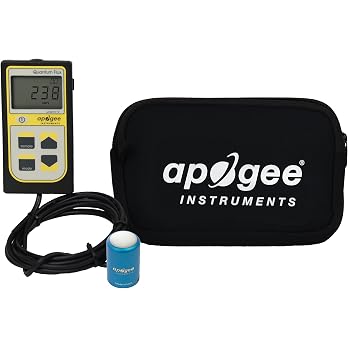 Apogee MQ-500 PAR MeterSo overpriced, but unfortunately the only thing that has been consistently accurate. The phone apps become unreliable because every software update makes your camera interpret light differently.View product
 Photone Quantum PAR Meter AccessoryThe phone accessory from the earlier comparison. Kept here for reference; the MQ-500 is my preferred meter.View product
Affiliate disclosure: HWGrow may earn a commission from qualifying purchases at no additional cost to you.
Hanging and power
 VIVOSUN Rope Hangers, 6 PairsThese are the best. I love the patented button on the side instead of those awful metal tabs that are seemingly impossible to push unless you have baby hands.View product
 Eighttree Smart PlugUsing the SmartLife app, you could program these to turn your lights on and off at the times you want and you could do this remotely.View product
Affiliate disclosure: HWGrow may earn a commission from qualifying purchases at no additional cost to you.
Sources, tests and technical data
HWGrow tests: the videos above, the LED measurement guide, and the MQ-500 versus Photone comparison. The chart and equipment preferences are based on my experience.
- Apogee MQ-500 specifications: full-spectrum PPFD measurement and calibration specifications.
- Photone’s version 4 update notes: a documented change to camera processing and removal of older custom calibrations.
- Samsung EOL notice, December 31, 2024: shipment deadline and affected models, including LM301H EVO.
- Samsung 2023 lighting catalogue and horticulture specification sheet: LM301H and EVO package ratings.
- Bridgelux DS1729, revision B, March 2026: part-specific PPF, efficacy, colour temperature and test conditions.
- Spider Farmer’s 2026 SE-series specifications: Bridgelux transition and manufacturer-rated fixture efficacy.
- Westmoreland, Kusuma and Bugbee (2021): lighting efficacy, spectrum and electricity economics.
- Rodriguez-Morrison, Llewellyn and Zheng (2021): measured responses to light intensity. This is background research, not a validation of my exact dimmer chart.
- Australian Government energy guidance: monitoring appliance consumption and time-of-use price periods.
- Apple: About iOS 13 Updates, iOS 13.2 Camera: Deep Fusion introduced multi-exposure, pixel-by-pixel processing for iPhone 11 photographs.
- Samsung: Image Processing in Exynos Processor: image-signal processing controls exposure and uses tone mapping to adjust local brightness and contrast.
You may also like
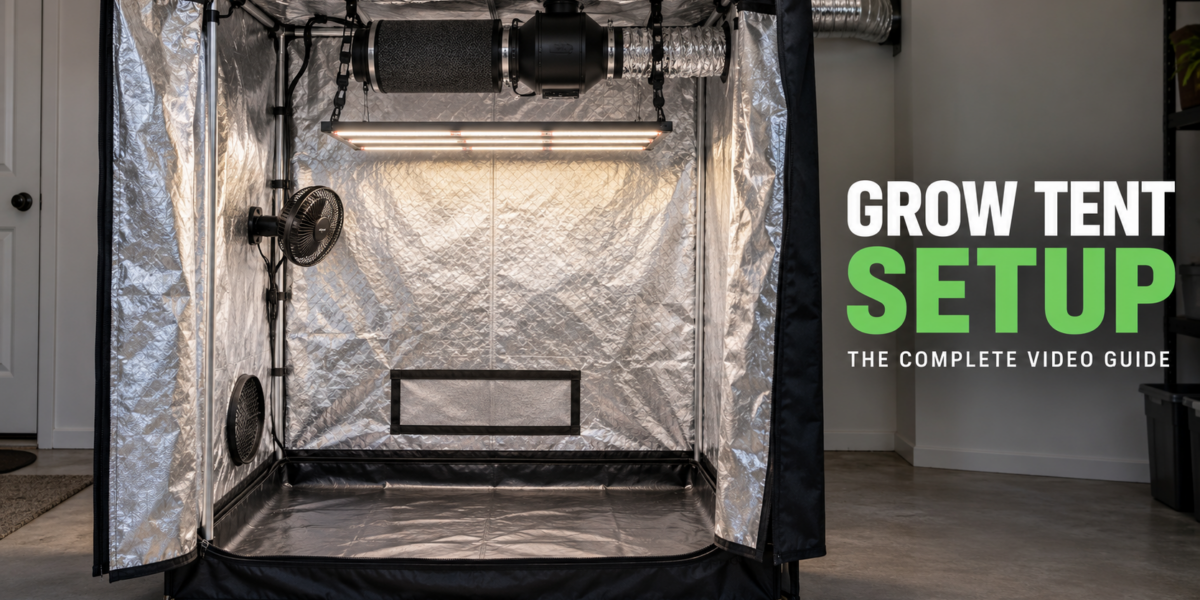
Complete Grow Tent Setup: Four Videos, One Working Setup
Lawrence Brooke: The Godfather of Cannabis Nutrients




Featured Grow
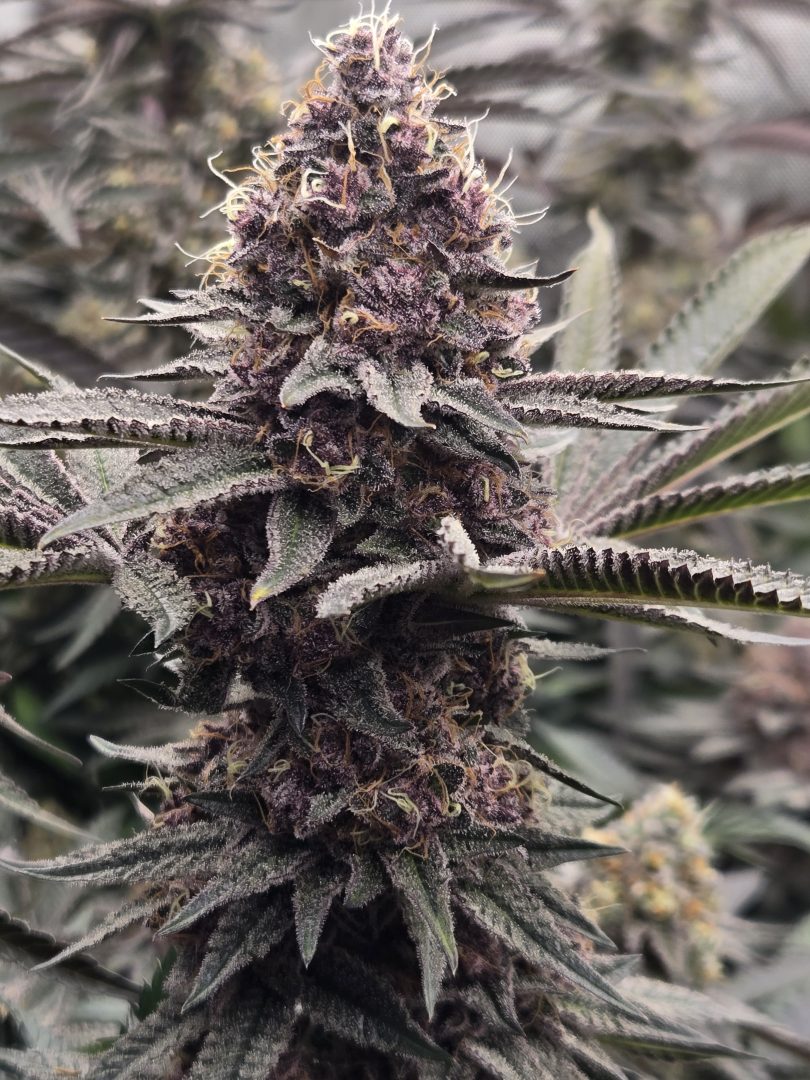
Passion matches the task at hand, looking good

Also the 2 on the far right are the Purple Berry plants
Thanks I think tonight when the lights come on at 8pm I will do some more tucking
Looking real proper
Looking ready to flip any day now