

Sunshine Farmre LED Grow Light Review: What My 2022 Test Found
Video chapters

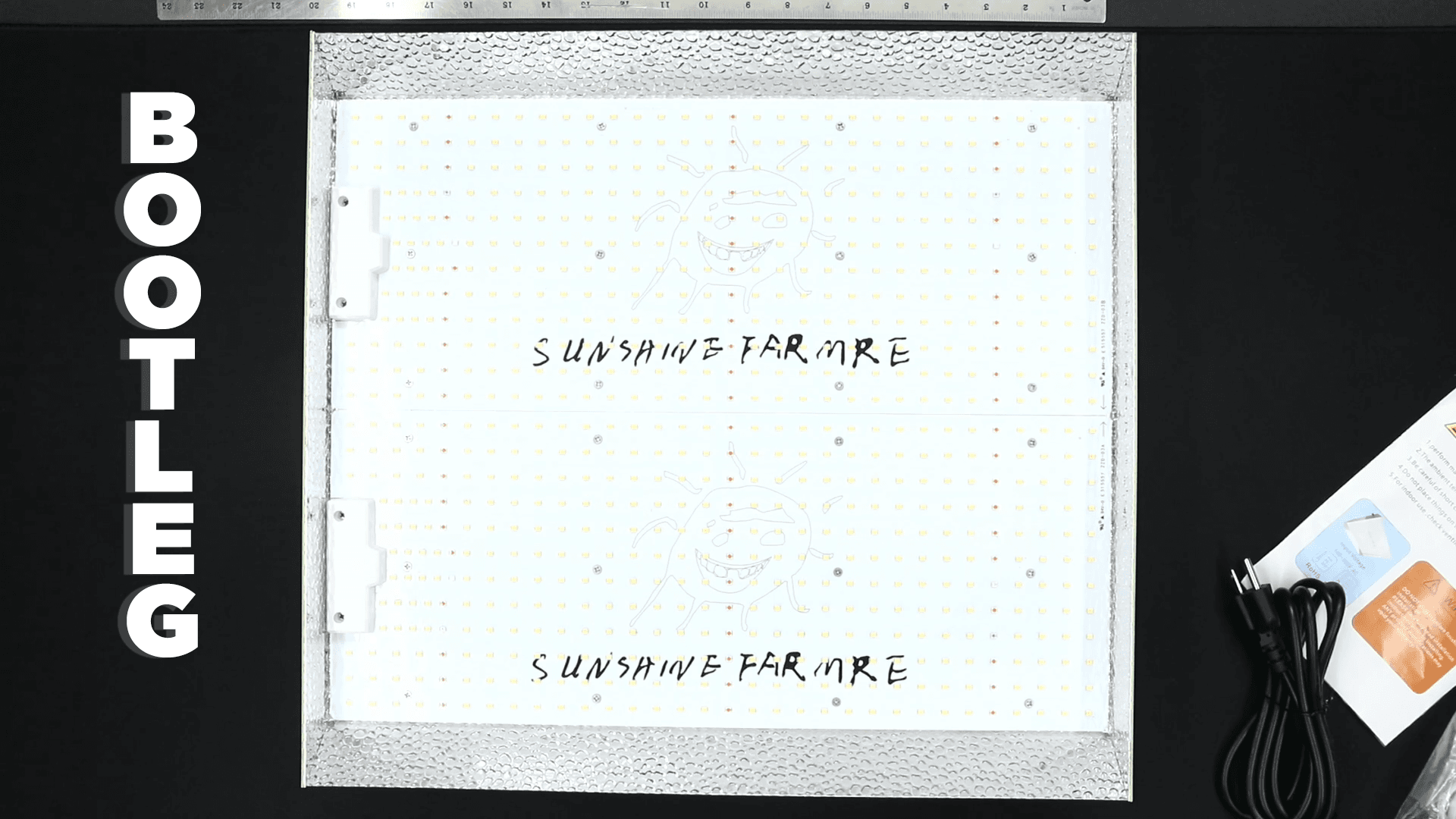
Short answer: I would not buy the Sunshine Farmre light I tested in 2022. My unit produced much lower center PPFD readings than the old listing claimed, had an awkward two-dimmer design and arrived with a hanging setup that was difficult to balance. That is a review of one historical unit and listing—not proof that every generic light or every later product is identical.

Each timestamp opens the standard HWGrow pop-out player at that moment without taking you away from your reading position.
What my test actually found
I measured the center of the fixture with the Photone app at three hanging heights. The video shows approximately 435 µmol/m²/s at 24 inches, 573 at 18 inches and 820 at 12 inches. Those readings were nowhere near the old listing’s claimed center value above 2,000.
The gap was the deal-breaker. A catchy equivalent-wattage number does not tell you how many photons reach the canopy. The physical experience did not rescue it: one supplied rope hanger was hard to balance, and the two dimmer controls did not behave like two independently useful channels.
What this test cannot prove
I did not open the diode packages or send the fixture to a laboratory, so I cannot verify which specific LEDs were installed. I also tested one purchased unit, not a statistically useful production sample. The fair conclusion is that the unit I received did not match the old performance claim closely enough for me to keep it.
A diode family printed in a listing is not a complete fixture test. Samsung’s horticulture materials list multiple LED families and specifications, but the final result still depends on how many diodes are used, current level, board layout, driver, optics and thermal design. See the Samsung lighting catalog for the component-level distinction.
A faster way to screen a grow light today
- Ignore equivalent watts. Find the actual wall draw for the exact model.
- Look for a full PPFD map. A single center reading can hide weak corners and a narrow hotspot.
- Match the test height and tent size. A map without distance and footprint is not useful.
- Check independent measurements. Compare wall draw, PPFD pattern, heat and dimmer behavior—not just a logo or diode name.
- Verify the generation. Sellers reuse familiar names while boards, drivers and diodes change.
- Save the listing and return terms. The FTC says objective advertising claims should be truthful and evidence-based; keep screenshots and purchase records if performance claims matter to the decision. See the FTC advertising guidance.
For the complete current workflow, use the LED grow-light selection guide and the State of Indoor Grow Equipment. Those pages explain why current hardware generation matters more than an old brand ranking.
Useful tools for verifying a light
Current LED grow-light categoryCompare exact generation, wall draw, full-footprint PPFD and return terms.Check Current OptionsPlug-in power meterCheck actual fixture draw instead of trusting an equivalent-wattage title.Check Current PricePaired rope hangersSupport both ends so the fixture stays level and height changes remain repeatable.Check Current Price
Affiliate disclosure: HWGrow may earn a commission from qualifying Amazon purchases at no additional cost to you. Product destinations can be replaced with equivalent current items without changing the verification method.
Frequently asked questions
Was the Sunshine Farmre light actually counterfeit?
I did not authenticate the internal components, so I cannot establish that. “Bootleg” was the informal description used in the original video. The evidence supports a narrower conclusion: my unit’s measured center output and hardware experience did not match the old listing closely enough for me to keep it.
Does an LM301B or LM301H claim prove a grow light is good?
No. The finished fixture also depends on diode count, drive current, board layout, driver, thermal design and the light distribution across your canopy.
Is one center PPFD reading enough?
No. Use a grid across the complete intended footprint at a stated height. The center can look strong while the edges remain poorly lit.
Should I avoid every generic grow light?
No. Judge the exact model by documented wall draw, a credible full-footprint PPFD map, electrical safety, warranty, return terms and independent testing.
You may also like
Best Grow Tent Humidifier: Why Young Plants Need More Humidity
How to Breed Masterclass – Promo Video



Featured Grow
 Jul 2026 — White Iverson by Selfie Seeds +2 more
White Iverson × Selfie Seeds, Pink Strawberry × Selfie Seeds, Purple Berry × Selfie Seeds • Soil • Started Jul 25, 2026
View journal
Jul 2026 — White Iverson by Selfie Seeds +2 more
White Iverson × Selfie Seeds, Pink Strawberry × Selfie Seeds, Purple Berry × Selfie Seeds • Soil • Started Jul 25, 2026
View journal
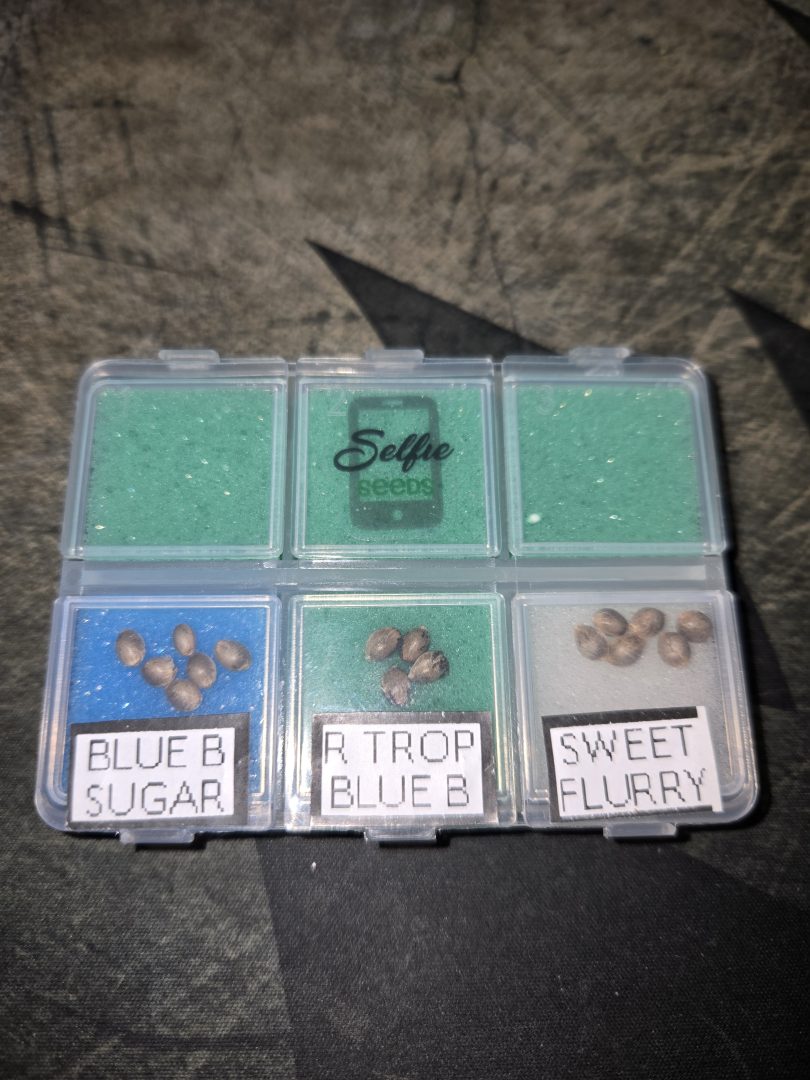 First Selfie Seeds Grow (Blueberry Sugar, Tropical Blueberry, and Sweet Flurry)
Blueberry Sugar × Selfie Seeds, Tropical Blueberry × Selfie Seeds, Sweet Flurry × Selfie Seeds • Soil • Started May 27, 2026
View journal
First Selfie Seeds Grow (Blueberry Sugar, Tropical Blueberry, and Sweet Flurry)
Blueberry Sugar × Selfie Seeds, Tropical Blueberry × Selfie Seeds, Sweet Flurry × Selfie Seeds • Soil • Started May 27, 2026
View journal
Awesome It’ll be a bit chlorophyllie but definitely let me know your opiniones

Walked in this morning before lights out and they are already bouncing back pretty good.
Awesome, fingers crossed for you
Nice LSTing Looks perfectly symmetric

Bananas!!!!! I knew I forgot something today. Thanks, gotta hit the store up in the am anyway. Coming off night,…