

Rapid Rooter vs. Rockwool for Cannabis Seeds: HWGrow Test

Last updated: August 2026
Quick answer: Rapid Rooters beat rockwool in this small HWGrow cannabis-seed test. Both groups had three seedlings above the plugs by day six, but the final rockwool seedling died while a Rapid Rooter seedling with a damaged taproot still emerged. At transplant, the Rapid Rooter seedlings looked greener and had more developed roots. That makes Rapid Rooters my easier beginner choice—not proof that rockwool can never work.
Here is the simple way I look at it: rockwool gives you a very consistent cube, but you have to manage that cube. Rapid Rooters are more forgiving sponges. If your biggest mistake is keeping a plug too wet, “more forgiving” matters.
Watch the Rapid Rooter vs. rockwool experiment
The original HWGrow comparison is the main source for this article. The seeds came from the same strain, the plugs received the same prepared water and both media started moist rather than dripping. One Rapid Rooter taproot was accidentally broken during transfer, which is important context—not something to hide from the result.

Selecting a timestamp opens the standard HWGrow pop-out at that exact moment without making you lose your place on the page.
What happened in the test?
| Checkpoint | Rapid Rooter | Rockwool |
|---|---|---|
| Preparation | Pre-soaked, then squeezed to moist | Pre-soaked, then squeezed to moist |
| Important accident | One taproot broke during transfer | No matching damage recorded |
| Day 3 | First seedling emerged | No first-place emergence |
| Day 6 | Three emerged | Three emerged |
| Day 9 | Damaged seed still emerged with help | Remaining seed/root had died |
| At transplant | Greener seedlings and stronger-looking roots in this run | Less-developed-looking survivors in this run |
The honest conclusion is narrower than “Rapid Rooters always win.” Rapid Rooters handled my watering and my mistake better in this test. Because the groups were small and one seed was damaged, repeat trials could produce a different percentage.
Why moisture control mattered more than the brand
A germinating seed needs water and oxygen at the same time. Saturating every pore may look safe because the plug cannot dry out, but it can reduce the air around the seed and root. That is why the phrase in the video—moist, not wet—is the most reusable lesson on the whole page.
Penn State’s seed and seedling biology guide explains that germinating embryos respire and need an aerated medium for gas exchange. Its damping-off guidance also identifies excessive moisture as a major seedling risk. Those general plant principles support the test’s moisture lesson without pretending one cannabis comparison settled every plug question.
Rapid Rooter: the easier beginner choice
Rapid Rooters are flexible plugs that hold moisture while leaving useful air space when they are handled correctly. They are easy to move into soil, coco or many hydroponic systems once roots appear through the plug.
- Best reason to choose them: simple moisture management and an easy transplant.
- Main mistake: leaving them sitting in water or soaking them again every time the surface changes color.
- Quality check: use clean, evenly moist plugs; discard moldy, sour-smelling or crumbling material.
For the full planting workflow, use the separate Rapid Rooter germination guide. This page stays focused on the comparison.
Rockwool: consistent, but less forgiving
Rockwool is an inert manufactured fiber with predictable shape and structure. It can be a good fit when the next container is a rockwool or hydroponic system and the grower already manages solution pH, EC and irrigation precisely.
- Best reason to choose it: uniform cubes that fit a structured hydroponic workflow.
- Main mistake: watering by the dry-looking top while the bottom remains saturated.
- Handling: follow the current manufacturer’s conditioning and irrigation instructions for the exact cube; do not crush or repeatedly squeeze the fibers.
Rockwool did not fail because it is unusable. It failed in this small run after the lower part of the cube appeared to hold more water than the seedling could tolerate. A grower who understands cube weight and irrigation may get a different outcome.
Which plug should you choose?
- New grower or mixed media: Rapid Rooter is my pick.
- Dedicated rockwool/hydro system: rockwool can make sense if you already understand its conditioning and water distribution.
- Testing valuable seeds: run a few less-valuable seeds through the exact plug, tray and watering routine before trusting the whole batch.
- Still unsure: see the seven-method cannabis germination comparison before buying a whole system.
Rapid Rooter and rockwool supplies

Rapid Rooter plugsThe more forgiving beginner choice in HWGrow’s side-by-side test. Keep them evenly moist, never submerged.

Rockwool starter cubesA consistent option for growers who already manage cube conditioning, pH and moisture precisely. Compare the current size and quantity.

Selfie Seeds™ geneticsStart the germination record with the cultivar and lot documented so the seedling’s source stays attached to the test.
Affiliate disclosure: HWGrow may earn a commission from qualifying Amazon purchases at no additional cost to you. Selfie Seeds™ is HWGrow’s in-house genetics source. Equivalent supplies can replace the linked products without changing the comparison. Verify local laws before ordering or germinating seeds.
Frequently asked questions
Are Rapid Rooters better than rockwool for cannabis seeds?
Rapid Rooters were easier and produced stronger-looking seedlings in this HWGrow test. Both media germinated seeds, and the small test does not prove that every rockwool run will lose.
Do you soak Rapid Rooters before planting seeds?
They should be evenly moist, not dripping or sitting in standing water. Follow the current package directions and let excess water drain before planting.
Why is my rockwool dry on top but wet underneath?
Water can distribute unevenly through the cube as the top loses moisture to air. Judge the whole cube by weight and root-zone conditions instead of adding water because the surface alone looks dry.
Can Rapid Rooters go into soil or hydro?
Yes. Once healthy roots show, the plug can move into soil, coco or a compatible hydroponic container without removing the seedling from the plug.
You may also like
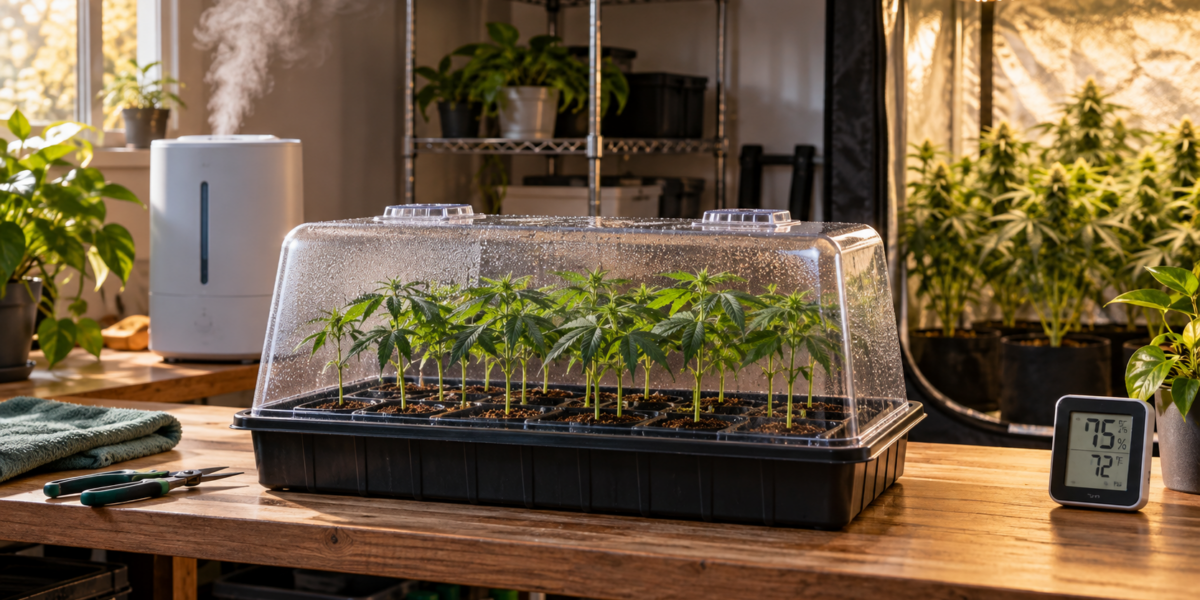
Best Grow Tent Humidifier: Why Young Plants Need More Humidity

Mars Hydro FC4000 vs Spider Farmer SE4500: Side-by-Side Test





Featured Grow
 Jul 2026 — White Iverson by Selfie Seeds +2 more
White Iverson × Selfie Seeds, Pink Strawberry × Selfie Seeds, Purple Berry × Selfie Seeds • Soil • Started Jul 25, 2026
View journal
Jul 2026 — White Iverson by Selfie Seeds +2 more
White Iverson × Selfie Seeds, Pink Strawberry × Selfie Seeds, Purple Berry × Selfie Seeds • Soil • Started Jul 25, 2026
View journal
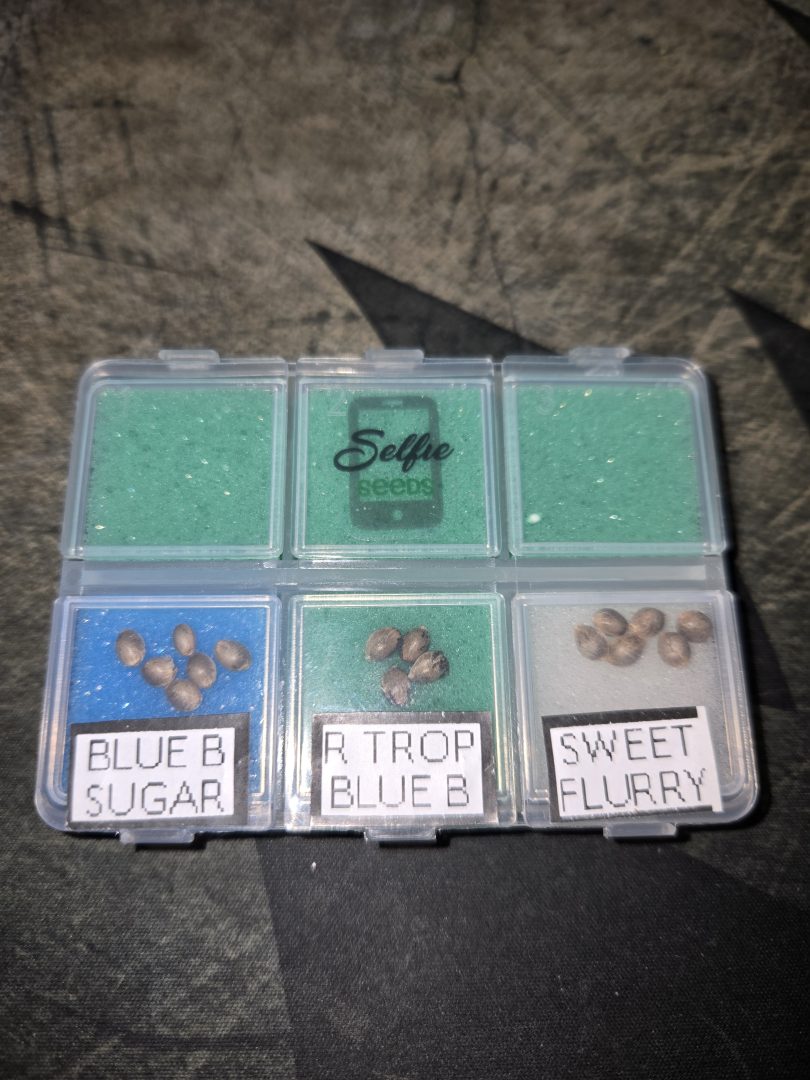 First Selfie Seeds Grow (Blueberry Sugar, Tropical Blueberry, and Sweet Flurry)
Blueberry Sugar × Selfie Seeds, Tropical Blueberry × Selfie Seeds, Sweet Flurry × Selfie Seeds • Soil • Started May 27, 2026
View journal
First Selfie Seeds Grow (Blueberry Sugar, Tropical Blueberry, and Sweet Flurry)
Blueberry Sugar × Selfie Seeds, Tropical Blueberry × Selfie Seeds, Sweet Flurry × Selfie Seeds • Soil • Started May 27, 2026
View journal
Awesome It’ll be a bit chlorophyllie but definitely let me know your opiniones

Walked in this morning before lights out and they are already bouncing back pretty good.
Awesome, fingers crossed for you
Nice LSTing Looks perfectly symmetric

Bananas!!!!! I knew I forgot something today. Thanks, gotta hit the store up in the am anyway. Coming off night,…