


Best Grow Tent Dehumidifier: Why Mini Units Fail

Quick answer: Skip the little $30–$50 mini dehumidifiers for an active grow. They may collect a few drops, but a living plant can put water into the air much faster than those small machines can remove it. For flowering plants, use a real compressor dehumidifier in the lung room—the room your tent pulls air from.
Why mini dehumidifiers do not keep up
Think about a cold soda can. Water appears on the outside because the cold surface turns moisture in the air back into liquid. Every dehumidifier is trying to do that—but they do not all have the same size engine.
Mini / Peltier
A small electric tile gets cold on one side and hot on the other. It is quiet and cheap, but the cold surface is tiny. It is better suited to a small curing cabinet than a tent full of living plants.
Desiccant
A moisture-grabbing material works like a reusable sponge. The machine then heats that material to dry it out. It can work in cold spaces, but it adds heat and is not my first choice for a normal home grow room.
Compressor
Uses refrigerant: This works like a refrigerator. A compressor makes a large coil cold, a fan pulls humid air across it, water drains away and the air passes over a warm coil before returning to the room. This is the type that can keep up.
People often say “Freon dehumidifier,” but Freon is a brand name. What you actually want to see is compressor, refrigerant and a real capacity measured in pints per day.
The science matches the common-sense result. The U.S. Department of Energy defines a consumer dehumidifier around a refrigerated evaporator, refrigeration system and fan. ENERGY STAR also rates capacity by the pints of water removed in 24 hours. A peer-reviewed thermoelectric study found that Peltier systems are less efficient than comparable compressor systems.
Your plant is constantly adding water to the air
A plant does not keep all the water you pour into the pot. It moves water through its roots and releases much of it through its leaves. That is called transpiration. In one controlled cannabis study, plant transpiration made up roughly 48% to 70% of measured evapotranspiration.
Your dehumidifier has to remove water faster than the grow adds it.
This is why a mini unit can have water in its tank and still be useless. It is like trying to empty a filling bathtub with an eyedropper.
Treat the lung room, not the tent
Your inline fan removes air from the tent and pulls replacement air from the surrounding room. If that lung room is sitting at 70% RH, the fan keeps feeding the tent more 70% RH air.
Dries the lung room
Pulls in drier air
Moisture is carried away
Lower the lung-room humidity first. Once that room is drier than the tent, the inline fan does the work of delivering that drier air to the plants. If your problem is dry air instead, use the grow-tent humidifier guide. The grow-tent airflow guide explains how intake and exhaust move that air.
Why the dehumidifier should stay outside the tent
A compressor dehumidifier dries the air, but it also gives off heat. Inside a tent, it steals plant space and can create one hot, dry area near the outlet while the middle of a thick canopy stays humid.
Spider Farmer states that its unit can raise the surrounding temperature by about 2–4°F on average. ENERGY STAR also warns that a working dehumidifier warms the room around it. Plan for that heat instead of aiming it directly at the plants.
Humidity matters most in late flower
Dense flowers trap humid air inside the bud where a room sensor may not see it. That gives Botrytis cinerea—bud rot—the exact environment it wants. British Columbia’s official cannabis pest-management manual warns that bud rot develops under high humidity and often begins inside the flower.
Do not wait until you see brown, collapsing buds. Read the HWGrow bud-rot prevention lesson for the plant-side warning signs and airflow steps.
The setup I recommend
- Place a properly sized compressor dehumidifier in the lung room with open space around its intake and exhaust.
- Set up continuous drainage so the machine does not shut off when its bucket fills.
- Keep a gravity drain hose running downhill without kinks.
- If there is no floor drain, use a low, wide and stable tote with enough reserve capacity. Keep it away from plugs and add a leak alarm if an overflow could damage the room.
- Use one hygrometer in the lung room and another near the canopy. Check both after watering and during lights-off.
The three dehumidifiers I would consider
These replace every product from the old comparison. Look at real pints-per-day capacity, drainage and controls—not a giant square-foot number on a marketplace image.
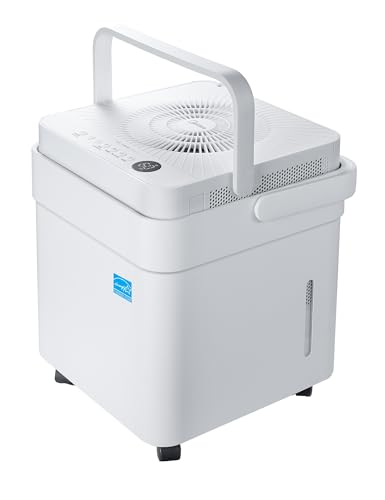 Midea Cube 50-pint with hoseSerious lung-room capacity with gravity-fed continuous drainage. Verify the exact model, seller and included hose before checkout.
 hOmeLabs 50-pint with pumpA strong room-size alternative when a built-in pump is more convenient than a gravity drain.
 Spider Farmer 32-pint compressor unitA compact compressor option with grow-room controls. Use it in the lung room without the hot-air tent adapter.
Affiliate disclosure: HWGrow may earn a commission from qualifying purchases at no additional cost to you. Product generations and sellers change, so verify the exact model, compressor design, rated capacity and drain method before buying.
Four things to check before buying
- Compressor and refrigerant: avoid “Peltier,” “semiconductor” or “ultra-quiet mini” wording for an active grow.
- Pints per day: this matters more than the advertised room size.
- Continuous drain: confirm whether it uses gravity or a built-in pump.
- Heat and restart: make sure the lung room can handle the extra heat and the unit restarts after an outage.
Sources
- U.S. Department of Energy: Consumer Dehumidifiers
- ENERGY STAR: Dehumidifiers
- Peer-reviewed thermoelectric dehumidifier study
- Peer-reviewed cannabis water-use and transpiration study
- Government of British Columbia cannabis pest-management manual
- Midea continuous-drain guidance
Archived: original 2022 test
The original article compared four mini dehumidifiers inside grow tents and ranked the old Breezome unit highest. That test is now archived because the products changed and, more importantly, the whole approach was too small for the moisture created by active plants. None of those original mini units are still recommended or linked here.
You may also like
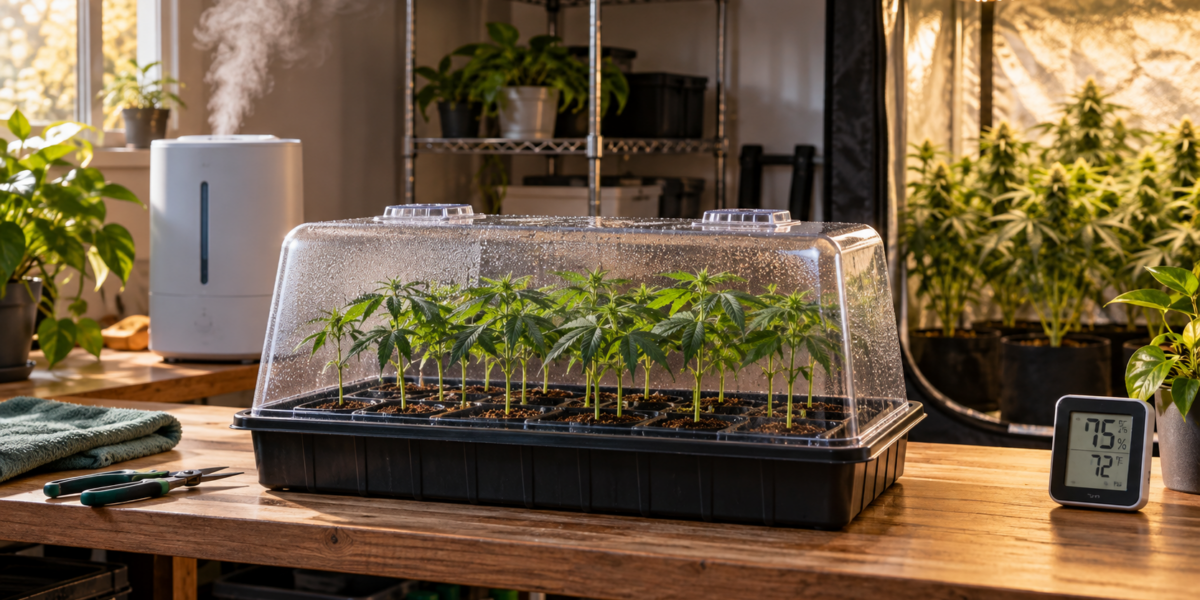
Best Grow Tent Humidifier: Why Young Plants Need More Humidity
How to Breed Masterclass – Promo Video

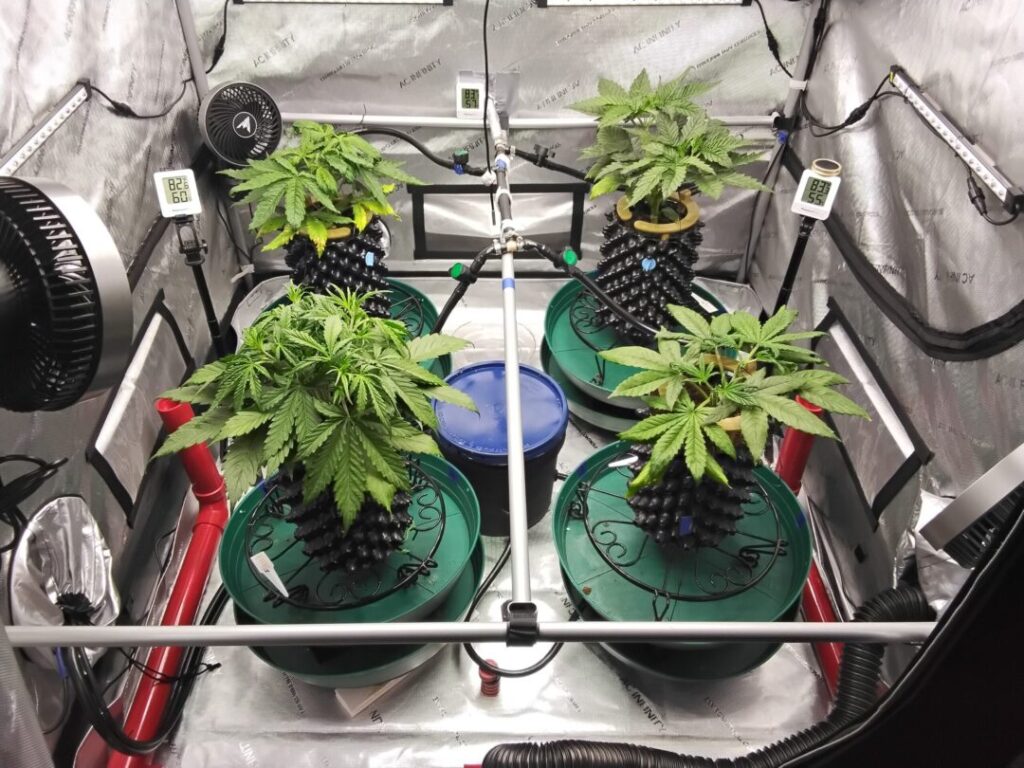



Featured Grow
 Jul 2026 — White Iverson by Selfie Seeds +2 more
White Iverson × Selfie Seeds, Pink Strawberry × Selfie Seeds, Purple Berry × Selfie Seeds • Soil • Started Jul 25, 2026
View journal
Jul 2026 — White Iverson by Selfie Seeds +2 more
White Iverson × Selfie Seeds, Pink Strawberry × Selfie Seeds, Purple Berry × Selfie Seeds • Soil • Started Jul 25, 2026
View journal
 First Selfie Seeds Grow (Blueberry Sugar, Tropical Blueberry, and Sweet Flurry)
Blueberry Sugar × Selfie Seeds, Tropical Blueberry × Selfie Seeds, Sweet Flurry × Selfie Seeds • Soil • Started May 27, 2026
View journal
First Selfie Seeds Grow (Blueberry Sugar, Tropical Blueberry, and Sweet Flurry)
Blueberry Sugar × Selfie Seeds, Tropical Blueberry × Selfie Seeds, Sweet Flurry × Selfie Seeds • Soil • Started May 27, 2026
View journal
Awesome It’ll be a bit chlorophyllie but definitely let me know your opiniones

Walked in this morning before lights out and they are already bouncing back pretty good.
Awesome, fingers crossed for you
Nice LSTing Looks perfectly symmetric

Bananas!!!!! I knew I forgot something today. Thanks, gotta hit the store up in the am anyway. Coming off night,…