Chlorine and Chloramine in Water for Cannabis Plants

Growing in soil? Follow the full step-by-step guide to growing weed at home, and keep the interactive grow cheat sheet open on your phone for every week’s settings and how-to videos.
We checked the nutrients. We checked the pH. The plants still kept falling apart. The clue wasn’t another bottle on the shelf. It was in the local water report: chloramine.
The video follows that frustrating case and the recovery after the water source changed. Here’s the part worth understanding before you blame your own tap.
Same job. Different chemistry.
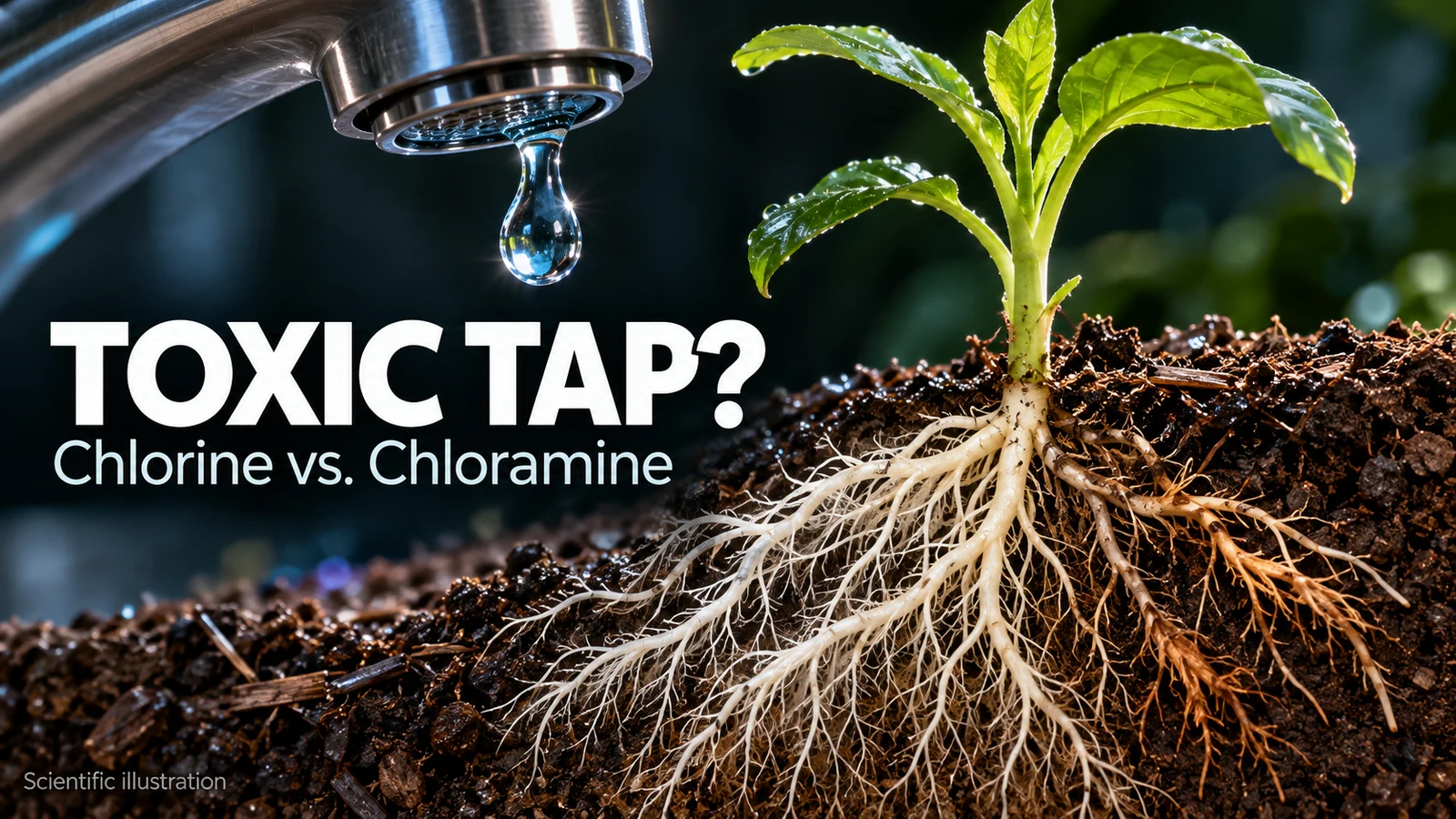
Water companies add disinfectants to control germs. Free chlorine and chloramine do that job differently. Free chlorine can decline as water stands, but chloramine lasts much longer. Leaving a bucket out overnight is not a reliable way to remove chloramine. [1] [2]
The chemistry isn’t as complicated as the names make it sound. Chlorine gas is Cl2, but in treated water, free chlorine is mainly HOCl and OCl−. Monochloramine is NH2Cl: one nitrogen, two hydrogens and one chlorine. That small change makes a big difference to persistence. [3] [4]
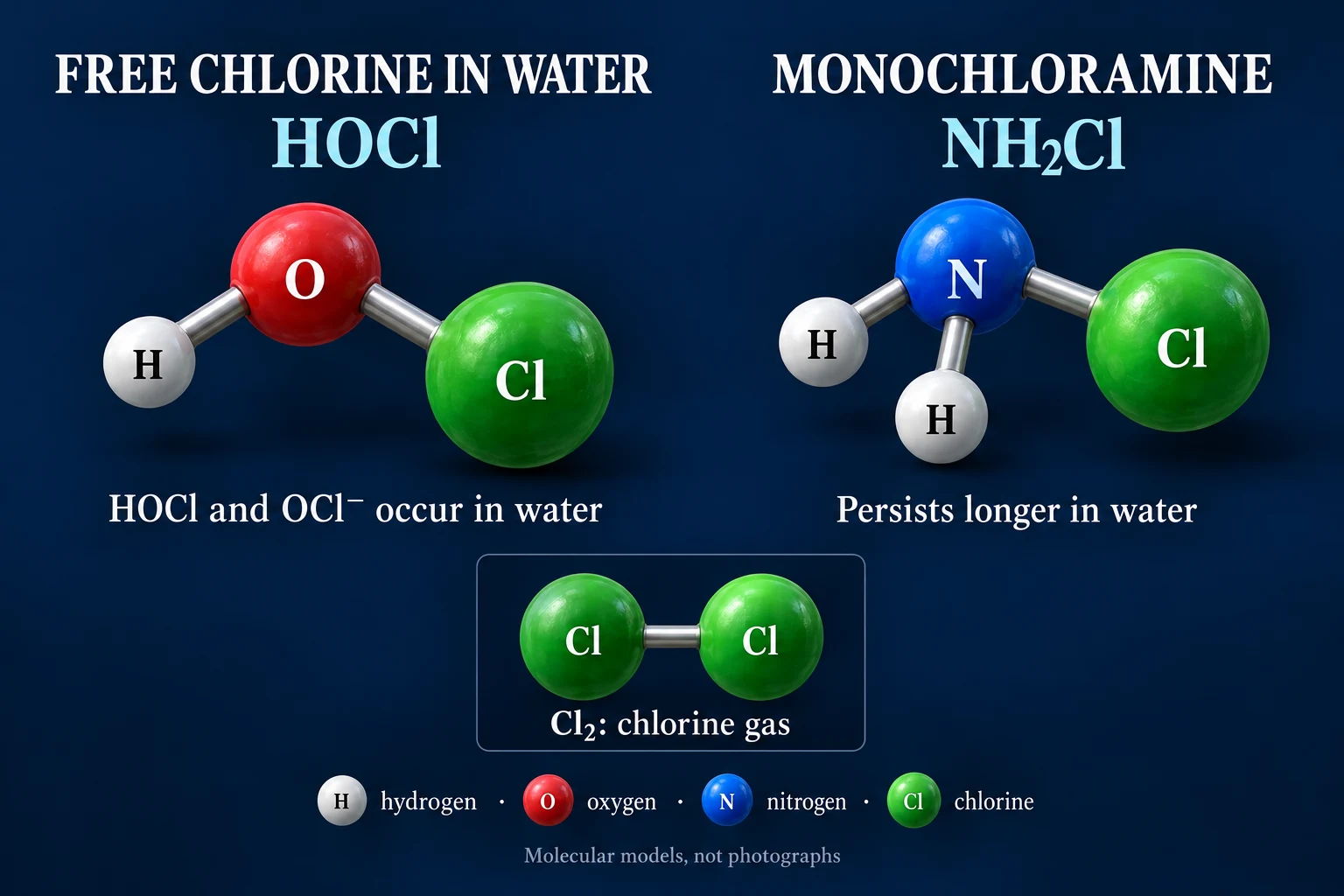
Simple solution: let chlorine dissipate
If your water uses free chlorine, letting it stand exposed to air can reduce it over time. People call this letting chlorine evaporate. However, Chloramine does not disappear this way. [9]
Peroxide reacts with free chlorine; it does not simply speed up evaporation. [10]
What happens around the roots?
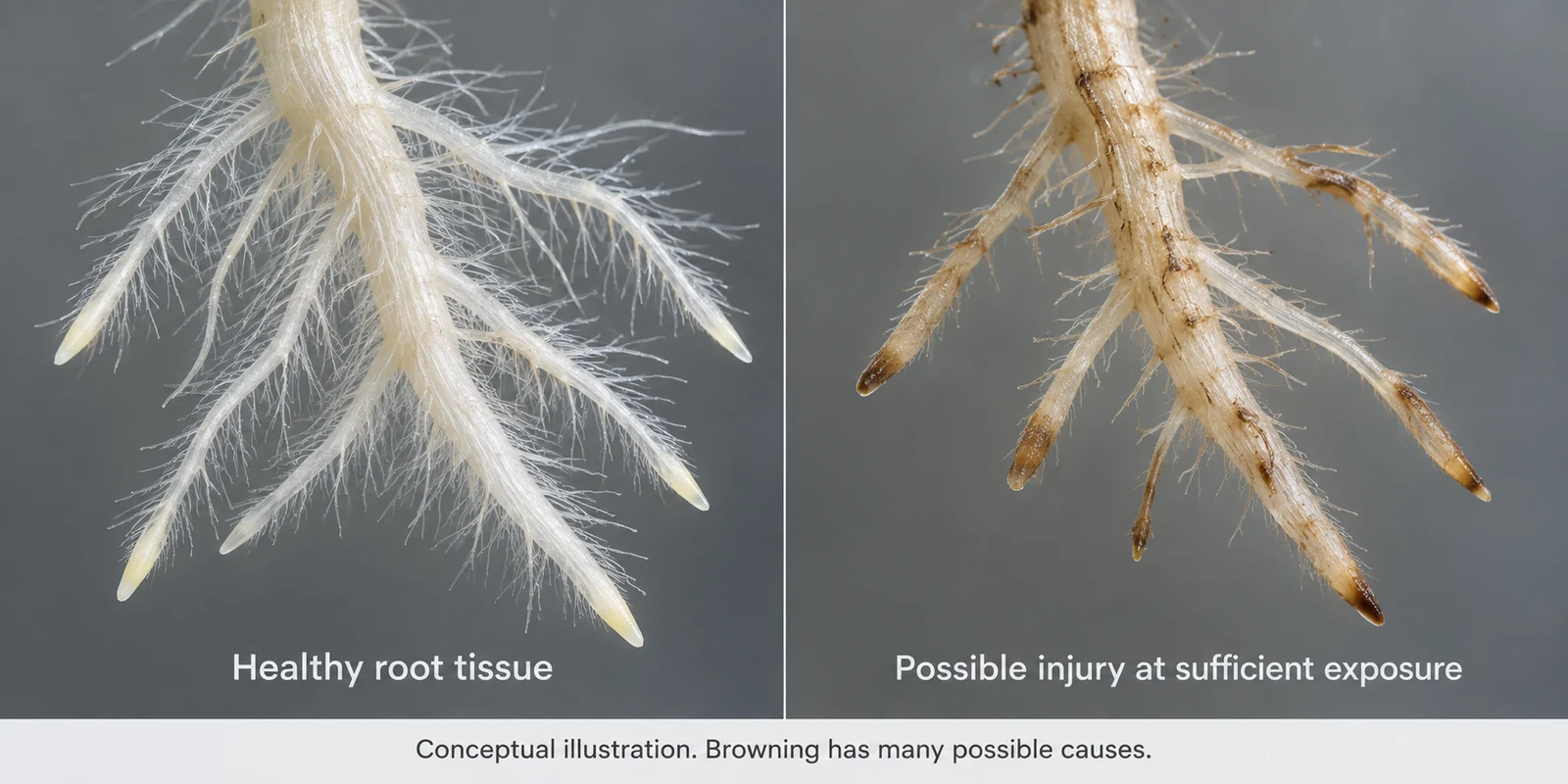
Disinfectants don’t know which microbes you want to keep. At sufficient exposure, they can damage microbial proteins and disrupt cell function. Roots can also be injured. Controlled hydroponic lettuce studies linked chloramine to root browning and reduced growth, with both concentration and exposure time affecting the result. [5] [6] [7]
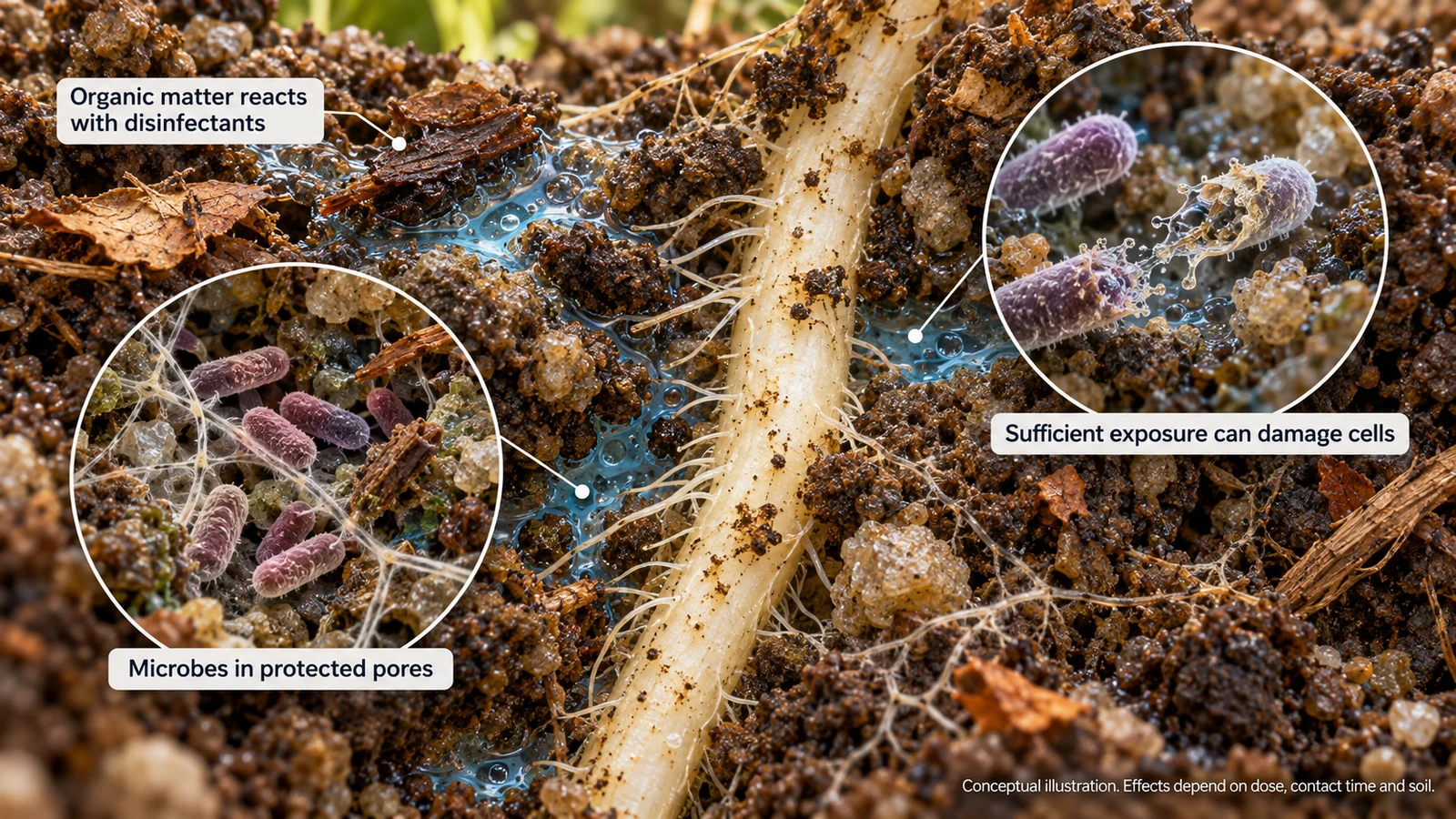
Soil changes the picture. Organic matter reacts with disinfectants, and microbes live in a complicated network of pores and surfaces. In a wheat-soil experiment, chlorine caused some microbial changes, but many responses recovered and the soil was not sterilized. Although chlorine may kill bad microbes, it does not discriminate and will kill good microbes as well. [7] [8]
Read the report before buying the fix
Start with your water utility’s current water-quality report and look for chlorine or chloramine. A test that measures free and total chlorine can help check what reaches your tap and what remains after treatment. A pH or PPM reading alone cannot tell you whether chloramine is present.
Find your local water report
Enter your ZIP, choose your water supplier, and read its report right here. Look for chlorine or chloramine.
Choose the name on your water bill. ZIP areas can overlap several suppliers. Private wells are not included.
Where the reports come from
Supplier choices use EPA service-area maps and Census ZIP-area maps. Reports come from the EPA directory and the supplier’s official website. Maps may be approximate and report links may be outdated. We show the report year when available, not a guarantee that it is the newest edition. Searches and reports are cached to keep the tool fast; this tool does not save a personal search history. If a report cannot open here, an official link appears.
For removal, check the exact product’s chloramine-reduction claim. Suitable carbon treatment or a compatible neutralizer can work, but not every filter has that capability. An RO membrane alone isn’t the answer; a complete RO system may depend on its carbon stages for this job. Follow the product label and verify the result. [2] [4]
My takeaway: don’t keep changing nutrients while ignoring the water they go into. But don’t diagnose chloramine from a brown root or a yellow leaf alone, either. This is one grower’s experience.
For the other numbers on that report, see the pH, EC and PPM guide. You can also return to the interactive cheat sheet.
Water-treatment products
 Chlorine/chloramine conditionerA simple small-batch option when the product label confirms compatibility with your grow system. Dose from the label and verify the treated water.View product
 Multi-stage RO systemUseful when hardness or source-water EC also needs to come down. Confirm the carbon stage is rated for chloramine and service it before capacity is exhausted.View product
Affiliate disclosure: HWGrow may earn a commission from qualifying purchases at no additional cost to you. Verify that any treatment product is rated for the disinfectant, flow rate and grow system you use.
Next in your grow
Before this step: How to Transplant Cannabis Without Shock
Next step: Cannabis pH, EC, PPM & Runoff: Complete Guide
Related: How to Water and Feed Cannabis in Fabric Pots · How to Mix Plant Nutrients in the Right Order · Hydrogen Peroxide for Plants: Uses, Risks and Safer Alternatives
Go deeper (supporter membership required): These advanced guides are for HWGrow supporters: Grow With Me – Day 29-41 – Blending Juices, Dunks, Responsive Feeding & Reading Leaves, LST. Become a supporter.
Want to watch this done step by step? The Grow With Me Masterclass follows one complete grow, day by day.
Jump to a part of the video
Choose a timestamp to play that section.
Sources and a note on the video
The water-source change in the video is what I saw in that grow. Keep the context above in mind on toxicity and reverse osmosis: dose matters, soil and hydro differ, and chloramine removal depends on the treatment system, not just an RO membrane. Water meeting drinking-water standards is not automatically unsafe for people. [2]
- U.S. EPA: Chloramines and drinking-water disinfection. Why chloramine is used and why it persists.
- U.S. EPA (2009): How can I remove monochloramine? Standing water, boiling, RO and certified removal claims.
- ATSDR (2010): Toxicological Profile for Chlorine. Cl2 versus HOCl and OCl− in water.
- Australian Drinking Water Guidelines: Monochloramine. Chemistry, persistence and treatment.
- Date, Terabayashi, Matsui, Namiki and Fujime (2002). Induction of root browning by chloramine in hydroponic lettuce.
- Date, Terabayashi, Kobayashi and Fujime (2005). Chloramine concentration, exposure time and hydroponic lettuce growth.
- CDC: Chemical Disinfectants, chlorine section. Microbial damage mechanisms and reactions with organic matter.
- Yu and colleagues (2023), Soil Ecology Letters 5:66–78. Assessment of residual chlorine in soil microbial communities using metagenomics.
- CDC: About Water Disinfection with Chlorine and Chloramine. Standing time, chloramine persistence and annual utility reports.
- U.S. EPA: Hydrogen Peroxide Supply Chain Profile. Peroxide as a dechlorinating agent.
The lettuce and wheat studies explain the mechanisms. All four new images are AI-generated scientific illustrations, not research photographs.
Updated October 22, 2026.


You may also like

AC Infinity SPECTRON 7 Review: Is the AI Camera Worth It?