

Hydrogen Peroxide for Plants: Uses, Risks and Safer Alternatives

Last updated: August 2026
Quick answer: Hydrogen peroxide can disinfect empty grow equipment and may suppress algae in a deliberately sterile hydroponic system, but it is not a routine plant tonic. It reacts quickly with organic matter, can injure roots and beneficial microbes, and cannot guarantee that a reservoir is pathogen-free. Use the labeled concentration for a specific job, never mix it with another cleaner, and fix the moisture, light leak or sanitation problem that allowed slime or algae to grow.
What hydrogen peroxide actually does
Hydrogen peroxide is H2O2: water with an extra oxygen atom. As it decomposes, it forms water and oxygen gas. Reactive oxygen species can damage membranes, proteins and other cell components, which is why peroxide can work as a disinfectant at the right concentration and contact time.
That reaction is not selective. The same oxidizing action that damages algae, bacteria and fungi can also stress root tissue and kill microbes you intentionally added. A quick dissolved-oxygen spike is also not a substitute for a correctly sized air pump, cool reservoir, clean plumbing and adequate circulation.
The CDC notes that commercial 3% hydrogen peroxide can disinfect inanimate surfaces, but disinfection still depends on concentration, contact time, surface cleanliness and material compatibility. A bottle from the first-aid aisle is not automatically labeled for every horticultural use.
First-party HWGrow demonstration—with current corrections
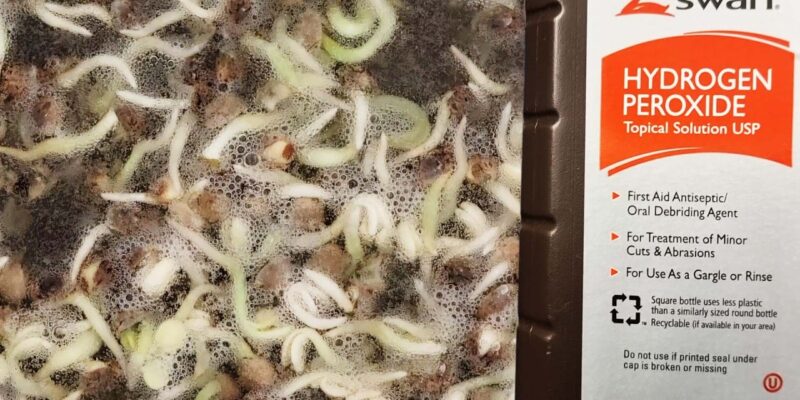
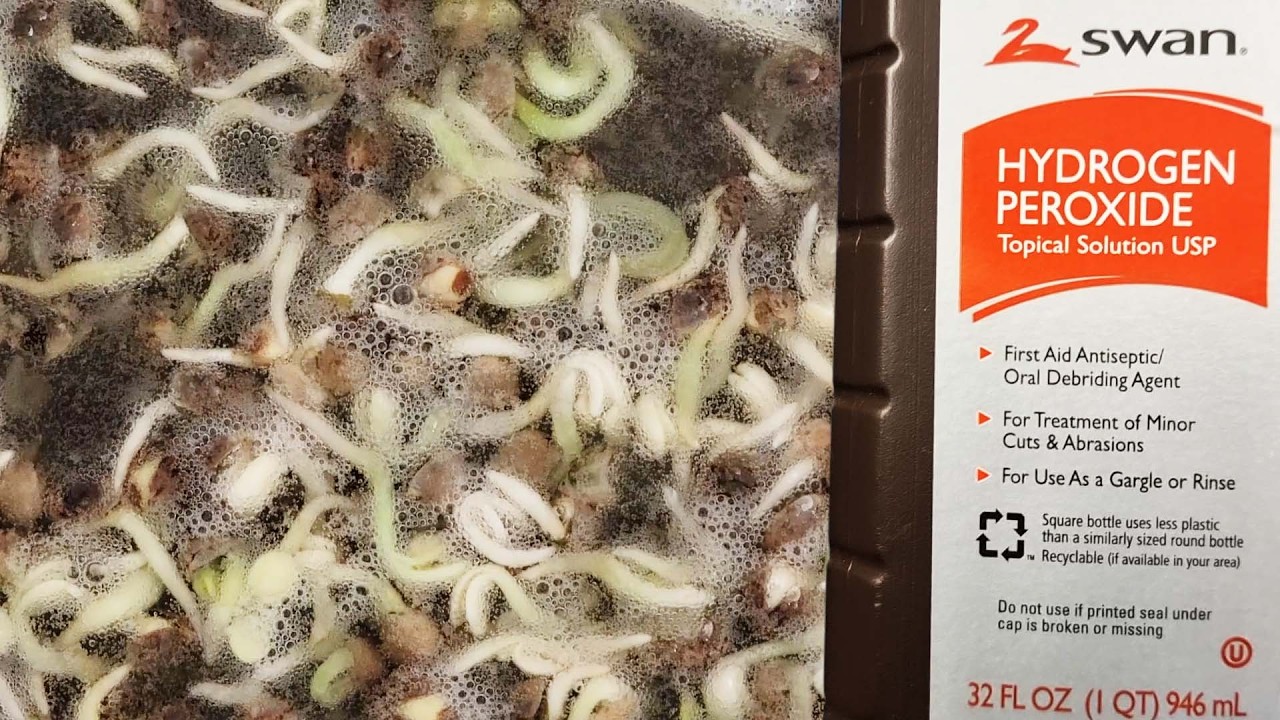
This video is the firsthand source for the visible fizz reaction and five common grow-room uses. The article adds important limits: there is no universal milliliters-per-gallon dose for every peroxide strength, crop or reservoir; peroxide does not keep water free of every pathogen; and seed treatment can reduce germination when the concentration or exposure is wrong.
Video chapters
- 0:00 — The fizz reaction
- 0:14 — What hydrogen peroxide is
- 1:01 — Free-chlorine discussion; test the water instead of using a universal dose
- 1:49 — Cleaning wet equipment and lines
- 2:14 — Surface algae and the conditions that let it return
- 2:38 — Sterile hydroponics; use a validated product-specific protocol
- 3:02 — Seed and starter sanitation; exposure must be validated
Selecting a timestamp starts the embedded video in the HWGrow pop-out player without moving the reader away from this section.
Five grow-room uses ranked by risk
| Use | When it may make sense | Main limit |
|---|---|---|
| Clean empty equipment | Between crops, after physically removing slime and debris | Use a product labeled for the surface and observe its contact time and rinse directions |
| Algae suppression in sterile hydro | A validated sterile-reservoir program with no beneficial inoculant | Dose depends on the formulation, system and organic load; roots can be injured |
| Surface-algae reset | Limited cleanup after correcting excess moisture and light exposure | Algae returns when the environment stays wet and illuminated |
| Free-chlorine reaction | Only when testing shows a treatment is needed | Does not create one universal recipe and should not be assumed to solve chloramine |
| Seed or plug sanitation | A crop-specific, tested protocol | Too much concentration or time can damage the seed or young tissue |
1. Cleaning empty reservoirs, lines and tools
This is the clearest public use. Drain the system, remove roots and visible biofilm, wash away debris, then use a disinfectant that is compatible with the material and labeled for the job. Keep the surface wet for the required contact time, rinse when directed and let the equipment dry before rebuilding the system.
Peroxide is not a substitute for physical cleaning. Organic debris consumes the oxidizer and can protect the contamination underneath. It can also discolor or damage some materials, so test compatibility before treating an expensive pump, seal or sensor.
2. Algae in a hydroponic reservoir
Research has shown that peroxide-based products can suppress algae and cause a short-term dissolved-oxygen increase in ebb-and-flow hydroponics. The same study found that oxygen rose after treatment and then declined over the following days. That is a temporary chemical effect, not permanent aeration.
Before reaching for a bottle, block light from the reservoir and tubing, remove the existing algae, lower excessive water temperature, clean the system and improve circulation. If the program uses beneficial bacteria or fungi, peroxide works against that biology. Choose a sterile or biological strategy; do not unknowingly run both.
This public guide intentionally does not publish a universal hydro dose. Household 3%, horticultural 12%, stabilized products and peracetic-acid blends are not interchangeable. The product label and a system-specific protocol must state the concentration, frequency, protective equipment and compatibility.
3. Green algae on potting mix
Algae on top of a pot is usually a symptom: the surface stays wet, receives light and has nutrients available. Peroxide may bleach or kill the visible layer, but the green carpet returns if the pot is still overwatered or poorly ventilated.
Scrape away the heavy layer, let the upper surface dry appropriately, correct the watering rhythm, improve gentle airflow and block unnecessary light from the medium. Use the fabric-pot watering guide to correct the condition instead of repeatedly oxidizing a living root zone.
4. Chlorine and chloramine in tap water
Hydrogen peroxide can react with hypochlorous acid, the active form of free chlorine. That chemistry does not justify a fixed household dose for every city, pH and water report, and it should not be assumed to remove chloramine. Search your ZIP code plus “water report,” identify the disinfectant and test the residual before treating anything.
The chlorine and chloramine water guide compares standing, activated carbon, conditioner and reverse-osmosis options without guessing from smell.
5. Seeds, plugs and young plants
Seed sanitation is a separate protocol, not a splash-and-hope step. The response changes with species, seed coat, peroxide strength and exposure time. A treatment that reduces surface contamination can also slow or prevent germination. Test a small expendable sample before treating valuable genetics, and never treat a germination method as sterile merely because it fizzed.
For the public beginner workflow, use the seven-way germination comparison. Breeding-specific seed cleaning remains in the protected breeding program.
Safety rules that are not optional
- Read the concentration. A 12% horticultural product is four times as concentrated as household 3% peroxide.
- Wear the label-required gloves and eye protection. More concentrated products can burn skin and eyes.
- Never mix peroxide with another cleaner or disinfectant. That includes bleach/chlorine products, acids, bases and unknown line cleaners. CDC guidance specifically warns that peroxide and bleach solutions may react violently.
- Keep it in its original opaque container. Light and contamination speed decomposition. Never reuse a food or drink container.
- Measure with dedicated tools. Do not put a used syringe back into the original bottle.
- Ventilate the work area and protect nearby people and pets.
- Do not create a sealed container where oxygen gas can build pressure.
- If a chemical gets in the eyes, on the skin or is swallowed, follow the label and contact Poison Control in the United States at 1-800-222-1222.
Frequently asked questions
Does hydrogen peroxide add oxygen to roots?
It can create a short-lived dissolved-oxygen increase as it decomposes, but the effect falls. An air pump, clean air stones, cool solution and circulation are the dependable long-term controls.
Can hydrogen peroxide prevent root rot?
It cannot guarantee prevention. Root disease management starts with temperature, oxygenation, sanitation, light control, plant health and a coherent sterile or biological strategy. A declining plant needs diagnosis, not a blind oxidizer dose.
Can I use peroxide in living soil?
Routine drenches work against the living biology that defines that system and can damage roots. Correct excess moisture, compaction and sanitation first.
Can I mix hydrogen peroxide with nutrients?
Only when the peroxide product and nutrient program explicitly allow it. Oxidation can change organic additives, chelates and biological inoculants. Never mix concentrates directly.
For a complete beginner grow sequence, start with the seed-to-harvest guide. For chronological member guidance without publishing paid recipes here, join the Grow With Me Masterclass.
Recommended peroxide-handling and oxygenation tools


Affiliate disclosure: HWGrow may earn a commission from qualifying purchases at no additional cost to you. Product labels, concentrations and material-compatibility instructions control every chemical use.
Evidence and safety references
- CDC: hydrogen peroxide as a chemical disinfectant
- CDC: never mix hydrogen peroxide and bleach solutions
- HortScience: peroxide products, algae and dissolved oxygen in ebb-and-flow hydroponics
- Journal of Hazardous Materials: hydrogen peroxide reaction with hypochlorous acid
- Poison Control: hydrogen peroxide exposure and concentration safety
You may also like
How to Prepare Fabric Pots and Grow Bags for Soil
How to Breed Masterclass – Promo Video


You have to bring it up to the targets listed in the chart.

i have a dwc 4 pot hydroponic system with no res… so how much juice do i put together i’m…
Hey! Please tell me the selfieseeds site is coming back up for at least a little bit?
Hi everyone, I'm building a new indoor grow and I'd like some advice from growers with real long-term experience. My…
What is the PPM for 3 gallons I’m new to all this and have no idea what I’m doing


