


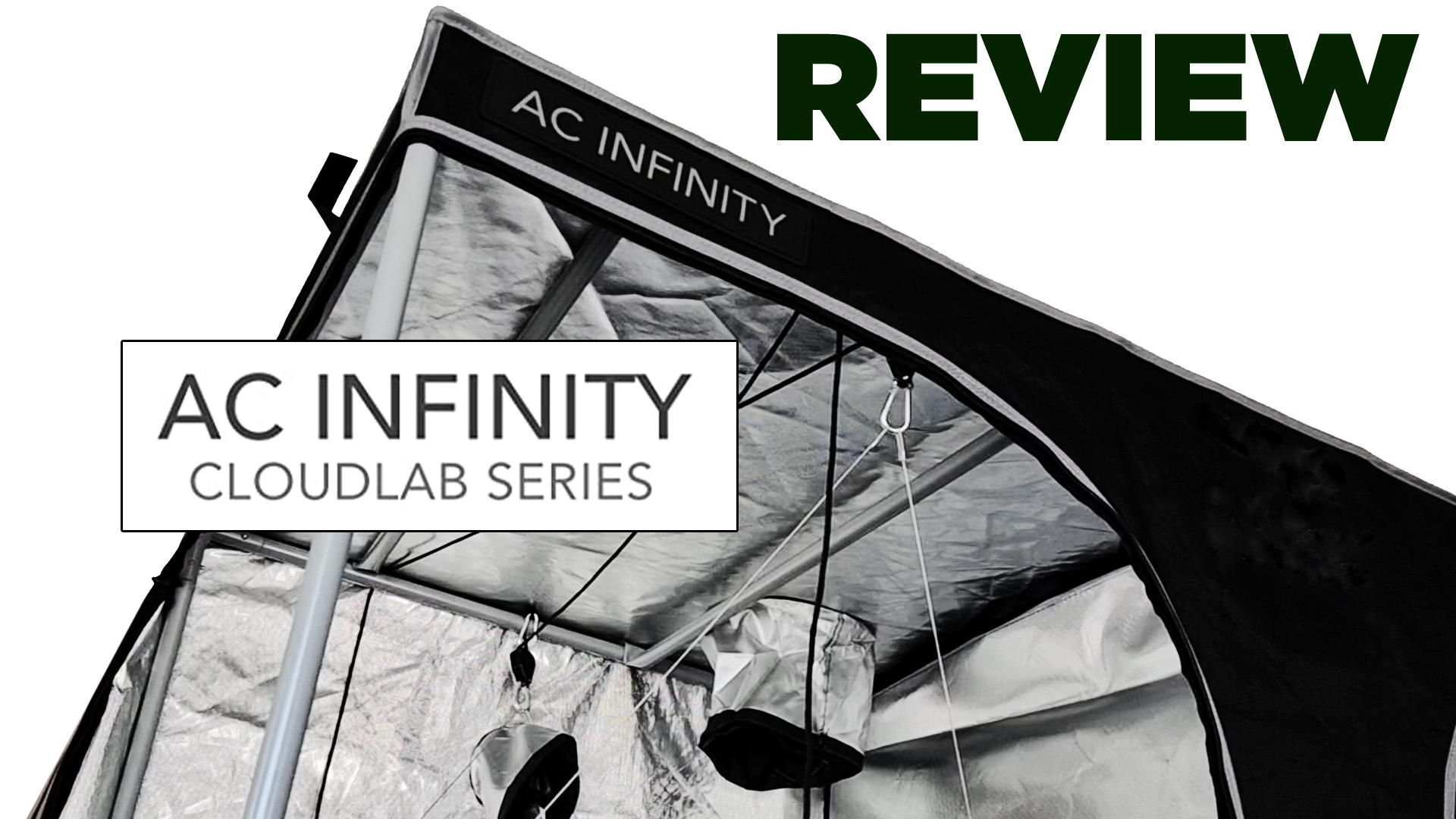
AC Infinity CLOUDLAB 743D Review: 2-in-1 Grow Tent

Short answer: the AC Infinity CLOUDLAB 743D solved a real space problem for me. Its main 3×3 chamber handled larger plants while the stacked side chamber kept smaller plants moving behind them. The tested tent felt sturdier than cheaper tents I had used, but the removable divider was fussy, could leak light and interfered with the spill trays.
Video chapters
- 0:05 — Why I bought the 743D
- 0:26 — Overlapping grow cycles in one footprint
- 0:44 — Mylar and puncture resistance
- 1:21 — Zippers and door straps
- 1:35 — Ports, poles and controller mount
- 1:58 — Divider problem
- 2:15 — Light leaks and loose tray edges
- 2:29 — Final space-saving verdict
Timestamp links open the standard HWGrow pop-out player at the selected moment without losing your reading position.
Who this tent layout is for
A divided tent makes sense when floor space—not equipment—is the limiting factor. I used the main chamber for larger plants and the stacked side for smaller stages, allowing one cycle to start before the previous cycle finished.
- Main chamber: roughly a 3×3 growing area on my tested 4×3-foot overall footprint.
- Side chamber: two stacked shelves for seedlings, clones or short vegetative plants.
- Separate equipment: every chamber needs appropriate light, air movement and environmental monitoring.
- Height limit: the small shelves work only while plants and lights fit safely within their reduced clearance.
- Light isolation: inspect the removable divider carefully if chambers will run different light schedules.
Assembly and material notes
The heavy poles were the first quality difference I noticed. Pair the frame pieces until their spring buttons click, lay the shell flat if the room allows it, then work the assembled frame into the canvas without forcing a sharp corner. I found it easier to add the shelves after the main shell was positioned.
The reflective lining and exterior fabric felt heavier than several tents I had owned, but “thicker” does not mean puncture-proof. A dropped 35-pound light punctured my removable spill tray. Keep sharp hardware away from the shell and use a second person when hanging heavy equipment.


The divider is the main compromise
The optional divider uses hook-and-loop material, so the alignment must be patient and exact. A small gap can pass light between chambers. The divider also covers frame sections used to secure the spill trays, leaving their inner edges looser than I wanted.
Before trusting different photoperiods, close the room, run the brighter chamber and inspect the darker side from every angle. Also confirm that each chamber can exchange or exhaust enough air; three physical sections do not automatically create three controlled environments.
AC Infinity’s current CLOUDLAB 743D page lists today’s model as 48×36×72 inches with a removable wall and tray. The current CLOUDLAB manual should be the final authority for assembly and load instructions.
AC Infinity savings: If you buy from AC Infinity directly, use code EVYGROWS at checkout for additional savings on eligible products.
Useful tent-planning gear
 Divided grow tentVerify the exact current dimensions, included shelves and return policy.Check Current OptionsCompact circulation fanEach occupied chamber needs gentle air movement without losing plant clearance.Check Current PriceMultiple temperature/RH sensorsMeasure each compartment instead of assuming they share one climate.Check Current Options
Affiliate disclosure: HWGrow may earn a commission from qualifying Amazon purchases at no additional cost to you. Equivalent current products can replace these links without changing the setup method.
Continue with the grow-tent fan and filter setup guide and the complete beginner grow guide. Need help deciding whether divided chambers fit your timeline? Ask HWGrow with your available floor space and plant stages.
Frequently asked questions
What size is the CLOUDLAB 743D?
The current manufacturer listing identifies it as a 4×3-foot overall tent measuring 48×36×72 inches. Verify the exact current listing before ordering.
Can the side chamber run a different light schedule?
That is the intended use, but inspect the removable divider for light leaks and plan separate lights, airflow and environmental sensors.
What was the biggest problem in the test?
The divider required careful alignment, could pass light and blocked one secured edge of the spill trays.
Is a divided tent better than two tents?
It saves floor space, but it also concentrates equipment and reduces flexibility. The better choice depends on your room, plant height and cycle plan.
Comments
Leave a reply
You may also like

Best Grow Tent Configuration: Plants, Watts, Fans and Layouts for 2×2 to 5×5

Mars Hydro FC4000 vs Spider Farmer SE4500: Side-by-Side Test




Featured Grow

Looking healthy
Shared a GIF.
kind of looks a little too dry for my liking
of course you will

Growing the Purple Berry's now, hope I do her justice.
How would you manage to create 2 environments in this tent? One for photo flowering amd the other seedling/veg. I’ve looked at the bigger model so I could have a 4×4 flowering space but wasn’t sure if I’d need 2 inline fans and filters which would be too costly. I’d rather have 2 tents to avoid any 2in1 issues if that was the case.
no, its impossible because devices will take up the whole small space