

Best Mason Jars for Curing Cannabis: Size, Color & Lids

Quick answer: For a normal home harvest, I still prefer a wide-mouth glass jar with a truly airtight lid. Amber glass is convenient because it reduces light exposure, but clear glass stored in a dark cabinet works too. The wide mouth matters every time you inspect, rotate or remove flower; the old narrow-mouth jars were the first ones I wanted to stop using.
Watch the five-jar HWGrow comparison
This video is the main source for the practical recommendations below. I compared 32-ounce, 64-ounce and gallon containers, clear versus amber glass, regular versus wide mouths and different lid styles. The prices and stores shown in the 2021 recording are historical; the jar features are the useful part.

The five features that actually matter
1. An airtight, replaceable closure
A pretty jar with a poor seal is just a glass container. Check the lid, gasket or canning ring for damage, clean the mating surfaces and verify that the closure stays tight. Replace rusted metal, cracked glass and worn gaskets instead of trusting them with a finished harvest.
2. A wide mouth
This was the biggest day-to-day difference in my comparison. A true wide mouth lets you reach the bottom without crushing flower against the neck. Standardized mouths also make compatible replacement lids and accessories easier to find.
3. Protection from light
Amber glass adds a layer of protection when a jar may sit in a lit room. It does not make the jar sunlight-proof, and it does not replace cool, dark storage. A four-year cannabis storage study found that light and temperature changed cannabinoid degradation; the older classic storage study likewise identified light as a major loss factor. See the four-year storage study and the earlier controlled storage work.
4. A size you can monitor
One giant jar is convenient until one wet pocket or mold problem affects the whole batch. Smaller jars divide the risk and make comparison easier. Larger containers reduce the number of lids you manage, but they are heavier, harder to mix gently and more expensive to lose if a problem develops.
5. Clean, food-contact-friendly material
Glass is easy to inspect and clean, does not hold odors like scratched plastic can, and avoids the static cling I saw with some plastic containers. Wash and completely dry every jar before use. Keep broken, chipped or strongly scented containers away from flower.
Which jar size should you buy?
| Container | Best use | Main tradeoff |
|---|---|---|
| 32 oz / quart | Small batches, cultivar separation and easy inspection | More lids and more individual readings to manage |
| 64 oz / half gallon | The balance I preferred in the video: useful capacity with reasonable access | Amber wide-mouth versions can be harder to find |
| 1 gallon | Already-stable bulk flower when you are willing to inspect the full load carefully | More material shares one humidity problem; clear versions must stay dark |
Do not jam a jar to the lid. Leave enough room to inspect and gently redistribute the flower without grinding it against the glass. The correct load is the one you can monitor safely—not the maximum weight you can physically force inside.
Do you need amber glass?
No. Amber is the convenience upgrade; darkness is the requirement. If your jars live inside an opaque cabinet or sealed tote, ordinary clear Ball-style jars can do the job. If they may remain on a shelf, amber glass reduces accidental exposure and makes the storage rule easier to follow.
Humidity packs come after the cure
HWGrow’s controlled humidity-pack test showed that a pack can move a sealed jar toward its labeled range, but every pack has a finite amount of moisture it can absorb or release. Once that capacity is reached, it cannot keep correcting the container. Stabilize the cure first; add a correctly sized pack afterward only for maintenance.
Recommended jar-storage tools
 Wide-mouth glass jarsChoose an airtight closure and a size you can lift, inspect and clean. Amber is helpful; clear glass belongs in a dark cabinet.View product
 Mini jar hygrometersCompare the sensors before use, then monitor representative containers instead of guessing from how the outside of a bud feels.View product
 Humidity packs for maintenanceOptional after the flower is cured and stable. Match the pack capacity to the load and replace it when exhausted.View product
Affiliate disclosure: HWGrow may earn a commission from qualifying purchases at no additional cost to you. Verify size, mouth diameter, closure type and seller before buying; equivalent food-safe products can be substituted.
Cannabis storage jar FAQ
Are amber mason jars better for cannabis?
They are more forgiving when a jar may be exposed to room light. Clear glass stored in a truly dark place can work just as well.
Is a 32-ounce or 64-ounce jar better?
A quart jar divides the harvest into smaller, easier-to-isolate batches. A half-gallon jar holds more while remaining easier to reach into than most gallon containers. Choose the size you can monitor and gently redistribute.
Should I use plastic containers?
Glass is easier to inspect and clean and is less prone to static cling. If plastic is used, it should be clean, undamaged, food-contact appropriate and paired with a reliable airtight closure.
Can a humidity pack cure cannabis in the jar?
No. A pack has finite capacity and should be added only after drying and curing have stabilized the flower.
Next: use the complete curing guide for the full workflow, or ask HWGrow with the jar size, flower weight, temperature and sealed-container reading.
Comments
Leave a reply
You may also like
PRO-MIX HP Review: What the Lab Test Actually Says

Making the Strain: Pink Panty Cream, Episode 1 | Defining Desire

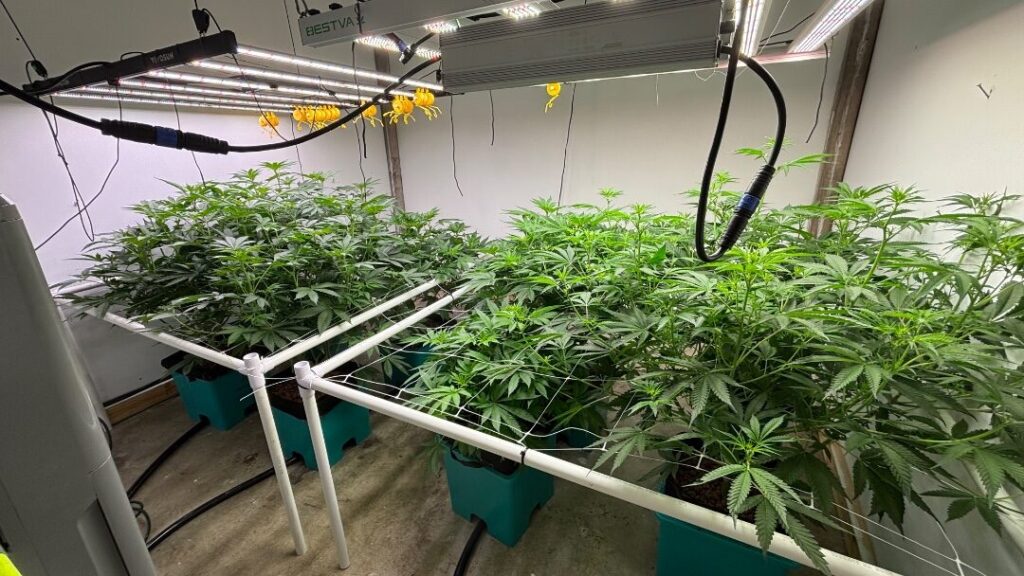


Featured Grow

Mine wasnt that bad, i am low rate afib so just swing between 95 and high as 150 sometimes, up…
Yeah not fun, but as long as it helps thats what matters. Had my heartrate 200+bpm in the hospital for…
Tupac mine is for afib. Just Had cardio version the other week to get me out of it, worst case…
I was hoping for one at least that check the box's, but ya, having a couple is that much better.…
Heart cath ablation? Had one of those for Super Ventricular Tachycardia and it worked well
Are you going to start a new YouTube channel
Not until it’s fully legalized and I don’t have to be paranoid all the time. This whole experience has been extremely unhealthy for me so I’m just posting here in the future.
I appreciate the time you put into all of this I’ve learned a lot from your experience TY brother
anytime bro