


FAMURS TF3000 LED Grow Light Review: My 2022 PPFD Test

Short answer: the FAMURS TF3000 I tested in 2022 looked better than it performed. In my tent, the center barely passed 900 µmol/m²/s and the outside area was around 350. That was not the even flowering footprint I expected, so I returned the fixture instead of using it for the planned grow.
Video chapters
- 0:00 — Why I questioned the old PPFD map
- 0:08 — The planned 4×3 grow
- 0:22 — Dimmer and included hanger
- 0:31 — Center PPFD result
- 0:39 — Outer-footprint result
- 0:52 — Why I returned it
Timestamp links open the standard HWGrow pop-out player at the selected moment without leaving your reading position.
The real problem was the footprint
A center reading above 900 can sound impressive when it is isolated from the rest of the tent. The outer reading around 350 changed the decision. Plants do not live at one bright point, so I care more about the complete canopy map than the maximum number in the middle.
The supplied hanging hardware also made the setup harder than it needed to be. One rope clip gives poor control over a wide rectangular fixture. Four independently adjustable corners are much easier to level and keep at a repeatable height.

What I would verify before buying a current light
- Exact wall draw: ignore equivalent-wattage names and verify consumption at the wall.
- Full PPFD map: require distance, footprint and readings across the edges—not one center number.
- Generation and parts: a diode-family claim does not describe diode count, current, driver, board layout or cooling.
- Safe hanging: plan for four independently adjustable corners on a wide fixture.
- Return terms: save the listing and test promptly while the return window is open.
Samsung’s lighting catalog illustrates why the LED package is only one part of a fixture. The FTC’s advertising guidance says objective performance claims should be truthful and evidence-based. A practical buyer should still verify the complete fixture.
Use the current LED grow-light selection guide for the measurement workflow and the State of Indoor Grow Equipment before trusting an old model name.
Useful verification tools
Current LED light categoryCompare the exact generation, wall draw and complete footprint.View productAffiliate disclosure: HWGrow may earn a commission from qualifying Amazon purchases at no additional cost to you. Equivalent current items can replace these links without changing the testing method.
Frequently asked questions
Was the FAMURS TF3000 bright enough for flowering?
My unit had enough intensity near the center, but the outer reading around 350 did not give me the even flowering footprint I wanted for the planned tent.
Does the Samsung LM301H claim guarantee performance?
No. Diode count, current, board layout, driver, cooling and fixture size all affect the finished result.
Should I use one PPFD reading to compare lights?
No. Measure a grid at a fixed height across the complete canopy and compare the average, minimum and uniformity.
Would you buy this old TF3000 again?
No. Based on the unit I tested, I returned it. That verdict should not be transferred automatically to a different current model.
You may also like
PRO-MIX HP Review: What the Lab Test Actually Says

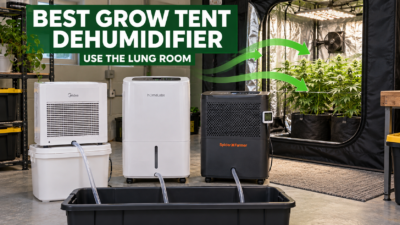
Best Grow Tent Dehumidifier: Why Mini Units Fail

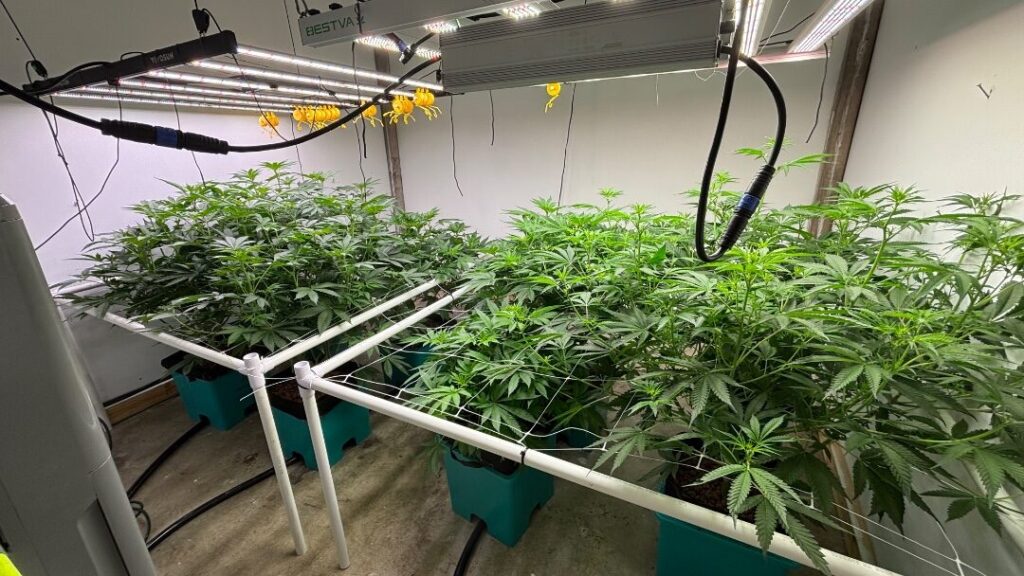


Featured Grow

Mine wasnt that bad, i am low rate afib so just swing between 95 and high as 150 sometimes, up…
Yeah not fun, but as long as it helps thats what matters. Had my heartrate 200+bpm in the hospital for…
Tupac mine is for afib. Just Had cardio version the other week to get me out of it, worst case…
I was hoping for one at least that check the box's, but ya, having a couple is that much better.…
Heart cath ablation? Had one of those for Super Ventricular Tachycardia and it worked well