Why Cannabis Leaves “Sweat”: Transpiration, Humidity and Healthy Clones

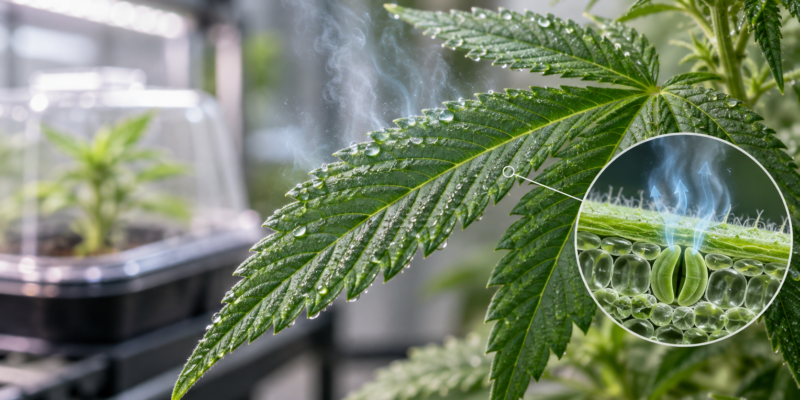
Quick answer: Plants do not sweat the way people do. They release invisible water vapor through tiny pores in their leaves. That process—transpiration—helps move water and minerals through the plant and is one reason a tent gets more humid as plants get larger.
Transpiration in one picture
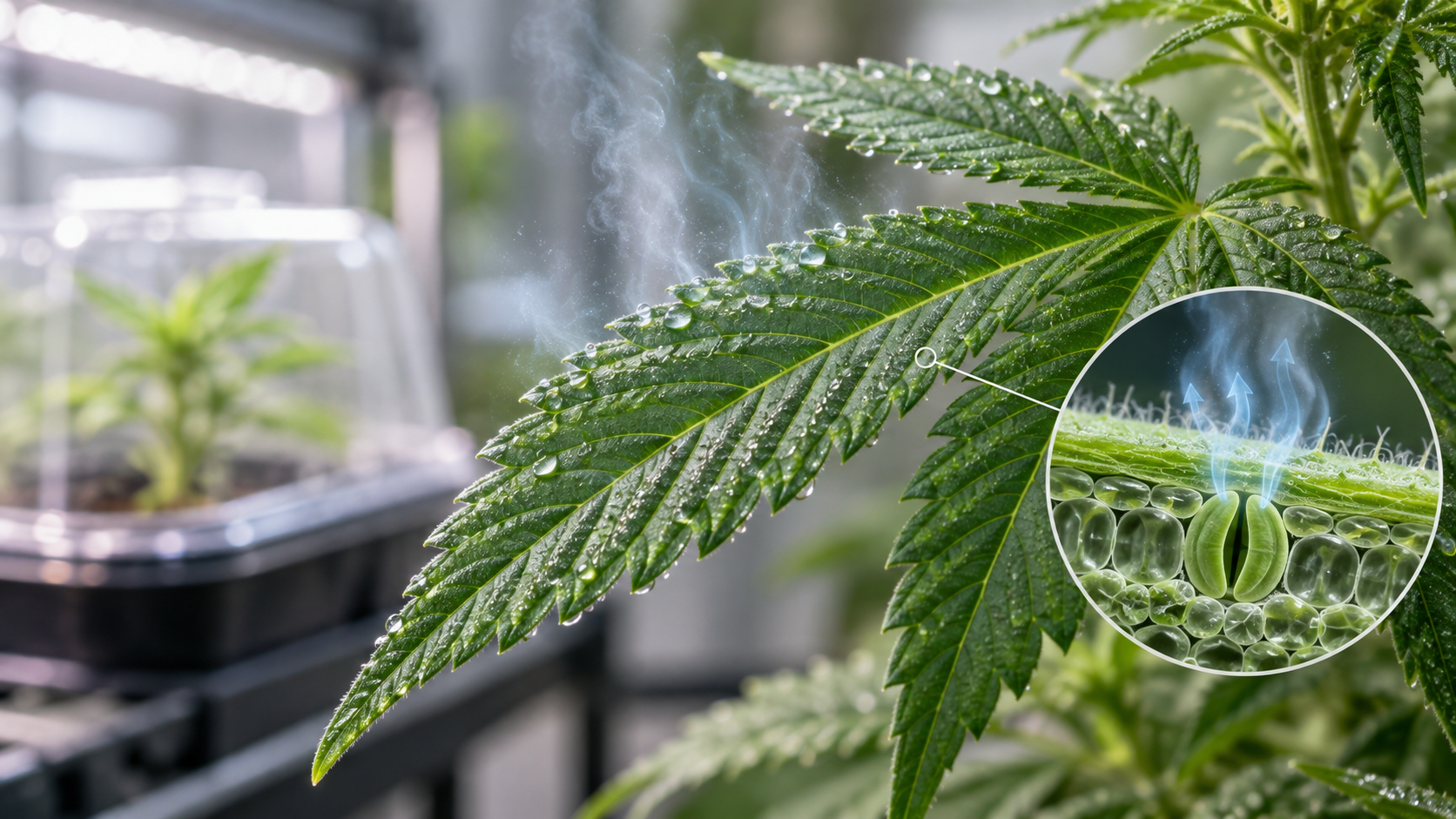
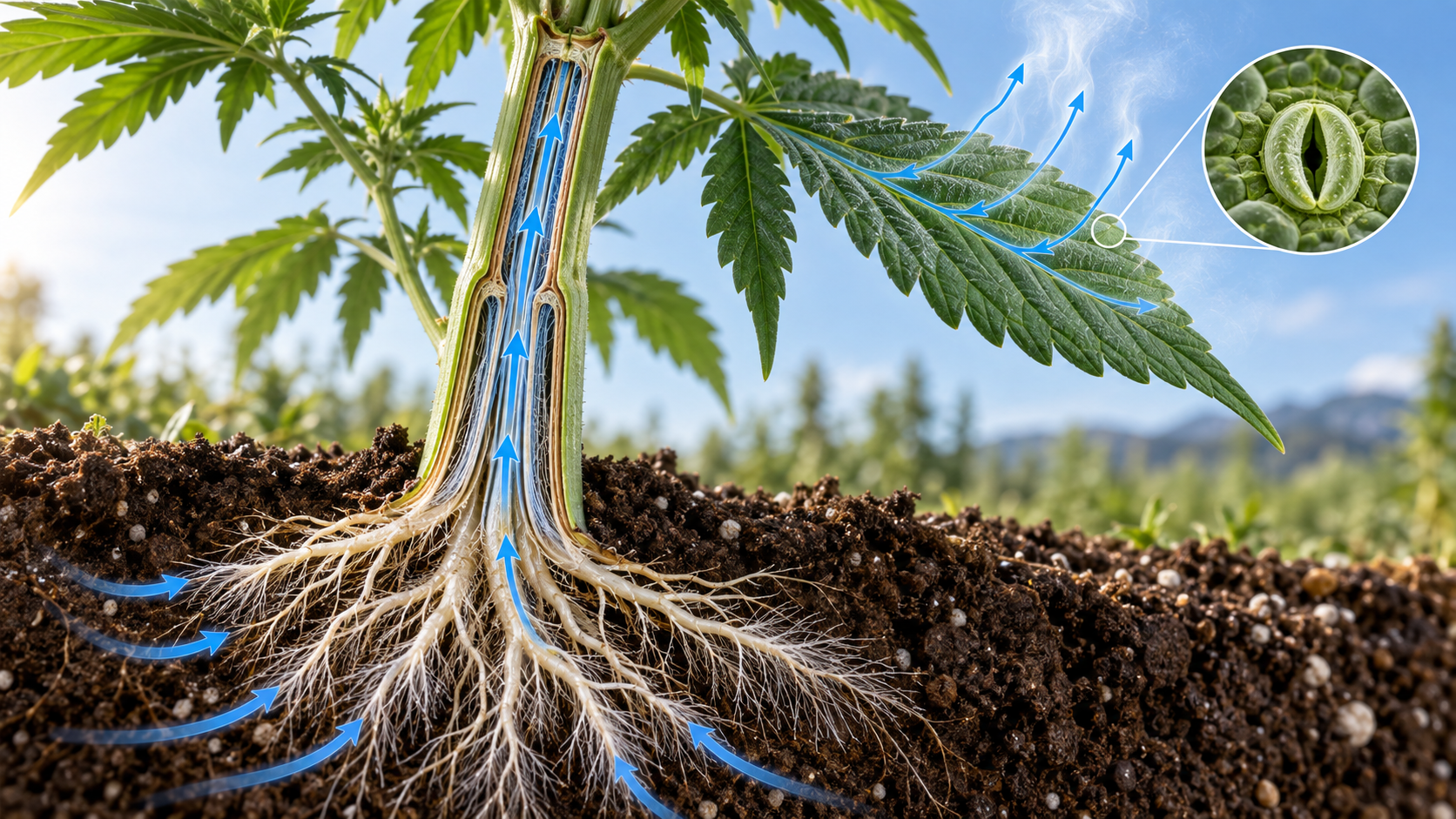
Imagine drinking through a long straw. Evaporation from the leaf helps pull the water column upward. Stomata open and close in response to light, carbon dioxide, water status and the surrounding air. When the air is warm and dry, it can pull water from the leaf faster. When the air is more humid, that pull is gentler.
Why clones need higher humidity
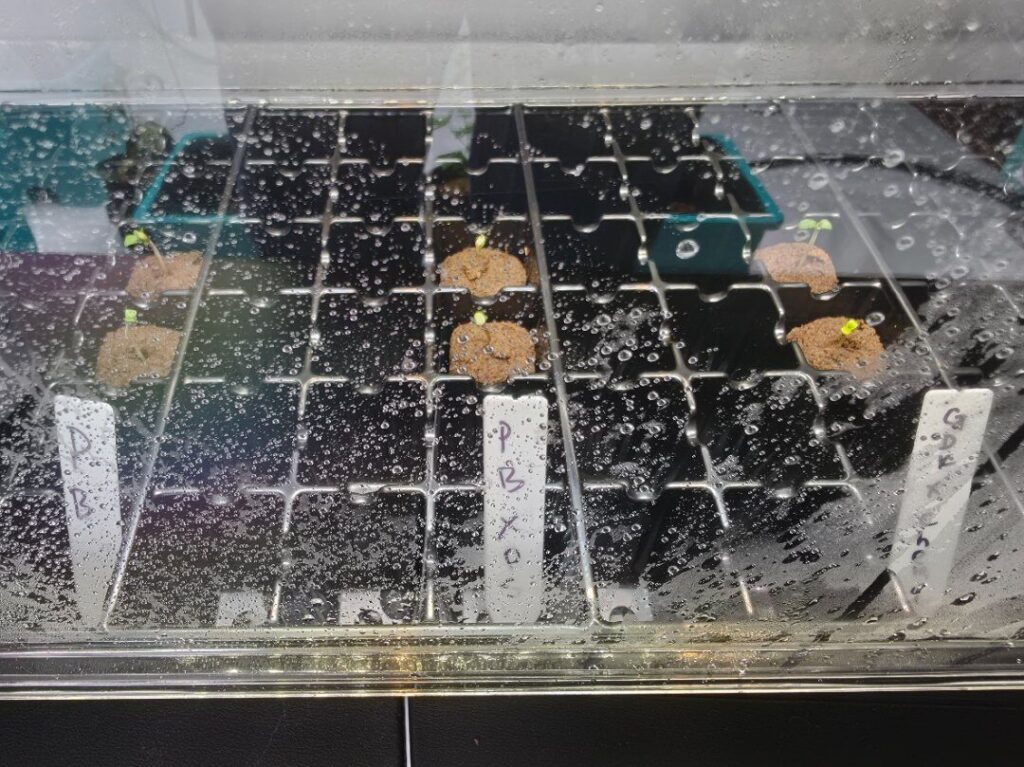
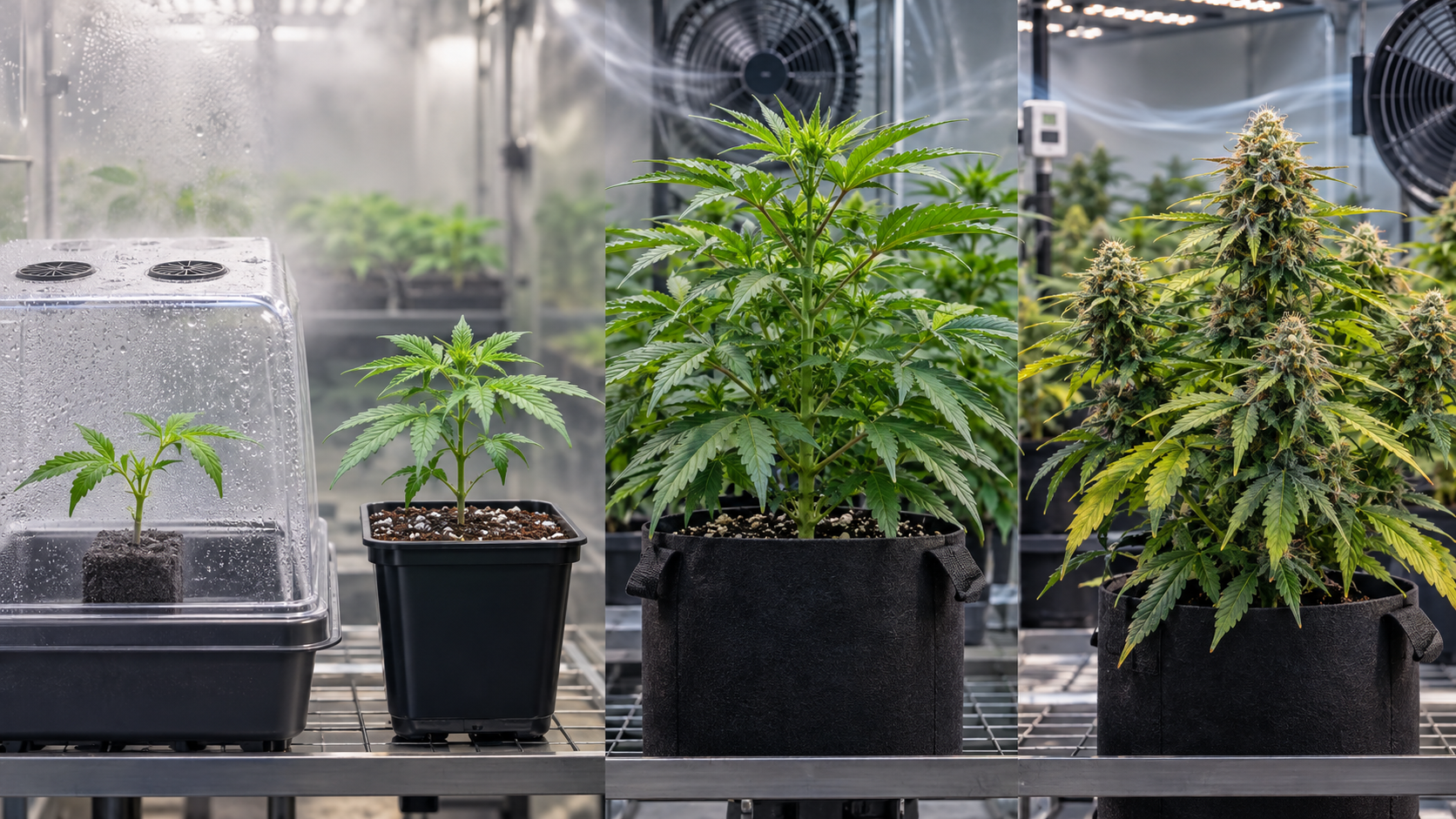
A fresh cutting still has leaves losing water, but its roots have just been removed. Until new roots form, the cutting has no reliable way to replace what the leaves lose. Higher humidity reduces that imbalance. This is why a propagation dome can save a cutting that would wilt in the same room without it.
Fresh cutting
No functional roots. Use high humidity, gentle light and fresh-air exchange so leaves stay hydrated without sitting wet.
Rooted clone
New roots are fragile. Open vents and reduce humidity in steps while watching for droop.
Established plant
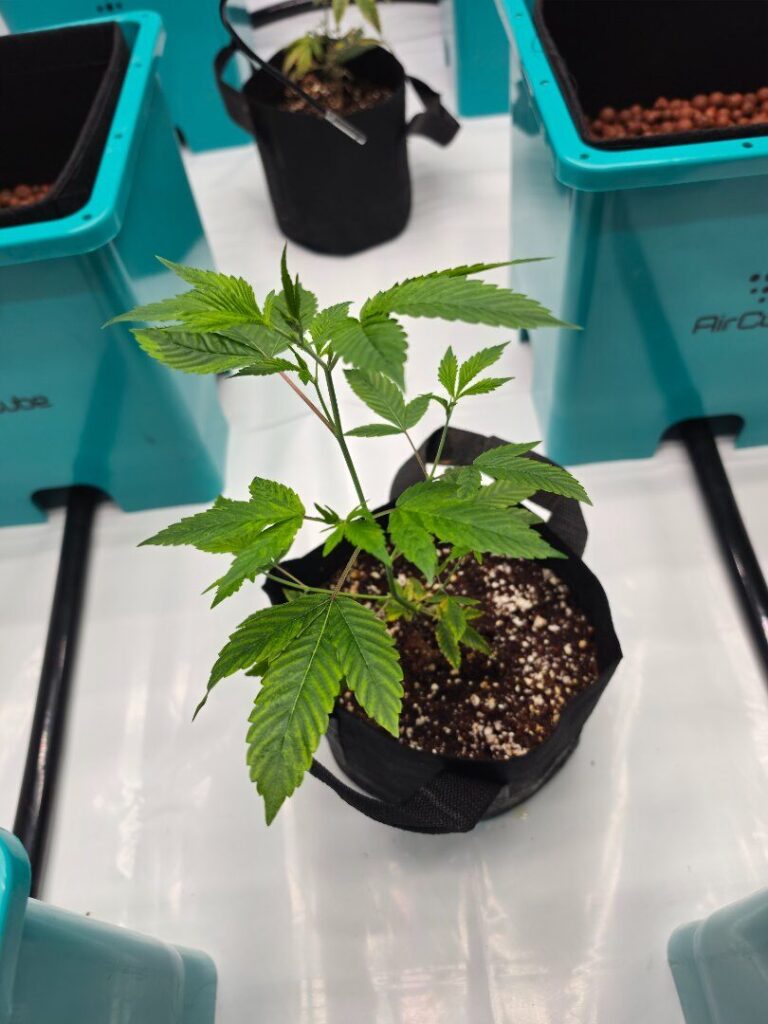
More roots and more leaf area. It can handle stronger drying pressure, but it also adds far more moisture to the room.
The UMass Extension guidance for unrooted cuttings emphasizes preventing wilt while avoiding saturated media. The University of Florida similarly explains that high humidity reduces water loss during propagation.
Why humidity should fall as the plant matures
Once roots are working, keeping the room extremely humid creates a new set of problems. Water evaporates more slowly from leaves and growing media. Condensation can form on cool surfaces. Dense canopies trap wet air, and flowers can stay damp inside even when the room sensor looks acceptable.
Dome protects leaves → roots appear → vents open → room humidity steps down → airflow steps up → plant manages normal transpiration
The goal is not to “harden” a plant by shocking it. The goal is to reduce humidity slowly enough that roots can take over. Open a propagation dome in stages. Watch how quickly the leaves recover after each change. If they collapse, the change was too large or the root system is not ready.
VPD without the headache
Vapor pressure deficit, or VPD, describes how strongly the air can pull water from a leaf. Hotter or drier air usually increases that pull. Cooler or more humid air usually reduces it. Leaf temperature matters, so a chart based only on room temperature can still mislead you.
You do not need to worship one decimal point. Use VPD as a way to connect temperature and humidity, then verify with the plant: leaf posture, irrigation rate, root development, condensation and overnight humidity all matter.
What “leaf sweating” can really be
Water beads on leaves can come from several sources:
- Condensation: humid air touches a cooler leaf and turns into liquid.
- Guttation: root pressure pushes liquid through leaf-edge hydathodes, often at night.
- Mist or splash: a humidifier, foliar spray or watering event deposits droplets.
Transpiration itself is normally invisible vapor. If leaves stay visibly wet, improve placement and air movement instead of treating the droplets as proof that the plant is healthy.
Connect the plant to the room
If young plants are wilting in dry air, use the best grow-tent humidifier guide. If established plants are pushing humidity too high, treat the lung room with the dehumidifier guide. During flower, combine lower humidity with the airflow guide and the bud-rot prevention lesson.
Humidity tools that fit the job
 Seed tray and humidity domeProtect unrooted cuttings, then open the vents gradually as roots develop.View product
 6L top-fill humidifierAdd moisture for clones or dry vegetative rooms, then verify the result with a separate canopy sensor.View product
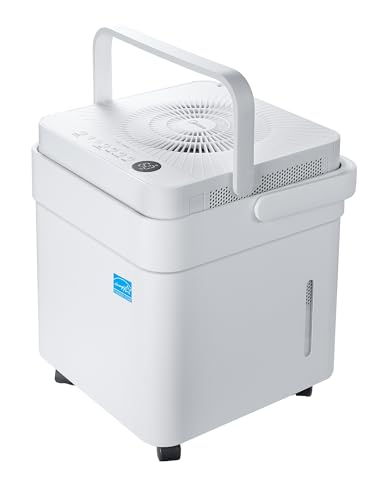 Midea Cube dehumidifierRemove excess water from the lung room before flower humidity turns into condensation and bud-rot pressure.View product
Affiliate disclosure: HWGrow may earn a commission from qualifying purchases at no extra cost to you. Verify the exact model, seller and specifications before buying.
Next in your grow
Before this step: How to Set Up Grow-Tent Ventilation, Inline Fans and Carbon Filters
Next step: How to Light Cannabis and Choosing LED Grow Lights
Related: Cannabis Temperature and Humidity Guide · AC Infinity IONBOARD S44 Review: 2022 Heat Test Revisited · Best Grow Tent Dehumidifier: Why Mini Units Fail
Go deeper (supporter membership required): These advanced guides are for HWGrow supporters: Hydro Masterclass Case Study: Bud Rot Detection and Containment. Become a supporter.
Want to watch this done step by step? The Grow With Me Masterclass follows one complete grow, day by day.
Sources
- University of Florida: Water and Humidity in Propagation
- UMass Extension: Moisture Management for Unrooted Cuttings
- University of Georgia Extension: Propagating Plants from Cuttings


You may also like
pH vs. PPM for Cannabis: EC Scales, Buffering and Nutrient Lockout