

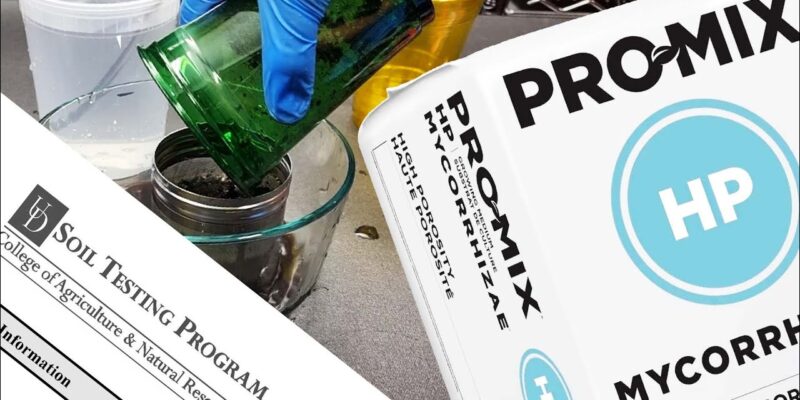
PRO-MIX HP Review: What the Lab Test Actually Says

Verdict: PRO‑MIX HP is an airy, fast-draining peat-and-perlite growing medium—not a bag of finished soil and not a season-long nutrient program. It makes sense for growers who want direct control over watering and feeding. It makes less sense for anyone expecting a rich, “just add water” organic mix.
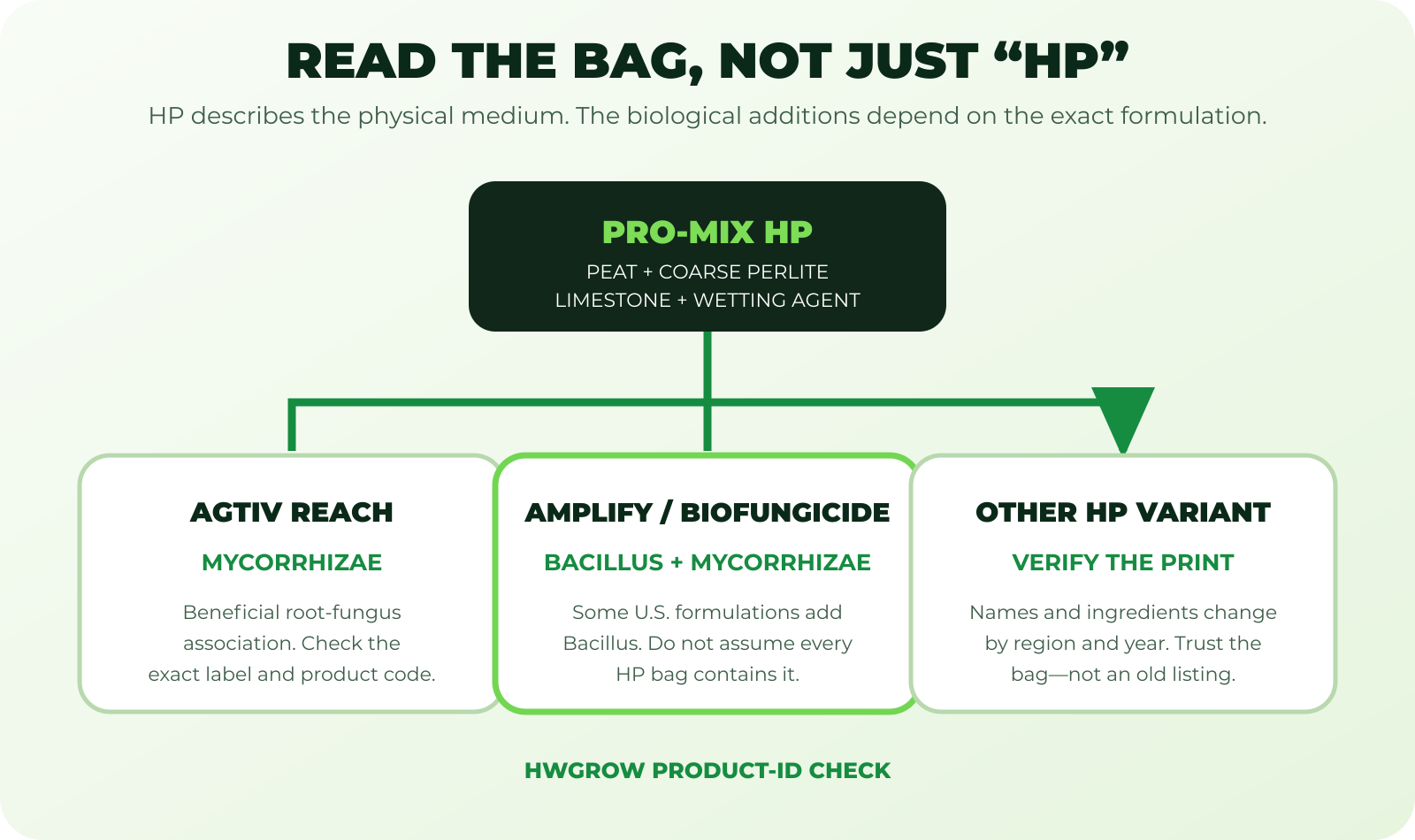
The smartest buying check: read the complete formulation name and product code on the bag. “HP” describes high porosity. Mycorrhizae and Bacillus depend on the exact AGTIV version, region and year.
Video chapter guide
- 0:10 — What “HP” means and why the mix drains quickly
- 0:28 — Biological ingredients in the tested formulation
- 0:43 — What the submitted lab sample showed
- 1:08 — Feeding and pre-moistening the mix
- 1:48 — At-home slurry pH versus the laboratory result
PRO‑MIX HP is soilless on purpose
The manufacturer lists sphagnum peat moss at roughly 65–75% of the mix, plus horticultural perlite, calcitic and dolomitic limestone, and a wetting agent. The coarse perlite creates more air-filled pore space and lowers water retention. That is the entire point of HP: roots get a fast-draining structure, while the grower accepts that the pot will dry faster and needs more deliberate irrigation.
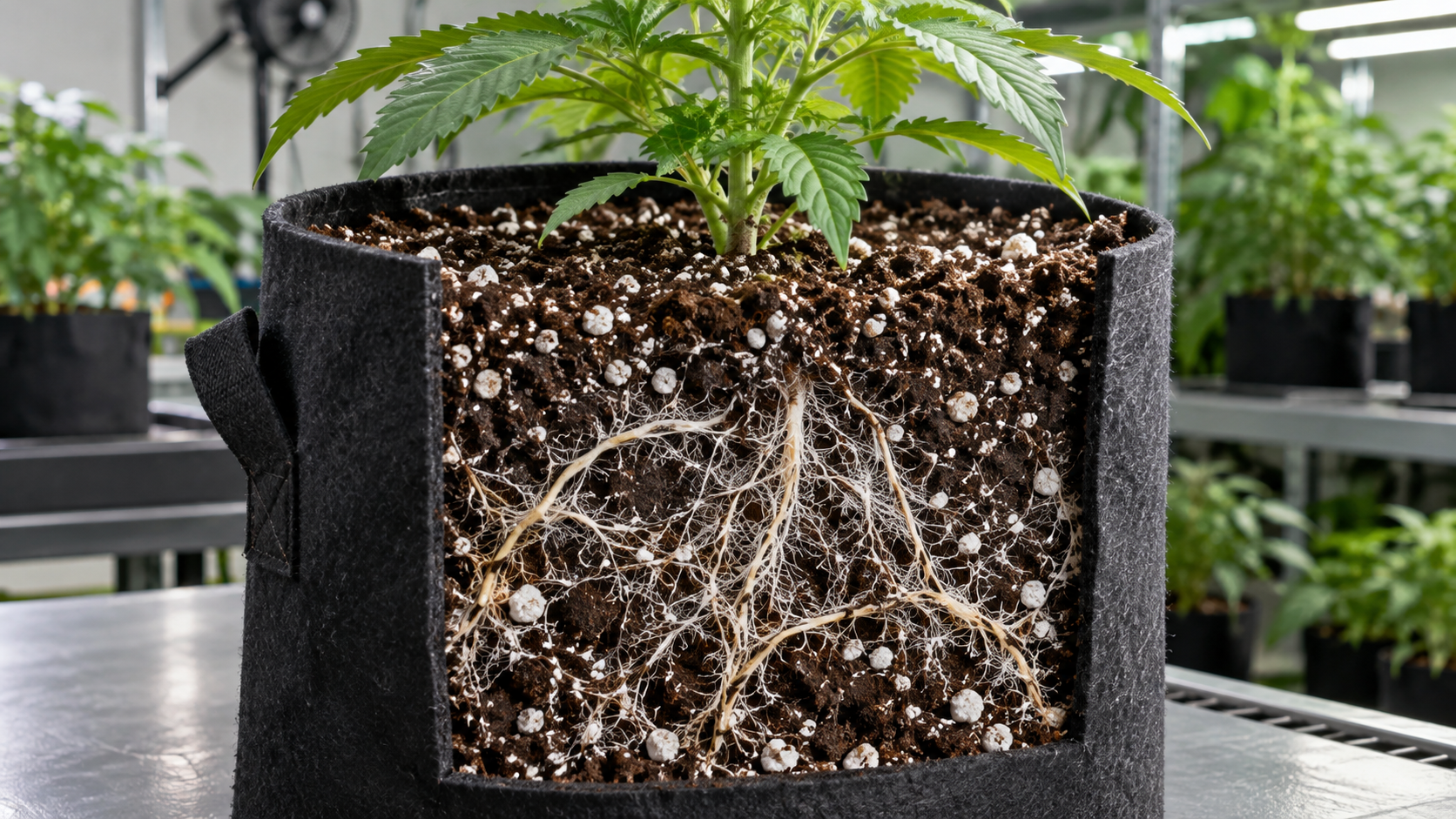
Compared with PRO‑MIX BX, the manufacturer says HP contains about twice as much perlite. That makes HP harder to keep waterlogged but easier to let dry too far. A small plant in a large pot, a low-light room and a humid room all change the interval. Lift the pot, inspect the color of the peat and water the complete root zone instead of following a calendar.
The bag variant changes the biological claim
The tested bag in the video was identified as containing mycorrhizae and Bacillus. Current product literature separates formulations: AGTIV REACH lists mycorrhizae, while certain U.S. AGTIV AMPLIFY or “Biofungicide + Mycorrhizae” versions also list a Bacillus strain. Packaging changes. Online listings lag. The printed bag is the final authority.
Mycorrhizae are fungi that form a living association with compatible roots. Their hyphae can extend the effective nutrient-gathering zone, and phosphorus transport is one of the best-studied benefits. They are not fertilizer granules and they do not magically “break down” every organic amendment. Colonization depends on a living host, root contact, the fungal species, moisture, temperature and fertility—especially phosphorus.
Bacillus is equally strain-specific. If the exact product label does not name it, do not assume it is present. If it is present, follow the manufacturer’s storage and use instructions rather than treating the word “biofungicide” as a promise that roots cannot get sick.
What the University of Delaware sample did—and did not—prove
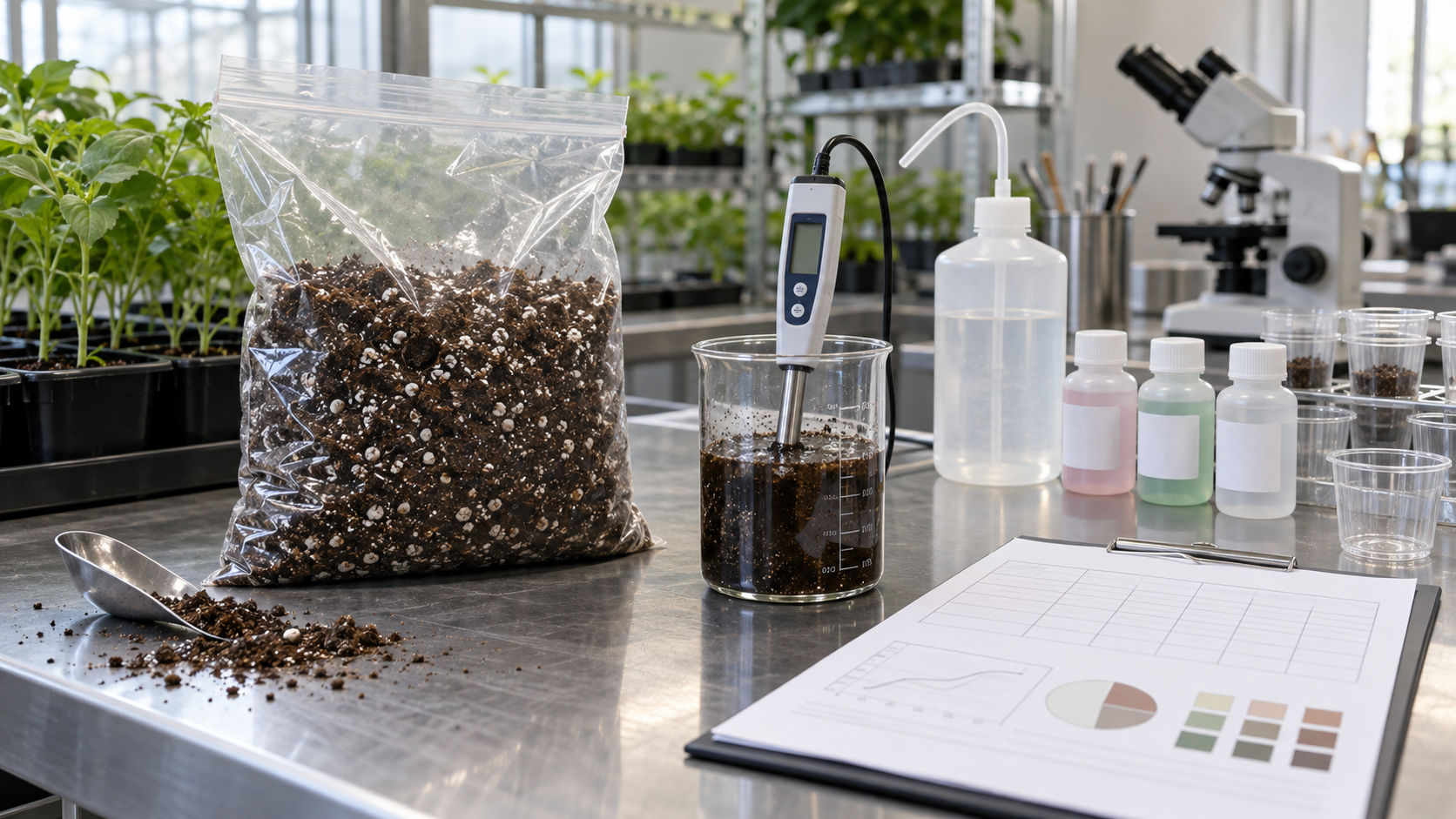
The sample discussed in the video was described as having low soluble salts and a light nutrient charge. The laboratory pH was 6.7; the author’s separate at-home slurry read 6.8. That close pair is useful evidence that the home method tracked that particular sample reasonably well.
It is not a universal certificate for every bag. A media test is a snapshot of one lot after its storage, water exposure and sampling history. A lab’s saturated-media extract and an at-home 1:1 slurry are also different methods. Compare trends only when the ratio, water, settling time, temperature and instrument calibration stay consistent.
Why the sample pH can differ from the manufacturer’s range
PRO‑MIX currently lists an initial SME range around 5.2–6.2 and says limestone activation after watering brings the medium toward about 5.8–6.2 within 7–10 days. A stored or previously moistened sample can read differently. Water alkalinity, fertilizer, lot variation, sampling depth and the extraction method can also move the result. A 6.7 or 6.8 reading from one bag does not rewrite the product specification.
If you test at home, follow the HWGrow soil-slurry protocol exactly. For EC and PPM scale differences, use the HWGrow pH, EC and PPM guide.
Does PRO‑MIX HP contain enough food?
It includes a starter charge, but the manufacturer recommends beginning a fertilizer program within roughly 7–10 days after planting. The tested sample also behaved like a lightly charged base. That makes HP useful for transplanting rooted seedlings and clones, but “gentle at the start” is not the same as “feeds a large flowering plant to harvest.”
For seed germination itself, the manufacturer points to its finer FPX product. HP’s coarse structure is better understood as a transplant and production medium. Once roots establish, choose either a complete soluble feed program or a properly calculated dry-amendment program. Do not stack both because the bag looked pale on a lab sheet.
The original HWGrow amendment approach
The video paired worm castings with one of two dry fertilizers:
- General vegetative or non-fruiting use: worm castings plus the linked Jobe’s Organics all-purpose fertilizer.
- Flowering or fruiting use: worm castings plus the linked Dr. Earth Flower Girl fertilizer.
The original description used 1 quart of castings per 5 gallons of medium and 1 tablespoon of dry fertilizer per 2 gallons of medium, with later top-dressing intervals. Treat those as the author’s tested starting recipe—not a substitute for the current product label. Plant size, existing nutrient charge, irrigation, cultivar and container volume still control demand. Mix thoroughly, moisten evenly, allow the amended medium to settle, then test before planting.
Who should use it?
- Good fit: growers who want fast drainage, frequent measured irrigation and direct control over nutrition.
- Good fit: rooted clones or established seedlings being transplanted into an airy medium.
- Possible fit: organic amendments, if you understand that HP itself is not a complete living-soil recipe.
- Poor fit: growers who routinely forget to water or want a long-buffered, heavily amended “water only” mix.
- Poor fit: anyone buying by the letters HP without checking the biological formulation printed on the bag.
To compare this controlled soilless approach with a more heavily amended mix, read the HWGrow BuildASoil 3.0 lab-test review.
Frequently asked questions
Is PRO‑MIX HP soil?
No. It is a peat-based soilless growing medium made primarily from sphagnum peat moss and coarse perlite, with limestone and a wetting agent.
What does HP stand for?
High porosity. The extra coarse perlite raises air porosity and drainage while lowering water retention compared with a general-purpose peat mix such as BX.
Does every PRO‑MIX HP bag contain Bacillus?
No. Biological ingredients vary by formulation. Check the exact AGTIV name, product code and active-ingredient panel printed on the bag.
Does PRO‑MIX HP have nutrients?
It has a starter fertilizer charge, but it is not a full-cycle nutrient program. The manufacturer recommends beginning an appropriate fertilizer program within about 7–10 days.
Is PRO‑MIX HP good for seedlings and clones?
It is useful for transplanting rooted seedlings and clones because it is airy and hard to waterlog. For seed germination, the manufacturer recommends a finer germination mix.
Do mycorrhizae replace fertilizer?
No. They are a root-fungus partnership that can improve access to water and nutrients under suitable conditions. They do not create every nutrient a plant needs.
Why did the home slurry read 6.8 when the manufacturer lists a lower range?
The test method, water, sample history, storage and lot can all change the reading. A home 1:1 slurry and a laboratory saturated-media extract are not interchangeable methods.
Scientific and manufacturer sources
- Premier Tech Horticulture: PRO‑MIX HP composition, physical properties, pH range, watering and starter-fertilizer guidance.
- PRO‑MIX professional catalog: regional HP formulations with mycorrhizae and optional Bacillus.
- University of Delaware Cooperative Extension: soil and growing-media testing services.
- Plant Physiology: review of arbuscular mycorrhizae and plant phosphorus nutrition.
- UF/IFAS Extension: how soilless-media water-holding capacity changes irrigation frequency.
Amendments used in the video
 Wiggle Worm CastingsAdds organic matter and a modest nutrient contribution; used as the common base amendment in the video recipe.View product
 Jobe’s Organics All PurposeThe general vegetative or non-fruiting dry-fertilizer option from the video; use the current label rate.View product
 Dr. Earth Flower Girl 3-9-4The flowering or fruiting alternative from the video; use instead of—not on top of—the all-purpose option.View product
Affiliate disclosure: HWGrow may earn a commission from qualifying purchases at no additional cost to you. Use the current product label to calculate rates; do not combine both dry fertilizers as one recipe.
You may also like

Best Grow Tent Dehumidifier: Why Mini Units Fail
Best Grow Tent Humidifier: Why Young Plants Need More Humidity








Featured Grow


fair point was going to res change tonight anyways think flip will happen this weekend anyways :)
I would flip now They’re still gonna grow for 3 weeks. There’s a point where they’ll get too big and…
no i didn’t yet waiting for the left plant to fill up more space in the tent and wanted to…
I miss angle draining and dunking. Good job responsive feeding.
did you just flip???