


Best pH Meter for Growing Cannabis: What Actually Matters

Quick answer: The best pH meter for most home growers is not automatically the cheapest pen or the most expensive laboratory-looking unit. Choose a waterproof meter with a replaceable probe, fresh calibration buffers and an easy-to-find storage solution. For pH alone, the Apera PH60 is a strong home-grow choice. If you also want EC, TDS and temperature in one tool, the AC Infinity Hydroponic Meter PRO is the more practical all-in-one option.
I have owned enough pH meters to learn this the expensive way: price matters less than the probe, the care routine and whether replacement parts actually exist. A good meter stored dry will become a bad meter. A mid-priced meter that is rinsed, calibrated and stored correctly can stay useful much longer.

My short list
| Best fit | What to look at | Why it makes the list |
|---|---|---|
| Best pH-only value | Apera PH60 | Replaceable probe, IP67 body, three-point calibration and 0.01 pH resolution. It includes the buffers and KCl needed to start caring for it correctly. |
| Best all-in-one meter | AC Infinity Hydroponic Meter PRO | Measures pH, EC, TDS, salinity and temperature with a replaceable probe. This is useful when you want one stabilized sample to show both acidity and nutrient strength. |
| Premium alternative | Bluelab pH PenPlus or OnePen | Current Bluelab options add replaceable probes; the OnePen combines pH, EC and temperature. Check the model carefully because older Bluelab pens do not all share the same probe design. |
Those details come from the manufacturers’ current pages for the Apera PH60, AC Infinity Hydroponic Meter PRO, Bluelab pH PenPlus and Bluelab OnePen. Product lines change, so verify the exact model instead of buying from a familiar brand name alone.
AC Infinity savings: If you buy from AC Infinity directly, use code EVYGROWS at checkout for additional savings on eligible products.
What actually matters in a plant pH meter
- A replaceable electrode. The glass probe is a wear item. A serviceable meter lets you replace that part instead of throwing away the whole tool.
- Compatible storage solution. Make sure you can buy the concentration and formula required by the manufacturer. Never store a glass pH probe in distilled or reverse-osmosis water.
- Fresh calibration buffers. Two- or three-point calibration is only as trustworthy as the buffers. Pour a small working amount into clean cups; do not contaminate the original bottles.
- Water resistance. A waterproof body does not make the probe indestructible, but it makes a nutrient-table accident less likely to end the meter.
- Useful resolution and repeatability. A display with extra decimal places is not automatically more accurate. Verify the meter in fresh buffer and watch how quickly it settles.
- The right measurements. Soil growers may only need pH. Growers mixing mineral nutrients or running hydro usually benefit from EC as well. If a meter reports PPM, record whether it uses the 500 or 700 conversion scale.

Cheap versus expensive pH meters
A cheap meter is not automatically useless, and an expensive meter is not automatically right. The real downside of many bargain pens is that the probe is sealed into the body. Once it becomes slow, contaminated or impossible to calibrate, the entire meter becomes disposable.
On the other end, a commercial controller can be overkill for one small tent. You are paying for continuous monitoring, alarms, replaceable components or integration that you may never use. Most home growers land in the middle: a waterproof handheld meter with a serviceable probe and available care supplies.
Choosing a pH and EC meter for hydroponics
For hydroponics, monitor both pH and EC. Oklahoma State University’s hydroponics guide explains why dissolved ions affect conductivity. EC helps track total salt concentration; it does not identify individual nutrients. pH tells you how acidic or alkaline the solution is. They answer different questions, so one number cannot replace the other.
An all-in-one meter saves space and makes recordkeeping easier, but it also puts several functions into one device. A separate pH pen and EC pen can be easier to troubleshoot. Either setup works when you calibrate it, identify the PPM scale and compare readings under the same conditions. The complete cannabis pH, EC, PPM and runoff guide explains how the numbers fit together.

How to keep any pH meter accurate
- Mix the complete nutrient solution first, let it settle, then measure.
- Rinse the probe as the manufacturer directs and gently blot it—do not scrub the glass bulb.
- Store the probe wet in the correct KCl solution. Do not leave it dry or soaking in distilled water.
- Calibrate with fresh buffers on the schedule shown by your meter and whenever a reading looks suspicious.
- Check the result in a known buffer after calibration. If it will not settle or verify, clean the probe and troubleshoot before adjusting a grow.
Use the complete pH-meter care guide for rinsing, storage and troubleshooting, the brand-by-brand calibration guide for Apera, Bluelab and budget pens, or the 3 M KCl guide if your probe manufacturer specifies that concentration.
Recommended pH-meter setup
 Apera PH60 pH meterA pH-only choice with a replaceable probe, waterproof body and included calibration and storage supplies.View product
 AC Infinity Hydroponic Meter PROA replaceable-probe all-in-one option when you want pH, EC, TDS and temperature from one sample.View product
 KCl probe-storage solutionKeeps a compatible glass electrode hydrated between readings. Confirm the required concentration in your meter manual.View product
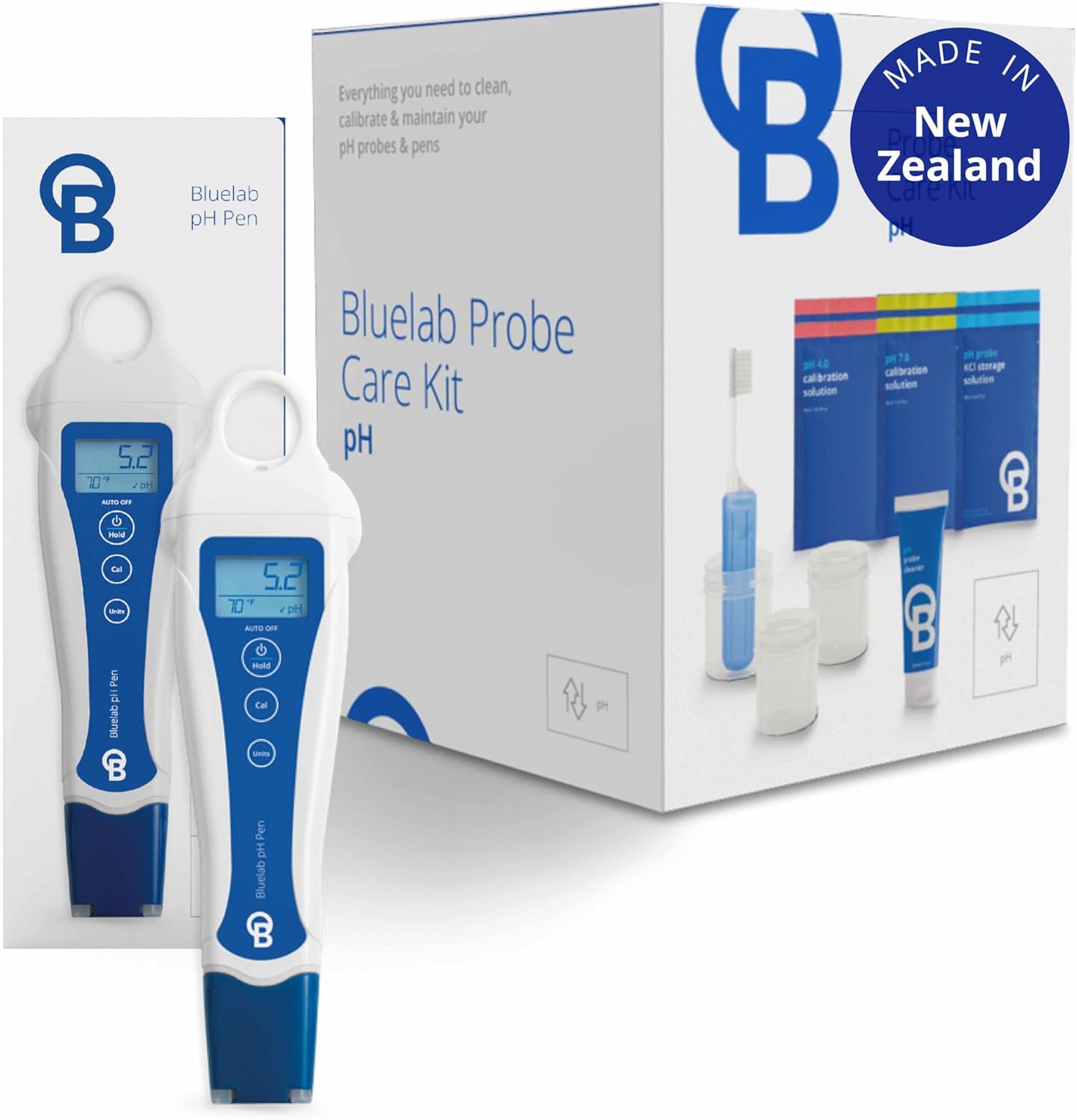 Calibration and care kitFresh buffers, storage solution and cleaning supplies make a bigger accuracy difference than another feature on the box.View product
Affiliate disclosure: HWGrow may earn a commission from qualifying purchases at no additional cost to you. Verify the exact model and probe compatibility before ordering; equivalent products can be substituted.
Where this fits in your grow
A meter does not fix the root zone by itself. It gives you one reliable number so you can stop guessing. Pair it with consistent mixing, watering and recordkeeping. The public beginner grow guide shows where pH checks belong in the seed-to-harvest workflow, while the Grow With Me Masterclass connects those readings to the decisions made across a complete grow without reproducing protected lessons here.
pH-meter FAQ
What is the best pH meter for growing cannabis?
For most home growers, choose a waterproof handheld meter with a replaceable probe, available calibration buffers and the correct storage solution. The Apera PH60 is a strong pH-only option; the AC Infinity Hydroponic Meter PRO adds EC, TDS and temperature.
Are cheap pH meters accurate?
Some can be accurate enough when freshly calibrated, but quality control, settling time, waterproofing and probe life vary. Verify any meter in fresh buffer before trusting it to change a nutrient solution.
Should I buy a pH and EC combination meter?
It is useful when you mix mineral nutrients or grow hydroponically because pH and EC answer different questions. Soil growers using a stable routine may prefer separate tools or only a pH meter.
Can I store a pH probe in distilled water?
No. Distilled or reverse-osmosis water can damage or shorten the life of many glass pH electrodes. Store the probe in the solution and concentration specified by its manufacturer.
How often should I calibrate a pH meter?
Follow the manufacturer’s interval and calibrate again whenever readings drift, settle slowly or fail a check in known buffer. Fresh buffers and correct storage matter as much as the calendar.
You may also like
PRO-MIX HP Review: What the Lab Test Actually Says
pH vs. PPM for Cannabis: EC Scales, Buffering and Nutrient Lockout



Featured Grow

Mine wasnt that bad, i am low rate afib so just swing between 95 and high as 150 sometimes, up…

Yeah not fun, but as long as it helps thats what matters. Had my heartrate 200+bpm in the hospital for…
Tupac mine is for afib. Just Had cardio version the other week to get me out of it, worst case…
I was hoping for one at least that check the box's, but ya, having a couple is that much better.…
Heart cath ablation? Had one of those for Super Ventricular Tachycardia and it worked well