


How to Calibrate Apera, Bluelab and Budget pH Meters

Last updated: August 2026
Quick answer: Calibrate with the buffer values and button sequence listed in your meter’s current manual. For most grow-room pens, that means starting with fresh pH 7.00 buffer, rinsing the probe, then using pH 4.00 because those two points bracket the mildly acidic nutrient range. Add pH 10.01 only when the meter or your measurement range calls for it. Never calibrate a dry probe, reuse contaminated buffer or store the glass sensor in distilled, deionized or RO water.
Watch the pH-meter calibration walkthrough
This first-party HWGrow video compares common budget pens with Bluelab and Apera calibration sequences. Use the chapters to reach your meter type, but let the updated written procedure below override legacy shortcuts in the original recording. Manufacturers change controls and supported buffer sets, so your exact manual always wins.
Selecting a timestamp opens the standard HWGrow pop-out player at that exact moment without moving you away from this section.
What you need
- Your meter and its current manufacturer instructions
- Fresh, certified calibration buffer in the values the meter supports
- Two or three clean calibration cups
- Distilled, deionized or manufacturer-approved clean water for rinsing
- The storage solution specified for your probe—commonly a compatible KCl solution
- A clean paper towel nearby for spills, not for rubbing the glass bulb
How to calibrate a digital pH meter
- Inspect and hydrate the probe. The glass bulb and reference junction must be clean and hydrated. If the probe dried out, soak it in the manufacturer’s storage solution for the stated time before trying to calibrate.
- Prepare fresh working portions. Pour a small amount of each buffer into its own clean cup. Keep the original bottle clean and never pour used buffer back into it.
- Match the temperatures. Let the meter, buffers and rinse water reach the same room temperature. Automatic temperature compensation helps the meter, but it cannot rescue contaminated or badly temperature-mismatched buffer.
- Rinse without scrubbing. Rinse the sensing area, gently shake off excess droplets and place it in the first buffer. Do not rub the glass bulb dry.
- Begin at pH 7.00 when the manual requires it. Swirl gently, make sure the sensing area and junction are submerged, remove trapped bubbles and wait for the stability indicator before accepting the point.
- Rinse, then calibrate the second point. For the acidic nutrient range used in most grows, the second point is normally pH 4.00. Use pH 10.01 instead when testing mainly alkaline samples or when the manual tells you to.
- Add a third point only when it helps. Some Apera and other multi-point meters support 7.00, 4.00 and 10.01. A third point does not fix a dirty probe or stale buffer.
- Verify instead of assuming. Rinse the probe and test a fresh portion of buffer. If it misses the manufacturer’s tolerance, stop before adjusting a reservoir and troubleshoot the probe, buffer or procedure.
- Rinse and store wet. After calibration, rinse the probe and return it to the correct storage solution. Rinse water is not storage solution.
Which calibration buffers should growers use?
| Calibration | When it fits | Grow-room use |
|---|---|---|
| One point: 7.00 | Quick calibration when the manual permits it | Better than guessing, but it does not verify slope across the acidic nutrient range. |
| Two point: 7.00 + 4.00 | Most soil, coco and hydroponic nutrient work | The best general choice because the two points bracket the mildly acidic solutions growers usually measure. |
| Two point: 7.00 + 10.01 | Mainly alkaline samples | Use only when it matches the expected range and the meter’s instructions. |
| Three point: 7.00 + 4.00 + 10.01 | A wide measurement range on a compatible meter | Useful for broader lab work; often unnecessary for a normal nutrient reservoir. |
Bluelab’s current pen guidance uses a two-point calibration and warns that the order matters. Apera’s PH20 guidance requires pH 7.00 as the first point and supports additional points. Generic yellow pens vary—some expect powder values such as 6.86 and 4.00, while others recognize 7.00 and 4.00 automatically. Read the packet and the meter manual together instead of forcing one universal sequence.
Powder packets versus premixed buffer
Premixed certified buffer is the simplest option because the concentration is already controlled. If your meter came with powder sachets, mix each packet with the exact water volume and water type printed on that packet. Do not assume every packet uses 250 mL, and do not improve the recipe by guessing with bottled water.
Label the cups, keep their lids closed and protect them from nutrient splash. Alkaline buffer—especially pH 10.01—changes more quickly after exposure to air. When accuracy matters, a fresh working portion costs less than correcting an entire reservoir from a bad reference.

How often should a pH meter be calibrated?
There is no honest universal answer such as “every two readings.” Follow the manufacturer’s interval and use a quick verification buffer when a measurement matters. Calibrate before first use, after long storage, after rehydrating or cleaning the probe, when the reading drifts, when a verification point fails and before making a large correction based on a surprising number.
A daily grow-room user may need calibration more often than someone who measures once a month. The better habit is to verify performance in fresh buffer before trusting a questionable result. Calibration sets the meter; verification tells you whether it stayed trustworthy.
Common calibration mistakes
- Starting with the wrong point: several meters require pH 7.00 first, even if an older generic demonstration starts elsewhere.
- Reusing working buffer: a drop of nutrient solution or rinse water changes the reference.
- Leaving the probe dry: a dehydrated sensor can respond slowly, drift or fail calibration.
- Storing in purified water: distilled, deionized and RO water are useful rinses but can damage or deplete the reference system during storage.
- Wiping the bulb: rubbing can contaminate or statically charge the sensitive glass. Rinse and gently shake off droplets.
- Ignoring temperature: buffer values change with temperature, especially alkaline buffers. Follow the temperature table or compensation method supplied with the product.
- Comparing two unknown meters: another pen is not a reference standard. Check both against certified buffer.
If calibration keeps failing
- Replace the working buffer with a fresh portion.
- Confirm that the selected buffer set and order match the meter.
- Inspect the bulb and junction for buildup, cracks or trapped bubbles.
- Clean and rehydrate the probe according to the manufacturer, then try again.
- Replace the electrode—or the pen if its probe is not replaceable—when it cannot verify within tolerance.
For the complete rinse, measurement and storage routine, use the pH-meter care guide. To understand what the number means in a grow, continue to the pH, EC, PPM and runoff guide. If your meter uses a compatible 3M KCl solution, the separate DIY KCl storage-solution guide preserves the calculation without assuming it fits every probe.
Recommended calibration supplies
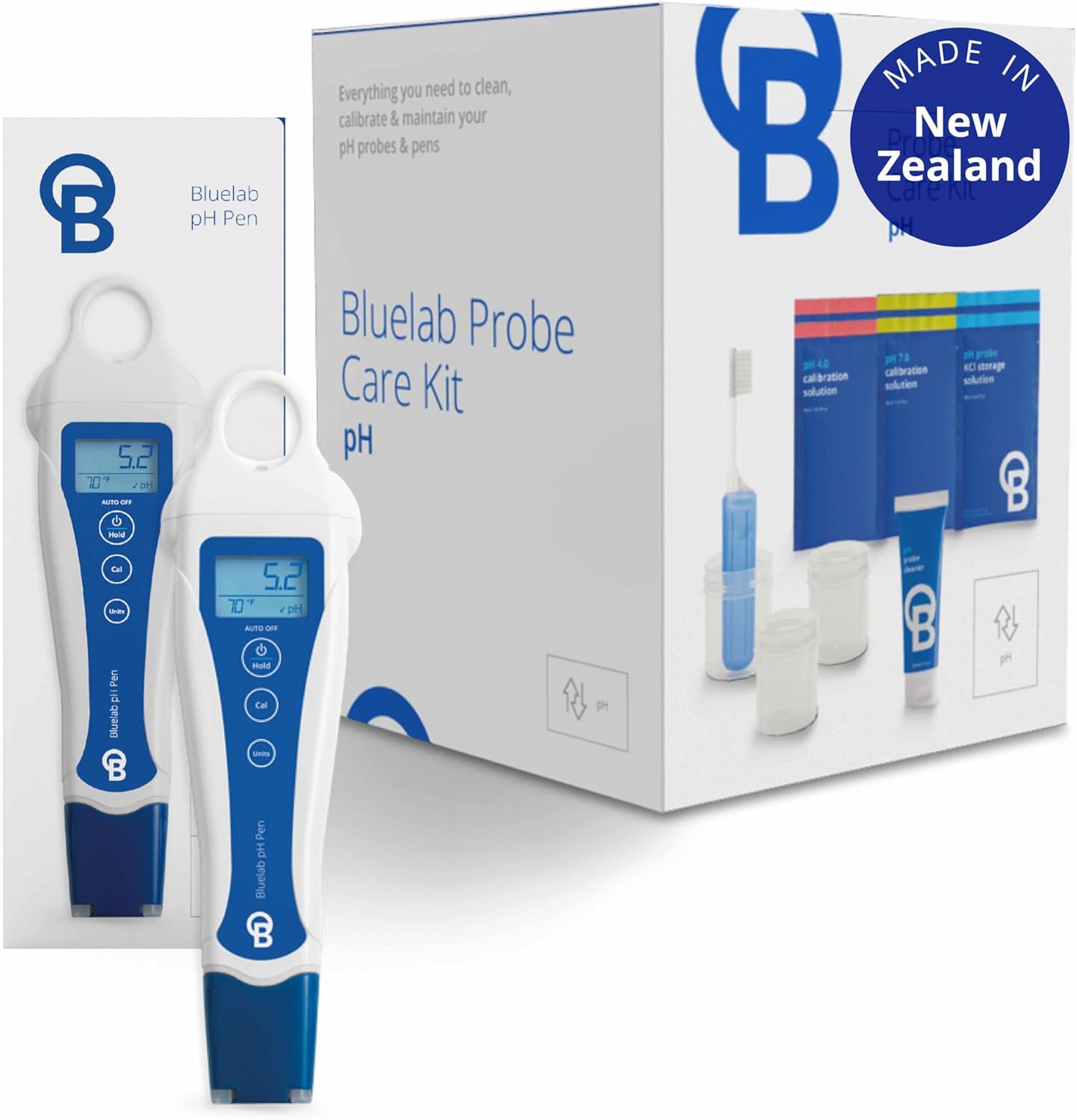
Calibration and storage care kitA clean, matched set of acidic and neutral buffers, probe-care supplies and compatible storage solution for routine maintenance.

3M KCl storage solutionA ready-made storage option for compatible probes. Confirm the concentration and formula required by your exact meter.
Affiliate disclosure: HWGrow may earn a commission from qualifying purchases at no additional cost to you. Equivalent fresh buffers and manufacturer-compatible storage supplies can be substituted without changing the calibration procedure.
Manufacturer references
- Bluelab: pH probe care, maintenance and storage
- Apera: calibrating 20 Series pH testers
- Apera: pH-electrode storage guidance
- Hanna Instruments: generalized pH-electrode calibration
Frequently asked questions
Do I calibrate a pH meter with 4.00 or 7.00 first?
Many grow-room meters require 7.00 first, followed by 4.00. Confirm the sequence in the current manual because generic pens and buffer families differ.
Can I reuse calibration solution?
Do not pour used working buffer back into the original bottle. Reuse policies differ by product, but fresh, uncontaminated portions give the most trustworthy result.
Can I store a pH meter in distilled water?
No. Distilled, deionized and RO water may be used for rinsing when the manufacturer permits it, but they are not pH-electrode storage solutions.
Why does my pH meter read correctly at 7.00 but miss 4.00?
The probe slope may be weak, the acidic buffer may be contaminated or stale, or the electrode may need cleaning and rehydration. Verify with fresh buffer before replacing equipment.
Want the complete feeding workflow? The Grow With Me Masterclass connects calibration to mixing, feeding and runoff decisions without reproducing protected lessons here. If your meter still will not verify, ask HWGrow and include the meter model, buffer values, probe age, storage method and the readings you see.
You may also like
Hydroponic Water Chillers: Stop Summer Root Rot Before It Starts
How to Breed Masterclass – Promo Video




Featured Grow

Looking healthy
Shared a GIF.
kind of looks a little too dry for my liking
of course you will

Growing the Purple Berry's now, hope I do her justice.