


Best Grow Tent Configuration: Plants, Watts, Fans and Layouts for 2×2 to 5×5

Grow tent planning guide
A tent is not “one size fits all.” Start with the number of plants you are legally allowed to grow, then match the floor space, real light wattage, height, exhaust and access. Here is the setup math I use before buying anything.
Already have your kit? Follow the complete grow tent setup video guide to assemble the tent, install ventilation, hang the LED light, and set up fans and timers.
The fast rule: four square feet and about 150 watts per plant
My easy planning rule is about 4 square feet of canopy and roughly 150 watts of quality LED power per full-size plant. That is not a law and it is not a guarantee. Genetics, training, veg time, light efficiency and your target yield all change the result. It is simply a clean starting point that keeps beginners from cramming too many plants under too little light.
Also look at the light’s actual wall draw and PPFD map, not only the model name. When two fixtures are otherwise comparable, I prefer a bar-style light because the diodes are spread across more of the tent. That normally gives better edge coverage than concentrating everything in one small panel. Read my LED grow-light guide before choosing the final fixture.

| Tent | Plant plan | LED starting point | Exhaust kit | Access reality |
|---|---|---|---|---|
| 2×2 | 1 plant | About 150W | 4 inch | Easy from the front |
| 2×4 | 2 plants | About 300W | 4 inch; 6 inch if needed | Best with the long door clear |
| 4×4 | 4 plants | About 600W | 6 inch | Hard rear corners if against a wall |
| 5×5 | 6 comfortable or 9 dense | About 900–1000W | 6–8 inch | Plan access on more than one side |
2×2 tent: one plant
2 FEET2 FEET
One plant in a 5-gallon fabric pot—or one hydro bucket—fits a 2×2 perfectly. Let it fill the footprint instead of adding more plants just because small seedlings appear to fit.
2×2 shopping list


 AC Infinity Air Filtration Kit 4” with Speed ControllerI dont do fancy controllers because the server updates have proven to reset settings. I rage quit a grow because of this. All the settings are in my complete guide.View product
 One AC Infinity CLOUDRAY S6 Gen 2 oscillating clip fanRecommended equipment for this tent configuration.View product
 AC Infinity 2×2 elastic trellis netSeems Expensive, but the Vivosun, Mars Hydro and Spider Farmer ones will not last more than 4 months and their customer service sucks.View product
Use code EVYGROWS for additional AC Infinity savings when eligible.
Affiliate disclosure: qualifying purchases through these links may earn HWGrow a commission at no additional cost to you.
2×4 tent: two plants
4 FEET2 FEET
A 2×4 is one of my favorite layouts because two plants each get a true 2×2 section. A wide 300W-class bar light fits the shape, while the long front door makes both plants reachable.
2×4 shopping list
 Spider Farmer 4.6×2.3 Grow Tent 55″x28″x80″My favorite because it’s actually more square footage than a 3 x 3, plus it doesnt have the awkward back corners that are difficult to reach.View product
 Spider Farmer G4500 320W bar LEDBest fit and best bang for buck in this tent. Bridgelux has proven itself to be sufficient light intensity for optimal growth.View productAC Infinity Air Filtration Kit 4” with Speed ControllerRecommended equipment for this tent configuration.View productAC Infinity CLOUDRAY S6 Gen 2 oscillating clip fanRecommended equipment for this tent configuration.View product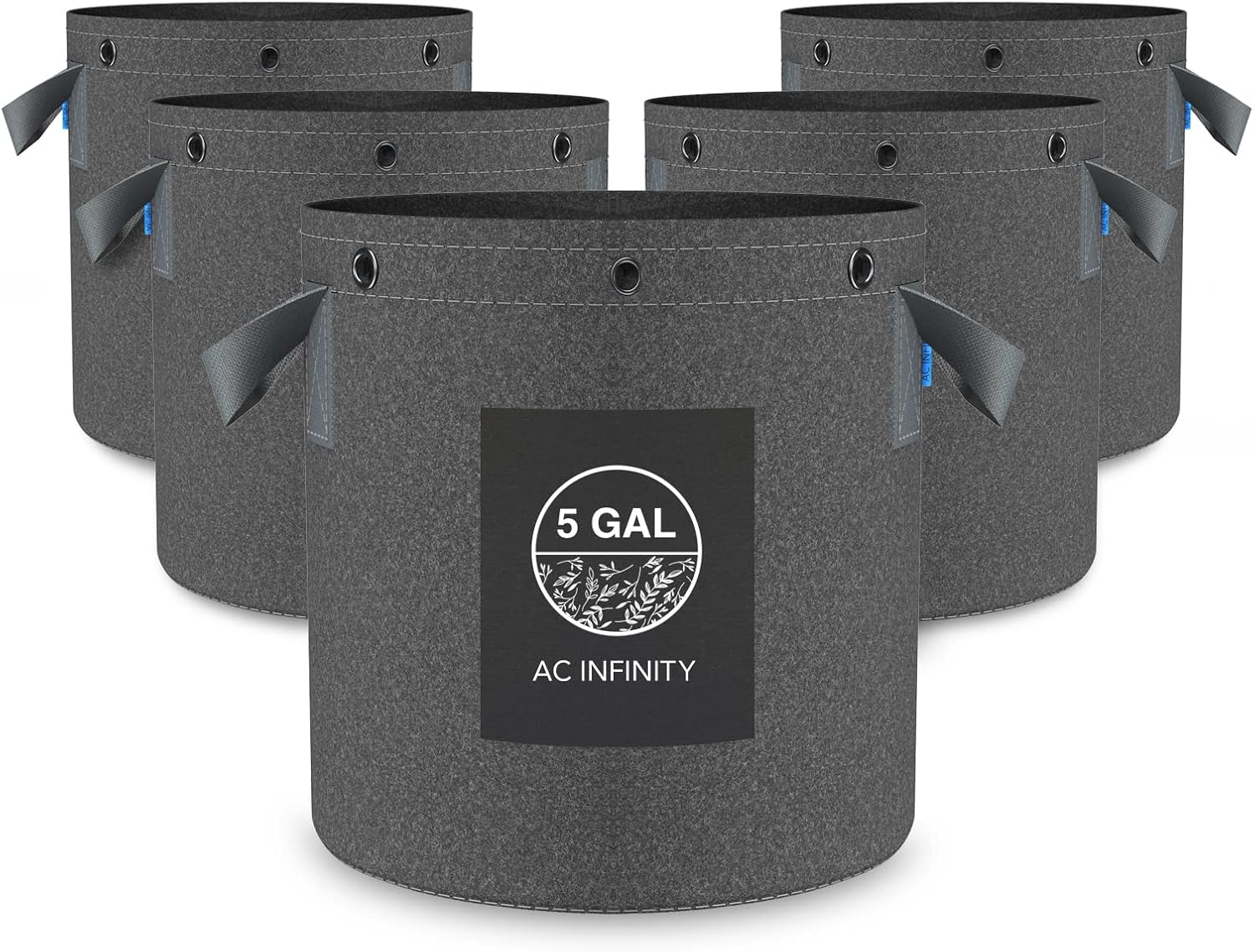

Use code EVYGROWS for additional AC Infinity savings when eligible.
Affiliate disclosure: qualifying purchases through these links may earn HWGrow a commission at no additional cost to you.

4×4 tent: four plants
4 FEET4 FEET
Four plants in a 4×4 maintain the four-square-foot rule. I would start around 600 actual LED watts, preferably with a wide, dimmable bar fixture. Buying a little more light and dimming it is better than permanently running an undersized fixture at its limit—provided the fixture fits, the environment stays controlled and the circuit can handle it.
A 4×4 becomes hard to service when two or three sides touch walls. Leave access around it or make sure the tent has usable side doors.
4×4 shopping list
 AC Infinity CLOUDLAB 844 4×4×6.7 tentmultiple access points matter here
Vivosun Pro Series is the same quality: https://amzn.to/3VW2PryView product
AC Infinity CLOUDLAB 844 4×4×6.7 tentmultiple access points matter here
Vivosun Pro Series is the same quality: https://amzn.to/3VW2PryView product
 AC Infinity Air Filtration Kit 6” with Speed ControllerRecommended equipment for this tent configuration.View product
Use code EVYGROWS for additional AC Infinity savings when eligible.
Affiliate disclosure: qualifying purchases through these links may earn HWGrow a commission at no additional cost to you.
5×5 tent: six comfortable or nine dense
5 FEET5 FEET
A 5×5 is where the math changes. Nine evenly spaced plants make a neat 3×3 grid, but each receives only about 1.67×1.67 feet, or 2.78 square feet. That is denser than my normal rule. It calls for a shorter veg, smaller final plants, disciplined pruning and a trellis to spread the canopy without creating a solid wall of leaves.
If you want larger plants and easier service, six plants are closer to the four-square-foot target. Either way, the middle and back plants are difficult to reach if the tent is against a wall. Plan the room before filling it.
5×5 shopping list
 AC Infinity CLOUDLAB 866, Advance Grow Tent 5×5, Thickest Poles & MylarVivosun Pro Series tent is a close 2nd: https://amzn.to/4s8y52q
Get whatever is cheaper.View product
AC Infinity CLOUDLAB 866, Advance Grow Tent 5×5, Thickest Poles & MylarVivosun Pro Series tent is a close 2nd: https://amzn.to/4s8y52q
Get whatever is cheaper.View product Spider Farmer G1000W Commercial 1000W LED Grow Light with Osram RedDimmable, true 5×5 footprint coverage. WARNING: Make sure you have a dedicated outlet just for this light. Most outlets will trip when over 1000 watts.View productAC Infinity Air Filtration Kit 6” with Speed ControllerWorks fine as long as you have vents open on the bottom of the tent and 2 oscillating fans.View product
 AC Infinity CLOUDRAY S9 Gen 2 oscillating clip fansJust one order of this item, since it is a 2 Pack. Install on opposite corners of the tent.View product
 Six or nine AC Infinity 5-gallon fabric potsYou will need to purchase 2 of these for 10 5-Gallon Fabric Pots total.View product
Use code EVYGROWS for additional AC Infinity savings when eligible.
Affiliate disclosure: qualifying purchases through these links may earn HWGrow a commission at no additional cost to you.
Tent height: buy the space above the plant too
Tents are commonly around 5, 6 or 8 feet tall. The plant does not get all of that height. Subtract the pot or hydro bucket, the fixture, hangers, the safe light-to-canopy distance, and any fan or carbon filter mounted at the top. Then leave room for the stretch after flowering starts.
A short tent can work for trained plants, but an 8-foot tent gives you more recovery room. Measure the room ceiling and doorway first; the tallest tent is useless if you cannot stand it up in the room.
How much inline-fan CFM do you need?
Start with the tent’s cubic volume and aim to exchange roughly that air volume about once per minute. A carbon filter, duct length and bends reduce real airflow, so add a practical resistance allowance.
Practical starting target = base CFM × about 1.25 to 1.5 for a filter and ordinary duct resistance.
Using typical tent heights, that works out to roughly 30–36 CFM for a 2×2×6, 60–72 CFM for a 2×4×6, 130–156 CFM for a 4×4×6.5, and 250–300 CFM for a 5×5×8. Those are starting targets, not universal speed settings. Dial the system by canopy temperature, humidity and slight negative pressure, and check the fan maker’s performance curve when static pressure is listed.
My normal hardware starting point is a 4-inch kit below a 3×3, a 6-inch kit for a 4×4, and a 6- or 8-inch kit for a 5×5. Then add oscillating circulation fans inside the tent. The AC Infinity S-series oscillating clip fans are my preference because they move across the canopy instead of blasting one leaf all day. Read which direction to point your grow-tent fans before final placement.
The 1000-watt circuit warning
A common electrical design rule keeps continuous load within 80% of a branch circuit’s rating: about 12 amps or 1,440 watts on a 15-amp, 120V circuit, and about 16 amps or 1,920 watts on a 20-amp circuit. Other rooms and outlets may share that same breaker. Do not guess, do not daisy-chain power strips, and do not treat a smart plug as a substitute for circuit capacity. Have a qualified electrician confirm the complete load if you are near the limit.
My order of operations
- Confirm the current legal plant limit for your state, locality and registration status.
- Choose the plant count and give each full-size plant about four square feet whenever possible.
- Select a tent that fits the room, leaves service access and provides enough usable height.
- Choose a wide, dimmable LED using actual wall draw and a real PPFD map.
- Size the exhaust from tent volume, then account for the filter, duct and bends.
- Add oscillating circulation fans and plan the trellis before the plants become difficult to move.
- Total every electrical load on the whole circuit before plugging the setup in.
Want a broader equipment checklist after selecting your footprint? Continue with the complete HWGrow grow-tent setup and buying guide.
Sources and further reading
- California Department of Cannabis Control: personal-use rules and local restrictions
- Maryland Cannabis Administration: household cultivation limits
- Ohio Revised Code §3796.04: home-grow limits and security
- Connecticut official home-cultivation guidance
- UMass Extension: greenhouse ventilation and air-exchange principles
- U.S. Government Publishing Office: branch-circuit continuous-load sizing principle
Comments
Leave a reply
You may also like
pH vs. PPM for Cannabis: EC Scales, Buffering and Nutrient Lockout
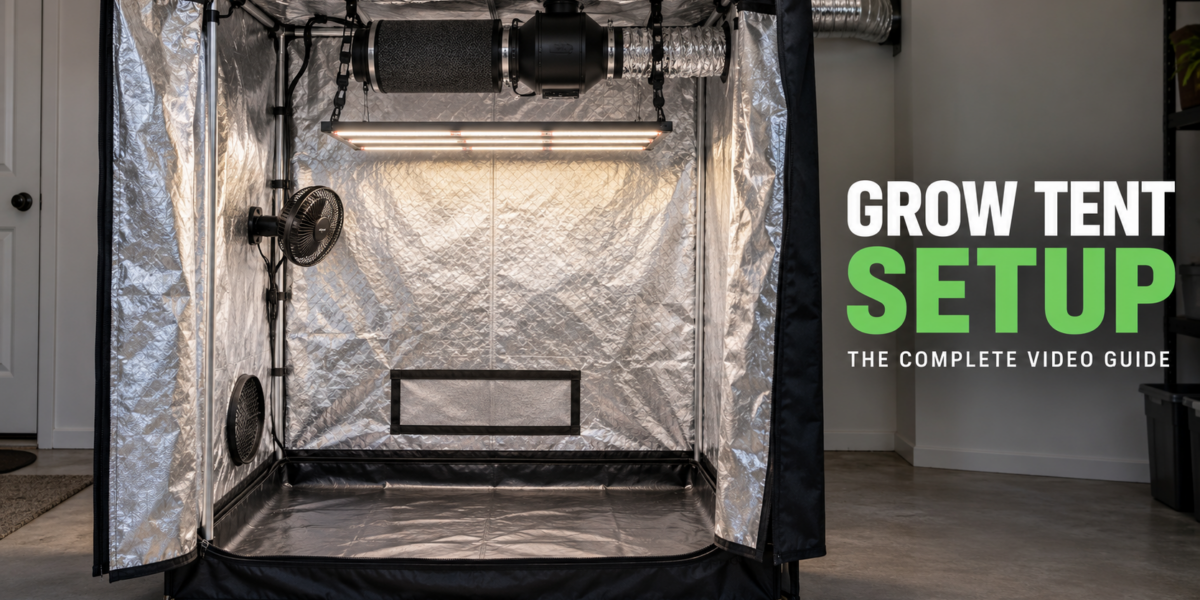
Complete Grow Tent Setup: Four Videos, One Working Setup


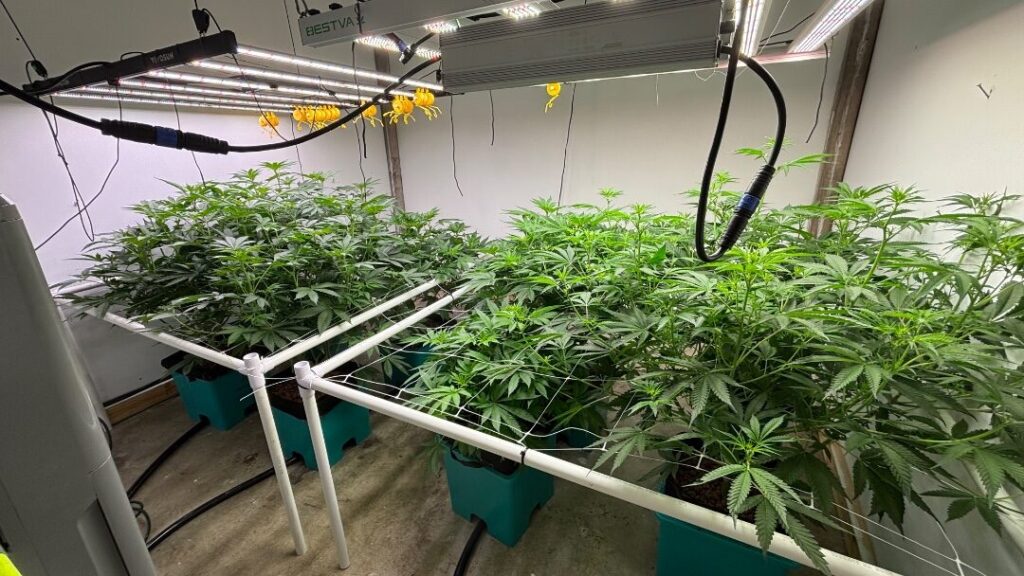



Featured Grow

Mine wasnt that bad, i am low rate afib so just swing between 95 and high as 150 sometimes, up…

Yeah not fun, but as long as it helps thats what matters. Had my heartrate 200+bpm in the hospital for…
Tupac mine is for afib. Just Had cardio version the other week to get me out of it, worst case…
I was hoping for one at least that check the box's, but ya, having a couple is that much better.…
Heart cath ablation? Had one of those for Super Ventricular Tachycardia and it worked well
Lighting is my downfall in my current setup. When the new setup gets down I think the correct size for the space will be 3x 1000w lights that can each flower a 5×5 size space for 12 plants.
Yeah the sprawl is always the most important and rarely ever discussed. The edges always get too little lights