


Cannabis pH, EC, PPM & Runoff: Complete Guide

Last updated: August 2026
Quick answer: pH tells you how acidic or basic the root-zone solution is. EC measures how strongly that solution conducts electricity and is the most consistent way to report its dissolved-ion concentration. TDS/PPM is a meter-calculated estimate derived from EC, so a PPM number is meaningless unless you also know whether the meter uses the 500 or 700 scale.
Runoff can help you see whether the root zone is trending away from the solution going into the container, but it is a diagnostic sample—not a perfect chemical inventory of the pot. Use the same meter, collection method and timing each time, then make decisions from trends instead of chasing one reading.
pH, EC, TDS and PPM: What Each Number Means
| Reading | What it measures | Unit | What growers use it for |
|---|---|---|---|
| pH | Acidity or basicity on a logarithmic scale | pH 0–14 | Checking whether the root-zone chemistry supports nutrient availability |
| EC | Electrical conductivity caused by dissolved ions | mS/cm or dS/m | Comparing nutrient-solution strength and root-zone salt trends |
| TDS / PPM | A calculated estimate derived from conductivity | ppm500 or ppm700 | Displaying an EC reading on a familiar whole-number scale |
| Runoff | Drainage collected after solution moves through a container | pH plus EC/PPM | Comparing what entered the root zone with a consistently collected output sample |
EC is the common language. Two growers can test the same solution and report different PPM values because one meter multiplies EC by 500 and another multiplies it by 700. Their EC values should still agree when the meters are calibrated and temperature has stabilized.
EC to PPM Conversion Chart
For the common meter scales:
- PPM500 = EC × 500
- PPM700 = EC × 700
- EC = µS/cm ÷ 1,000
| EC (mS/cm) | PPM500 | PPM700 |
|---|---|---|
| 0.5 | 250 | 350 |
| 1.0 | 500 | 700 |
| 1.5 | 750 | 1,050 |
| 2.0 | 1,000 | 1,400 |
| 2.5 | 1,250 | 1,750 |
| 3.0 | 1,500 | 2,100 |
EC to PPM Calculator
500 scale: — ppm
700 scale: — ppm
A meter may label its 500 scale “Hanna,” “NaCl” or “TDS,” while another uses a 700 conversion. Confirm the scale in the meter settings or manual. The Bluelab conductivity-scale explanation shows why EC is easier to compare between devices.
Practical pH Starting Ranges by Growing Medium
There is no single pH number for every system. Soil buffers nutrients differently from coco, Rockwool or a recirculating reservoir. Use the following as starting bands, then follow the current instructions for your medium and nutrient system.
| Growing system | Useful starting band | How to use the number |
|---|---|---|
| Mineral or amended container soil | Approximately pH 6.0–6.5 | Consider soil buffering and water alkalinity. A media or slurry test can be more useful than forcing one runoff reading to equal the input. |
| Peat-based soilless mix | Approximately pH 5.5–6.5 | Follow the substrate and fertilizer program; monitor the root-zone trend with a consistent extraction method. |
| Coco/perlite | Approximately pH 5.6–6.2 | Measure the finished nutrient solution and compare input EC with consistently collected drainage. |
| DWC or recirculating hydroponics | Approximately pH 5.5–6.2 | Measure the reservoir directly and watch its direction of change along with EC and water level. |
These are broad public fundamentals—not a cultivar-specific feeding program. Published cannabis research uses different pH and EC conditions depending on substrate, fertilizer and experiment design. For example, Cornell’s Cannabis sativa production manual discusses soil and soilless media separately, while controlled soilless studies commonly report nutrient-solution pH in the upper 5s and show that drain readings can differ from feed readings.
Why There Is No Universal “Best PPM” for Cannabis
A fixed PPM number ignores too many variables:
- The meter may use the 500 or 700 conversion scale.
- Tap water contributes EC before fertilizer is added.
- Different fertilizers reach the same EC with different ion ratios.
- Young plants and mature flowering plants do not have identical demand.
- Soil, coco, Rockwool and deep-water culture hold or exchange nutrients differently.
- Dry-back concentrates dissolved ions even when no fertilizer was added.
- The result depends on whether you tested input solution, reservoir water, normal runoff, a pour-through sample or a slurry/extract.
Use the feed program’s EC target as a starting point, not as permission to ignore the plant. Record source-water EC, finished-solution EC, root-zone/drain EC and visible plant response. The relationship between those measurements is more informative than one isolated PPM target.
How to Measure pH and EC Correctly
- Calibrate first. A precise-looking number from an uncalibrated meter is still unreliable.
- Measure source water. Record its EC and, when relevant, alkalinity information from a water report.
- Mix the full nutrient solution. Add products in the correct order and mix thoroughly between additions.
- Measure EC. Wait for temperature compensation and the reading to stabilize.
- Adjust pH last. Nutrients and supplements can change pH, so make the final adjustment after mixing.
- Record the input. Date, plant stage, medium, pH, EC, meter scale and any changes belong in the grow journal.
- Collect output consistently. Use the same runoff or extraction method before comparing results.
A calibrated pH/EC meter is the core diagnostic tool here; an equivalent meter is suitable if it supports fresh calibration standards and clearly states its EC or PPM scale.
pH meter care
Calibrate with fresh buffer solutions that bracket the range you use. Rinse the probe between solutions, blot rather than scrape it and store it in the manufacturer’s storage solution. Do not store a glass pH probe dry or in reverse-osmosis/distilled water. See how to use and store pH meters and the separate KCl storage-solution guide.
EC meter care
Rinse the conductivity probe, calibrate with the correct standard for the device and give temperature compensation time to settle. If two meters disagree, compare both in the same fresh standard before changing the grow.
The Bluelab conductivity pen review and Truncheon meter review show the different units and scale options on real devices.
How to Collect and Interpret Runoff
“Runoff” can refer to more than one collection method. Label the method in your journal so the next reading is comparable.
Normal drainage comparison
During a normal, evenly applied irrigation, collect a representative portion of drainage in a clean container. Avoid using water that ran down the outside of a fabric pot or bypassed the root zone through one dry channel. Record the input and output readings together.
Pour-through or displaced-root-zone sample
For a more repeatable container-media test, irrigate normally, allow the container to equilibrate, then add a small, consistent volume of low-EC water to displace enough root-zone solution for the probes. Use the same delay, sample volume and container moisture condition each time. Horticultural pour-through guidance emphasizes that EC ranges change with the extraction method.
What the input/output relationship can suggest
| Pattern | Possible explanation | What to verify before acting |
|---|---|---|
| Output EC repeatedly rises above input | Salt accumulation, strong dry-back, uneven irrigation or a concentrated first sample | Meter calibration, source-water EC, collection consistency, container moisture and the current feed plan |
| Output EC is similar to input | The root zone may be relatively stable under that collection method | Plant appearance and the trend over several irrigations |
| Output EC is below input | Dilution, plant uptake, a weak root-zone reserve or a different sample volume/timing | Whether the same method and meter scale were used |
| Output pH differs from input | Medium buffering, alkalinity, fertilizer chemistry, biological activity or sampling method | Calibrate the pH meter and confirm with a slurry/media test before making a large correction |
A single high or low runoff value is not an automatic diagnosis. Combine it with watering history, the plant’s new growth, source-water chemistry and a repeatable measurement. Use the dedicated runoff testing tutorial for the collection workflow and the soil slurry diagnostic when soil/root-zone confirmation is needed.

Do Not Correct pH by “Mirroring” the Runoff Number
The old video suggests taking the distance between runoff pH and a target, then feeding the same distance on the opposite side until runoff matches. That shortcut can create a larger swing because the medium buffers pH, pH is logarithmic and runoff is not a direct titration of the entire root zone.
Use a safer sequence:
- Calibrate the meter and repeat the reading.
- Confirm the input solution after all nutrients are mixed.
- Review water alkalinity, fertilizer changes, watering frequency and dry-back.
- Confirm the root zone with an appropriate slurry, media extract or reservoir measurement.
- Make a modest change that stays inside the normal range for the medium.
- Watch the trend and new growth before changing another major variable.
When Is Leaching or Flushing Appropriate?
Do not flush on a fixed calendar merely because an older video or chart says to. Corrective leaching can be appropriate when a repeatable EC test and plant/root-zone evidence indicate harmful salt accumulation, or when the current nutrient/substrate program explicitly calls for it. It is not a substitute for diagnosing overwatering, meter error, poor drainage, incorrect nutrient ratios or a damaged root system.
If corrective leaching is needed, use the method designed for the medium and provide complete drainage. Then re-measure rather than assuming that one large volume solved the cause. Avoid routinely sending fertilizer-rich runoff into drains or the environment.
A Fast pH/EC Troubleshooting Workflow
- Check whether the plant was recently overwatered, underwatered or allowed to dry unusually far.
- Calibrate the pH and EC meters.
- Measure source water.
- Mix the current feed exactly as intended, then record final EC and pH.
- Collect runoff or a root-zone sample using a repeatable method.
- Compare the direction of change—not only whether a number is above or below a chart.
- Change one major variable, document it and evaluate new growth.
If leaves already show a repeatable symptom pattern, continue to the cannabis nutrient-deficiency guide. The complete beginner guide places this diagnostic workflow inside the full seed-to-harvest process.
Video Chapter Guide
The original video is preserved for its visual measurement examples. Select a timestamp to jump to a section, and follow the written update whenever the legacy ranges or correction advice differ.
| Timestamp | Topic |
|---|---|
| 0:19 | Start diagnosis in the root zone |
| 1:15 | What runoff is |
| 1:29 | pH and conductivity meters |
| 1:38 | Legacy EC/TDS explanation—use the written conversion table |
| 2:39 | Legacy pH section—use the written medium-specific workflow |
| 4:20 | Why consistent measurement matters |
Frequently Asked Questions
Is EC the same as PPM?
They describe the same solution from different displays, but they are not the same unit. EC is the measured conductivity. PPM is calculated from EC using a conversion factor, most commonly 500 or 700.
Which PPM scale should I use?
Use the scale your feed chart or reference specifies. If it does not specify one, report EC. Never compare a PPM500 number directly with a PPM700 target.
Should runoff pH equal input pH?
Not necessarily. Media buffering, water alkalinity, fertilizer chemistry, roots and the sampling method can all shift the output. Use the trend and confirm unusual readings with the correct root-zone test.
How often should I test runoff?
Test often enough to establish a baseline and whenever the plant, feed plan, water source or environment changes. More readings are only useful when the sampling method is consistent and the results are recorded.
Does high runoff EC always mean nutrient burn?
No. It can signal concentration or salt accumulation, but a dry container, small first sample, high source-water EC or inconsistent collection can also raise the reading. Repeat the test and examine the plant/root zone before taking corrective action.
Can pH cause nutrient-deficiency symptoms?
An unsuitable root-zone pH can change nutrient availability and produce symptoms that resemble a missing nutrient. Meter error, overwatering, root damage and excessive fertilizer can produce similar symptoms, which is why diagnosis should use more than leaf color alone.
See the FoxFarm nutrient test series
For real examples of how individual concentrates can move the same standardized RO-water sample, compare the Grow Big 6-4-4 review, Big Bloom 0-0.5-0.7 review and Tiger Bloom 2-8-4 review. Each page keeps HWGrow’s original measurements while separating the observation from universal feeding claims.
Recommended pH, EC and runoff tools
 Reliable pH and EC meterUse the same calibrated meter and scale for every input and runoff comparison so the trend means something.View product
 Calibration and storage kitFresh buffers expose drift, while proper storage solution protects a glass pH probe between readings.View product
 Runoff collection saucersA clean catch tray makes repeatable sampling easier. Empty it after testing so the container never sits in runoff.View product
Affiliate disclosure: HWGrow may earn a commission from qualifying purchases at no additional cost to you. Equivalent products can be substituted when they provide the same measurement function.
Comments
Leave a reply
You may also like
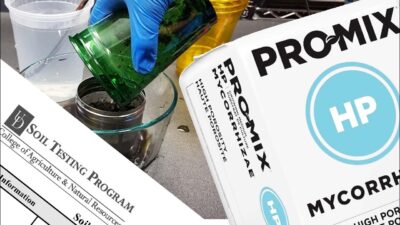
PRO-MIX HP Review: What the Lab Test Actually Says
pH vs. PPM for Cannabis: EC Scales, Buffering and Nutrient Lockout





Featured Grow

Mine wasnt that bad, i am low rate afib so just swing between 95 and high as 150 sometimes, up…

Yeah not fun, but as long as it helps thats what matters. Had my heartrate 200+bpm in the hospital for…
Tupac mine is for afib. Just Had cardio version the other week to get me out of it, worst case…
I was hoping for one at least that check the box's, but ya, having a couple is that much better.…
Heart cath ablation? Had one of those for Super Ventricular Tachycardia and it worked well
What would cause an autoflower to produce a few seeds!! Thanks
it hermed
At what week should you do your first flush?
We don’t flush at all in this series unless at the very end when trichomes are all milky or amber and the leaves are still completely green.
And also I need help understanding the grow chart. What are the numbers under the veg col , it shows 100 at week 2
That’s the target ppm’s Don’t make the juices until you need to use it because they have shelf lives. It will be explained in the juice episode but to simplify, you are making a concentrate, then mixing this with water to hit the target ppms listed.