

How to Dunk Water Cannabis in Fabric Pots
Video chapters: dunk a fabric pot
- 0:19 — Why fabric pots develop dry pockets
- 0:55 — What a complete dunk changes
- 1:37 — When to start dunk watering
- 2:07 — Prepare and record the input solution
- 2:43 — Submerge the pot and begin the drain
- 3:44 — Keep runoff separate and record the result
- 4:12 — Use pot weight and adapt the next watering

Quick answer: Dunk watering is a fast way to rehydrate a fabric pot that has developed dry, water-repellent pockets. Lower the pot into a clean container of prepared solution, keep the top of the medium above the water, lift it out after a brief soak, and drain it completely at an angle. It can be useful, but it is not automatically the best method for every plant or every feeding.

Why a fabric pot sometimes needs a complete soak
Fabric pots dry from the outside inward. When peat-based or coco-rich media becomes too dry, water can race through cracks and down the sidewall. You may see runoff immediately even though the center of the root ball is still dry. Pouring faster does not fix that channeling.
A brief dunk wets the bottom and sides at the same time. That makes it useful for a badly dried, water-repellent root ball or as an occasional controlled measurement. It does not make the pot impossible to overwater. Repeatedly soaking roots before the medium has used enough water can still reduce oxygen and create problems.
How to dunk water a cannabis plant
- Start with a healthy, established plant. The source video waited until the canopy extended beyond the pot. Treat that as one visual cue, not a universal rule. A young or recently transplanted root system usually needs gentler watering.
- Prepare a clean dunk container and drain container. The first must be wide enough for the fabric pot. The second needs to support the pot securely while catching runoff.
- Mix the solution completely. Use the current product labels, add concentrates in the correct order, then measure the finished pH and EC. The nutrient-mixing-order guide covers the sequence.
- Record the input. Write down pH, EC or the meter’s named PPM scale, temperature and the exact recipe. A number without its scale or method is hard to compare later.
- Lower the pot into the solution. The video places the water line about an inch below the soil surface and soaks for roughly 8–12 seconds. Use enough time to stop active bubbling and wet the root ball without leaving it parked underwater.
- Lift carefully and drain at an angle. Transfer the pot to the drain container and let the stream slow to drips. Stable footing matters; a wet five-gallon pot is heavy.
- Keep the runoff separate. Do not pour drainage back into the clean feed container. Shared runoff can move salts, debris and root-zone problems between plants.
Runoff is a trend—not an exact root-zone report
The original video says runoff tells you exactly what is happening at root level. It is more accurate to call it a sample shaped by the irrigation volume, path, medium and collection timing. Compare input and runoff using the same calibrated meter and method, then look for repeated trends. One high or low result does not automatically mean nutrient lockout or require a flush.
Use the repeatable runoff-testing guide and the pH, EC and PPM guide before changing the next feed.
Do not copy the 15-pound target
HWGrow recorded a personal cue of feeding a five-gallon fabric pot again below 15 pounds. Your dry and wet weights change with the pot, medium, plant size, stakes and equipment. Weigh your own pot immediately after a complete drain, then track it as the plant uses water. The useful signal is your repeatable wet-to-dry change plus the plant’s response—not somebody else’s pound number.
Does dunking prevent fungus gnats or flush soil?
Keeping the upper layer drier can make the surface less attractive to fungus gnats, but it will not erase an established population by itself. Use the complete fungus-gnat control guide when adults or larvae remain.
A large dunk can leach soluble material, but “dunk” and “flush” are not synonyms. If you want to rehydrate the root ball, use an appropriate solution. If you want to correct a measured salt problem, define the input, volume and endpoint. Do not wash a healthy medium repeatedly because a calendar says so.
Recommended fabric-pot dunking tools
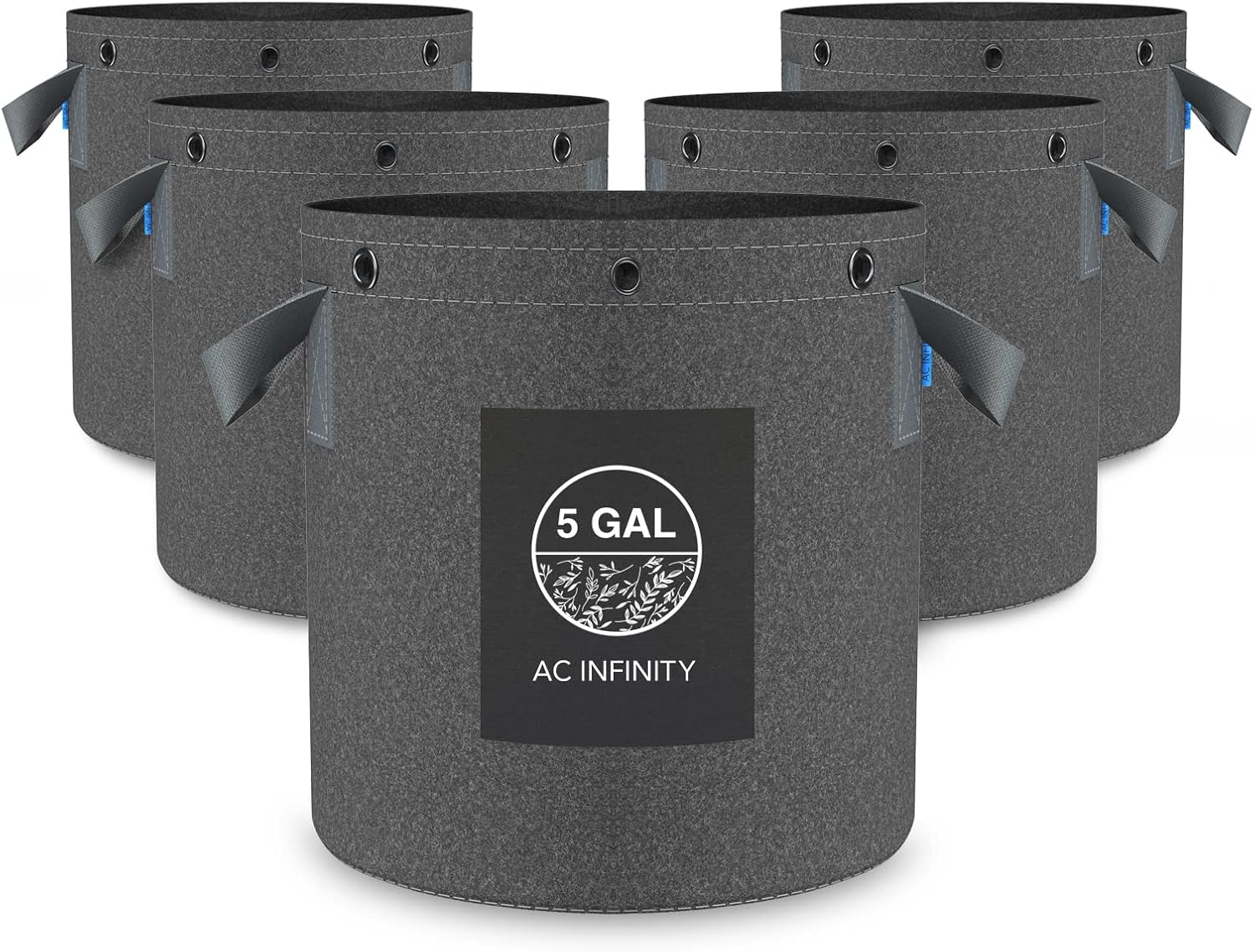 Five-gallon fabric grow potsHandles make a controlled lift and transfer easier. Choose the root volume that fits the plant, medium and irrigation plan.View product
 10-gallon dunk containerA wide, sturdy option for briefly rewetting a five-gallon fabric pot and keeping the solution contained.View product
 Digital pH, EC and PPM meterMeasure the finished input and a consistent runoff sample; calibrate the meter and record its PPM scale.View product
 50-pound digital scaleBuild your own wet-to-dry pot-weight record instead of copying a universal watering threshold.View product
AC Infinity savings: Use code EVYGROWS for additional savings on eligible products. When shopping on Amazon, clip any available coupon first.
Affiliate disclosure: HWGrow may earn a commission from qualifying purchases at no additional cost to you. Equivalent containers and measurement tools can be substituted without changing the method.
Where this fits in the complete workflow
For routine top feeding, dry-pocket recovery and the newer responsive input/runoff workflow, use the complete fabric-pot watering guide. The Grow With Me Masterclass connects watering and feeding decisions across the full grow without reproducing protected lessons here. If your pot remains heavy, smells sour or the plant declines after hydration, ask HWGrow a question with the medium, container, input, runoff and weight records.
Dunk-watering FAQ
Should I dunk a fabric pot at every watering?
No. Use it when the root ball needs complete rehydration or when you are taking a controlled input/runoff measurement. Many healthy pots can be watered evenly from the top.
How long should a fabric pot stay submerged?
The video demonstrates roughly 8–12 seconds. The real endpoint is even rehydration without leaving the root zone parked underwater. Drain completely afterward.
Can runoff tell me exactly what the roots are eating?
No. Runoff is influenced by the irrigation volume, path, medium and collection method. Use repeated input/runoff trends with plant and root observations.
Can dunk watering cause overwatering?
Yes, if it is repeated before the root zone has used enough water or if the pot cannot drain. Complete hydration is not the same as keeping roots constantly saturated.
Comments
Leave a reply
You may also like
pH vs. PPM for Cannabis: EC Scales, Buffering and Nutrient Lockout
Complete Grow Tent Setup: Four Videos, One Working Setup




Featured Grow

Mine wasnt that bad, i am low rate afib so just swing between 95 and high as 150 sometimes, up…

Yeah not fun, but as long as it helps thats what matters. Had my heartrate 200+bpm in the hospital for…
Tupac mine is for afib. Just Had cardio version the other week to get me out of it, worst case…
I was hoping for one at least that check the box's, but ya, having a couple is that much better.…
Heart cath ablation? Had one of those for Super Ventricular Tachycardia and it worked well
Do you know any good 50 pint dehumidifiers and a good shop vac to suck up run off water?
Yezzir,
This is the dehumidifier I use in my lung room: https://amzn.to/3MqSptf
You dont really need a shop vac, just use the drain to waste tube and have the water feed into a low tub such as: https://amzn.to/3o0ldi4
If you really need a shop vac, this is what I use, you could sometimes find it on sale:https://amzn.to/3ZX9vCf
Thank you so much bro. You are very helpful. I can’t wait until you figure out another way to extract trichomes. The dunking method you came up with is smart as fuck. I’m going to begin growing around may and I really do appreciate your videos especially you replying to my questions. You are the best.
If the method counts as flushing my plants, could I skip a flush on that schedule “nutrients, nutrients, flush”?
yes, learn to read the leaves, the words on the bottom of the chart that stress this should be capable of being clicked.
Will the feed water’s Ph and PPM be altered if you’re feeding more than one plant? If so, would you recommend fresh feed water for each plant?
I finally tried this after seeing it on Youtube the other day. It worked out amazingly. I notice that dunking it up until an inch or so from the top of the soil that the humidity in the tent doesn’t get nearly as high in comparison to watering the plant from the top.
So if I need to fill a dunk bucket with 3 gallons of RO water do I follow your chart that’s per gallon and 3x the nutrient amount you have on your chart?
so triple the amounts on the chart since the chart says per gallon
Do you recommend the “dunk” method for every feeding or alternate with top feeding?
Thanks for all the great info!
-OC
I alternate with top feeds. Nutrients on every feed until I see signs up slight burn
What is the ml of nutes per gallon when doing a dunk?
What the chart lists is per gallon so count how many gallons is in your dunk bucket and multiply it out