

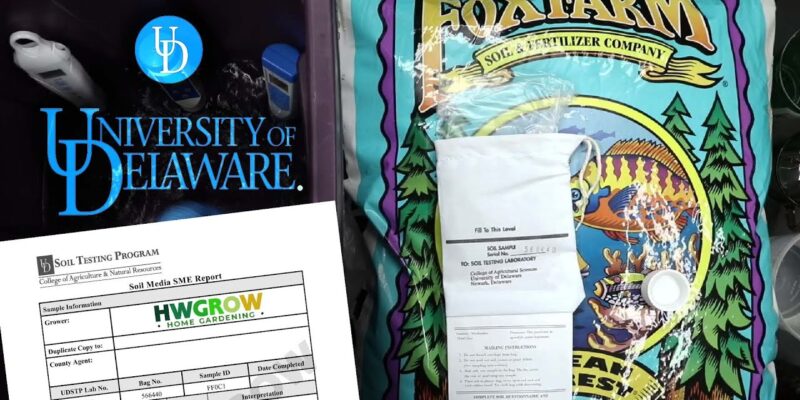
FoxFarm Ocean Forest Soil Review: Lab Test Results

Last updated: August 2026
Quick answer: HWGrow sent one cup from one bag of FoxFarm Ocean Forest to the University of Delaware for a greenhouse-media lab test. The home slurry measured pH 6.26 and 400 PPM; the lab’s saturated-media extract measured pH 5.9 and soluble salts of 1.42 mmhos/cm (the same numeric unit as mS/cm). The results are useful, but they do not prove that every bag needs nitrogen, calcium or a fixed fertilizer dose.
Video chapters: Ocean Forest home test vs. lab test
- 0:00 — Why send the soil to a lab?
- 0:10 — Home slurry: pH 6.26 and 400 PPM
- 0:28 — University lab report
- 0:30 — Lab pH: 5.9
- 0:44 — Bag analysis versus extract data
- 1:19 — Nitrate and calcium discussion
- 1:34 — Remaining nutrient results
- 1:49 — Historical amendment advice; safer workflow below
- 2:02 — Fungus-gnat experience
Selecting a timestamp opens the video at that moment without moving you away from this section.
What exactly did HWGrow test?
The sample went through the University of Delaware’s GH-1 SME Media Analysis. SME means saturated media extract. The package measures pH, electrical conductivity and extractable P, K, Ca, Mg, Mn, Zn, Cu, Fe, B, S, Na, Al, nitrate-N and ammonium-N. That is the right kind of service for a container medium; it is not the same procedure as a casual home slurry.
The University describes this as a greenhouse-media analysis, and its current program still lists the same core measurements. See the University of Delaware soil-testing program and GH-1 package.
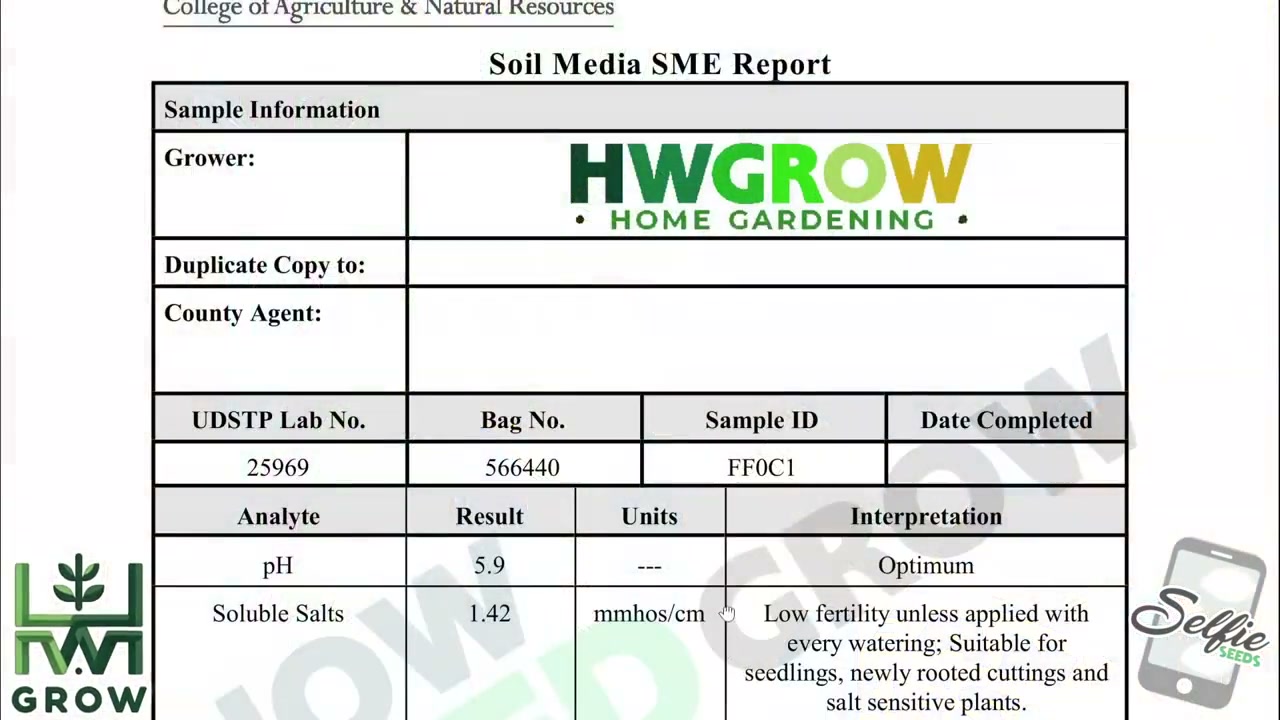
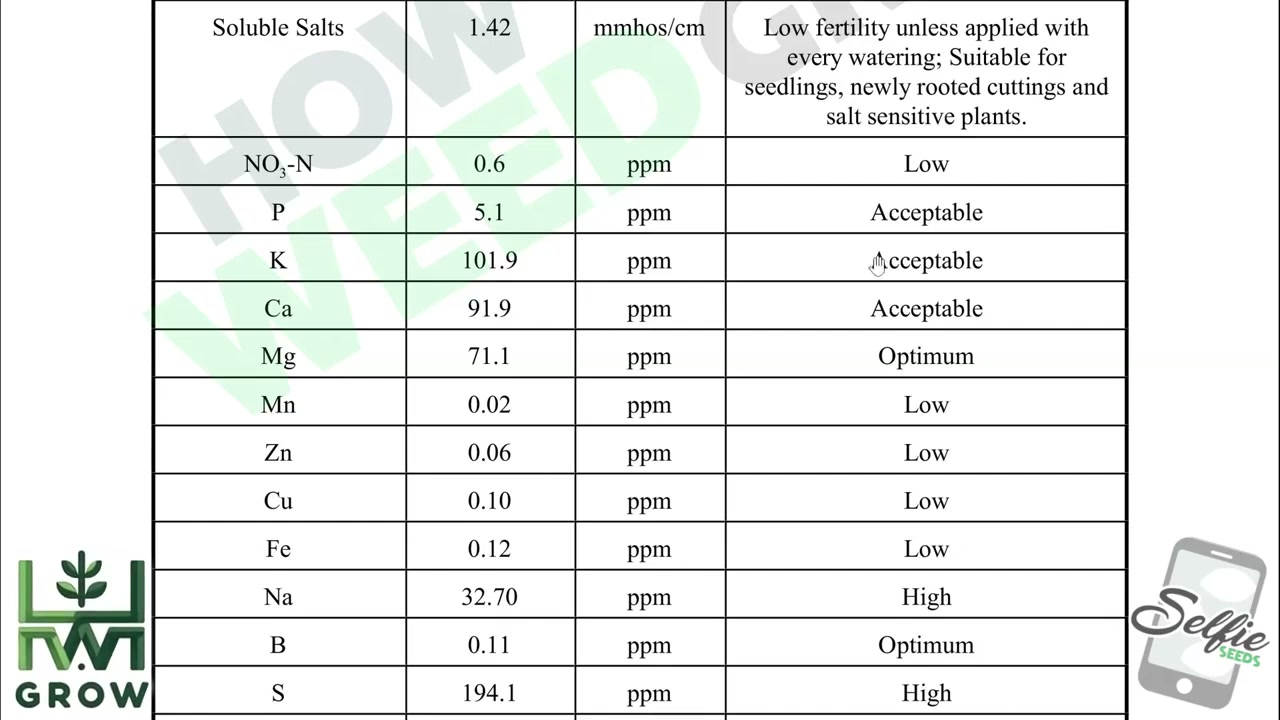
Ocean Forest lab results
| pH | 5.9 — lab interpretation: optimum |
|---|---|
| Soluble salts / EC | 1.42 mmhos/cm — lab note: low fertility unless applied with every watering; suitable for seedlings, newly rooted cuttings and salt-sensitive plants |
| Nitrate-N | 0.6 ppm — low |
| Phosphorus | 5.1 ppm — acceptable |
| Potassium | 101.9 ppm — acceptable |
| Calcium | 91.9 ppm — acceptable |
| Magnesium | 71.1 ppm — optimum |
| Manganese | 0.02 ppm — low |
| Zinc | 0.06 ppm — low |
| Copper | 0.10 ppm — low |
| Iron | 0.12 ppm — low |
| Sodium | 32.70 ppm — high |
| Boron | 0.11 ppm — optimum |
| Sulfur | 194.1 ppm — high |
| Aluminum | 0.27 ppm — not rated |
Those words—low, acceptable, optimum and high—come from the report’s interpretation ranges. They are more useful than a random internet chart, but they still describe this sample under this extraction method. They are not a cannabis-specific recipe and do not automatically tell you what to pour into a planted pot.
Why the home and lab numbers differ
A pH of 6.26 at home and 5.9 at the lab are not automatically a contradiction. A slurry result changes with the soil-to-water ratio, water chemistry, contact time, temperature, meter calibration, filtering and sampling. The lab used a standardized saturated-media extract. A home test can be a helpful trend check, but only when you repeat the same method every time.
The same warning applies to “400 PPM.” Consumer meters convert EC to PPM with a 500, 640 or 700 scale, and the source video did not name the scale. The lab’s 1.42 mmhos/cm is an EC value produced by a different preparation. Do not compare the two numbers as if they came from the same test. Use the repeatable soil slurry method for home trending and the pH, EC, PPM and runoff guide to keep the units straight.
Do not compare the bag’s NPK directly with this table
The original narration moves the decimal and calls the bag analysis 3-4.5-0.5. The label shown in the source video actually reads 0.30-0.45-0.05. More importantly, those guaranteed-analysis percentages describe nutrient content by weight. The lab table reports concentrations in the saturated extract. They answer different questions.
A low nitrate result does not mean the bag contains almost no total nitrogen. It means little nitrate-N was present in that extract at that moment. Organic nitrogen can mineralize over time through a broader microbial community; it is too simple to say mycorrhizae alone “activates” the nitrogen once the soil is wet.
Does Ocean Forest need fertilizer right away?
Not automatically. FoxFarm’s current Ocean Forest page calls the mix ready to use and specifically says there is no need for nitrogen fertilizer at first. It suggests feeding later during growth and bloom. The manufacturer currently lists aged forest products, sphagnum peat moss, earthworm castings, bat guano, fish emulsion and crab meal in the blend. Check the current Ocean Forest ingredients and directions.
The old page called Grow Big a “perfect complement,” prescribed a 150-PPM starting point, recommended calcium and gave a blanket Bio-Fish rate of four tablespoons per five-gallon pot. One lab sample cannot support those universal instructions. Calcium was acceptable in this report, and adding any fertilizer changes more than one nutrient at a time.
If an established plant, your source water and repeatable root-zone measurements point to a real need, choose a complete program and measure the final mixture. The FoxFarm Grow Big pH and EC test shows what that bottle does in a controlled water sample; the nutrient-deficiency guide helps separate symptoms before you add more.
A safer Ocean Forest workflow
- Record the bag and lot. Soil products vary. Photograph the label and keep the lot code before opening.
- Inspect before planting. Look for odor, pests and uneven moisture. The video reports repeated fungus-gnat problems from the creator’s past bags; that is a firsthand experience, not proof every current bag is infested.
- Use it as a starting medium. Plant, water thoroughly and allow the root zone to establish before assuming the fresh soil needs a corrective fertilizer.
- Trend with one method. If you run a home slurry, keep the ratio, water, timing, temperature and calibrated instruments consistent.
- Read your local water report. Search your ZIP code plus “water report”. Alkalinity and dissolved minerals can change the behavior of both pH and supplements.
- Diagnose before amending. Combine plant symptoms with input EC/pH, runoff or slurry trends, water data and stage. Do not chase one number.
- Change one variable at a time. Follow the current product label, start conservatively and measure the response before adding a second correction.
Recommended Ocean Forest testing and amendment supplies

FoxFarm Ocean Forest soilThe exact product tested. Compare the online price with a local garden store because shipping soil can be expensive.

pH and EC meter kitFor repeatable slurry, source-water and feed checks. Calibrate the probes and record the PPM scale when EC is unavailable.

Mosquito BitsA Bti-based option for fungus-gnat larvae when the current label permits the intended use. Follow the label rather than applying it automatically.

Calcium-magnesium supplementThe legacy calcium link, retained as an option only when water, medium and plant evidence identifies a real calcium or magnesium need.

Bio-Fish 7-7-2 fertilizerThe legacy organic amendment link. Do not copy the old blanket dose; follow the current label and adjust only from measured need.
Affiliate disclosure: HWGrow may earn a commission from qualifying purchases at no additional cost to you. Product destinations may be replaced with equivalent items; verify the exact product, current label and fit for your grow before use.
Want help reading your own soil data?
The Grow With Me Masterclass connects water, feeding and root-zone measurements inside a guided workflow without reproducing protected lesson content here. If your numbers or symptoms do not match this sample, ask HWGrow a question and include the soil brand and lot, plant stage, water report, meter calibration, exact test method, pH, EC or named PPM scale and clear plant photos.
FoxFarm Ocean Forest FAQ
What pH did Ocean Forest test at?
This one home slurry measured pH 6.26, while the University of Delaware saturated-media extract measured pH 5.9. Different preparation methods can produce different results.
What EC did the lab report?
The report listed soluble salts of 1.42 mmhos/cm, numerically equivalent to 1.42 mS/cm. Do not compare that directly with the video’s 400-PPM home reading without knowing the PPM scale and using the same extraction method.
Does fresh Ocean Forest need Grow Big or Cal-Mag?
Not automatically. FoxFarm currently describes Ocean Forest as ready to use and says no nitrogen fertilizer is needed at first. This lab sample rated calcium acceptable. Add nutrients only when the complete plant, water and root-zone evidence supports it.
Why does the bag analysis not match the lab ppm?
The bag’s 0.30-0.45-0.05 guaranteed analysis is nutrient content by weight. The laboratory ppm values are concentrations in a saturated-media extract. They are different measurements and should not match numerically.
Does Ocean Forest always contain fungus gnats?
No conclusion that broad comes from this test. The source video documents the creator’s repeated historical experience. Inspect each bag, quarantine when practical and use label-directed integrated pest management if pests are present.
You may also like
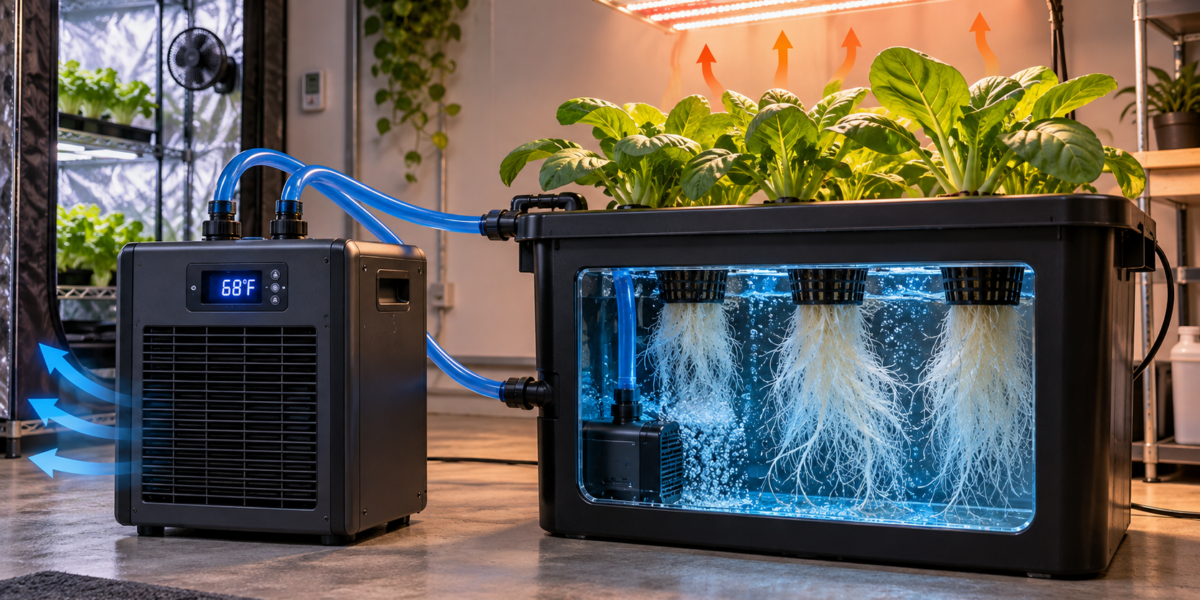
Hydroponic Water Chillers: Stop Summer Root Rot Before It Starts
How to Breed Masterclass – Promo Video







Featured Grow


HA!!! I love pictures. Noticed I'm missing a zip tie on a T-piece. Good deal.
Feed at 6 ounces, bring up to 8
Absolutely, just had it set up as I didn't want to disturb anything down there later on stabbing them through.…
I am not excited about em lol. I think my pump is a little on the high side right now,…
Remember Don’t drown them early on, I would start off the first couple of weeks hand feeding them using a…